INTRODUCTION
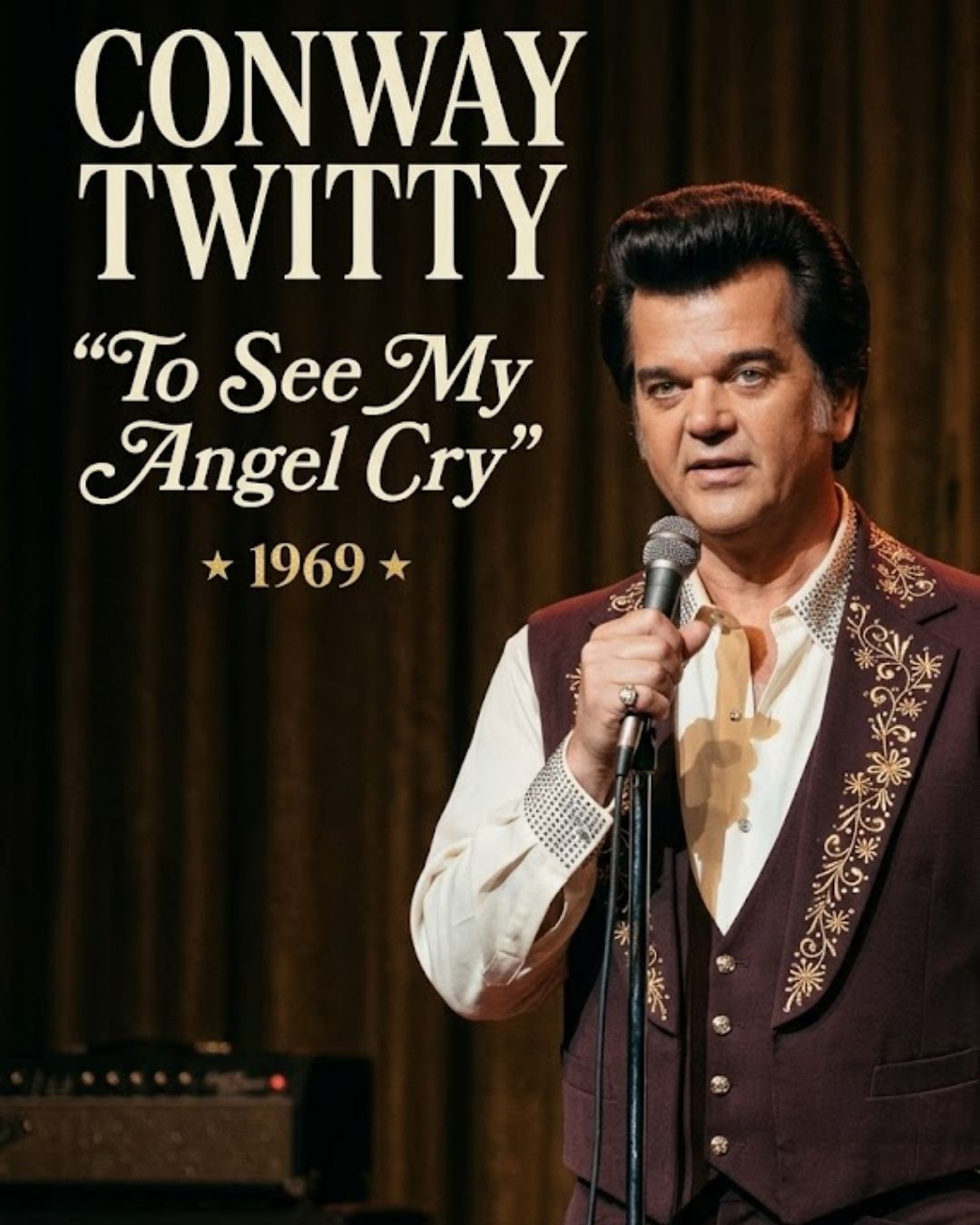
Inside the legendary Bradley’s Barn studio in Mount Juliet, Tennessee, producer Owen Bradley lowered the lights to capture an agonizingly personal vocal performance. Conway Twitty stood before the microphone, co-writing and pouring genuine marital sorrow into every trembling syllable. The resulting master tape stunned the session musicians, but would this devastatingly intimate confession resonate with a national audience?
THE DETAILED STORY
By 1969, Conway Twitty had executed one of the most audacious genre transitions in American music history. Having walked away from an internationally successful rock-and-roll career that birthed “It’s Only Make Believe,” he staked his creative future entirely on authentic country storytelling. Teaming up with trusted songwriter L.E. White, Twitty penned a composition rooted in profound remorse rather than standard honky-tonk bravado. “To See My Angel Cry” departed sharply from typical mid-century breakup anthems by placing full accountability on the male narrator, examining the devastating psychological toll of watching an innocent partner endure heartbreak caused by his own reckless mistakes.
Recorded at Bradley’s Barn in Mount Juliet under the guidance of legendary producer Owen Bradley, the musical arrangement relied on exquisite emotional restraint. Renowned steel guitarist John Hughey introduced his signature crying steel technique, sliding weeping high-register notes that mirrored literal tears behind Twitty’s resonant baritone delivery. Twitty utilized his remarkable vocal dynamics to perfection, shifting seamlessly from a hushed, spoken-word confession to a soaring, impassioned plea. The studio production masterfully balanced lush country strings with raw southern grit, establishing a sonically refined standard that permanently influenced Nashville’s classic golden era.
Released as the title track of his landmark Decca Records album, the song resonated powerfully across radio airwaves. In January 1970, the single climbed to Number One on the Billboard Hot Country Singles chart, securing Twitty’s third career chart-topper in the country format. Its undeniable commercial triumph proved that working-class audiences craved complex, emotionally mature narratives about marital struggle and regret. The single established Twitty as country music’s preeminent master of romantic drama, demonstrating that unvarnished emotional vulnerability could command mainstream charts while maintaining deep roots in traditional country values.
Decades after its debut, “To See My Angel Cry” remains a foundational milestone within a legendary career that produced fifty-five total number-one hits. The record bridged the sonic divide between fifties rock intensity and the rich narrative sophistication that defined seventies country music. By turning private anguish into transcendent art, Conway Twitty delivered an enduring masterclass in lyric honesty, ensuring this poignant ballad remains an essential masterpiece in the American musical canon. His raw delivery continues to inspire generations.