INTRODUCTION
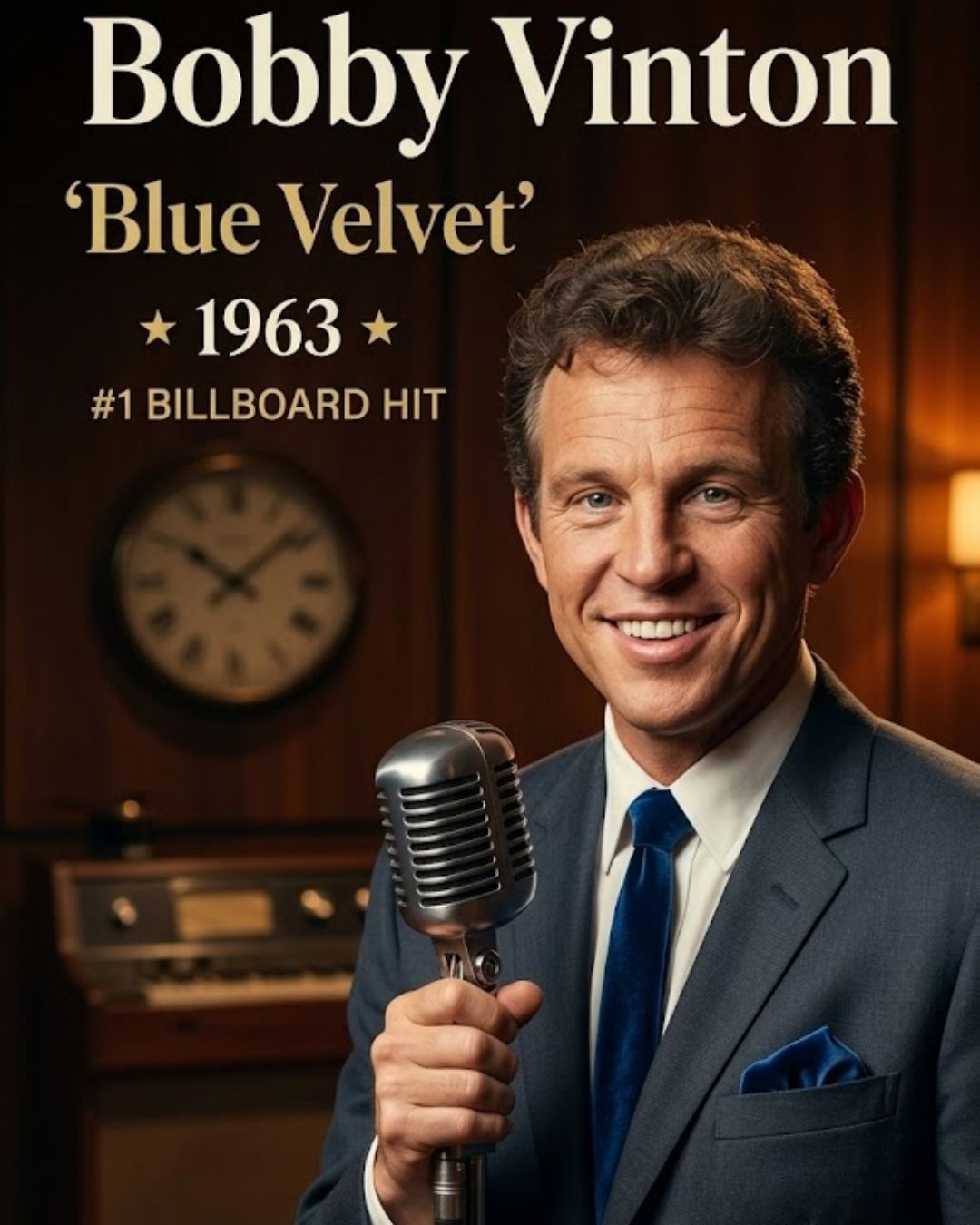
In the spring of 1963, Epic Records executives were scrambling to compile songs featuring colors for a thematic concept album. When Bobby Vinton walked into Columbia Studios in Nashville, he recorded a neglected 1950s standard that few expected to become a single. How did this overlooked track transform into one of pop history’s most enduring romantic masterpieces?
THE DETAILED STORY
Written in 1950 by Bernie Wayne and Lee Morris, the composition was inspired by a chance encounter with an enigmatic woman dressed in blue velvet at the historic Jefferson Hotel in Richmond, Virginia. Although Tony Bennett had earned a respectable top-twenty hit with his initial 1951 interpretation, the composition gradually faded from mainstream airwaves for over a decade. By 1963, Bobby Vinton was riding high after scoring a major chart success with “Blue on Blue,” which prompted Epic Records executives to assemble an entire concept album centered around songs featuring the word “blue” in their titles. Music publisher Al Gallico suggested dusting off the forgotten standard, famously dispatching his secretary to a local shop with a single dollar to buy the sheet music. Vinton initially viewed the track as simple album filler, assuming other selections possessed greater hit potential.
Recorded on May 27, 1963, at Columbia Studios in Nashville under producer Bob Morgan, the session produced immediate studio magic. The arrangement enveloped Vinton’s tender, vulnerable vocal delivery within a lavish bed of lush strings, gentle choral harmonies, and a slow, hypnotic tempo. Rather than relying on the dramatic, belt-heavy style favored by many mid-century crooners, Vinton approached the microphone with an understated intimacy, allowing his smooth phrasing and delicate head voice to evoke the bittersweet ache of youthful memory. The subtle interplay between the soaring violins and the singer’s warm, melancholy timbre created an enchanting atmosphere that felt both deeply personal and cinematic.
Issued as a single in August 1963, the record struck an immediate emotional chord with listeners across America. On September 21, 1963, it reached number one on the Billboard Hot 100, maintaining the summit for three consecutive weeks while reigning atop the Middle-Road chart for eight straight weeks. Standing as one of the final towering triumphs of pre-British Invasion traditional pop, the recording captured the innocent romance of an era just before rock culture shifted fundamentally. Decades later, the song experienced a surreal renaissance when filmmaker David Lynch made it the thematic centerpiece of his acclaimed 1986 neo-noir film. A subsequent European re-release in 1990 propelled the track to number two on the UK Singles Chart, proving that its timeless emotional elegance remains forever untouched by time.