INTRODUCTION
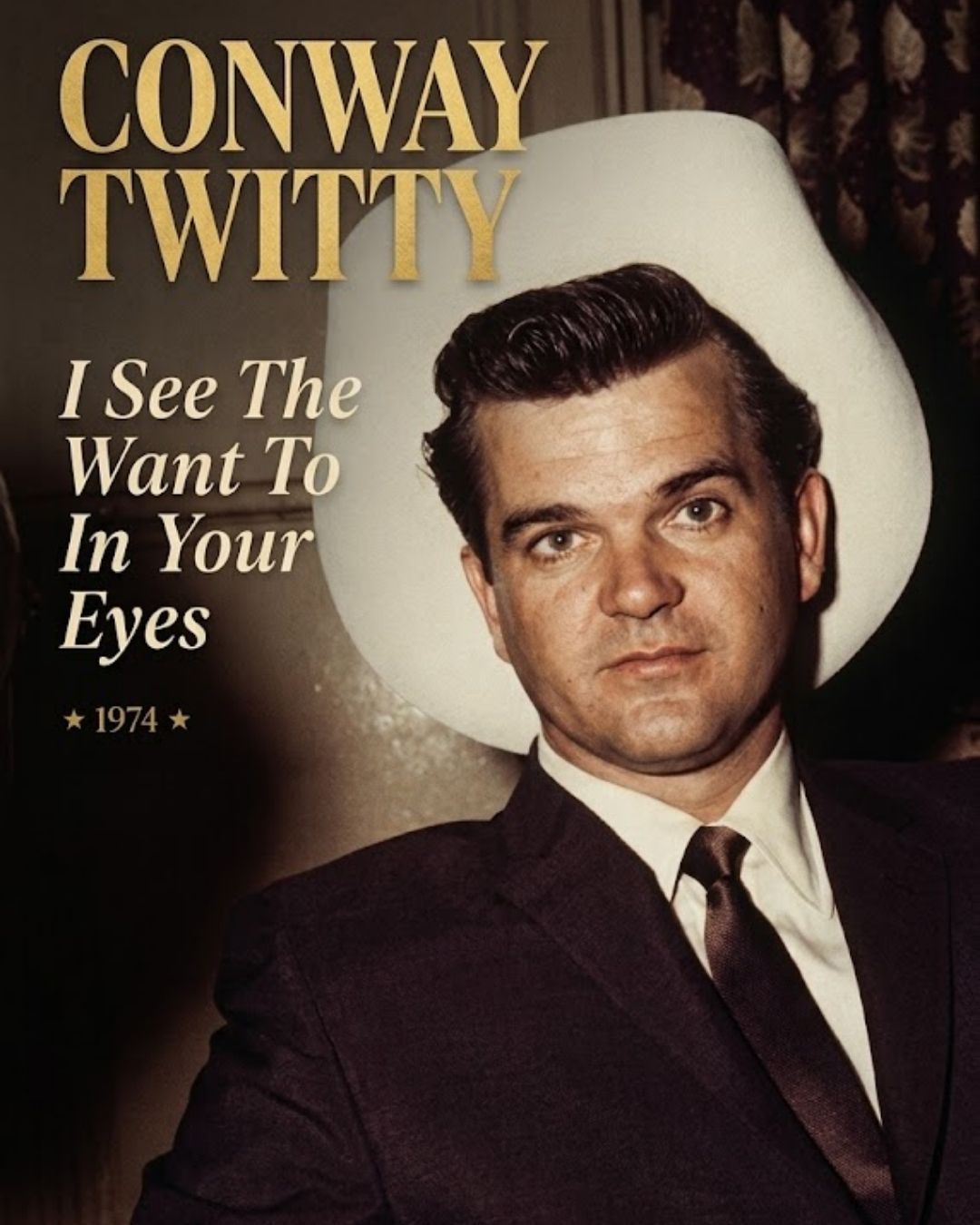
Inside Nashville’s Bradley’s Barn in 1974, legendary producer Owen Bradley dimmed the studio lights to capture something rare: pure, breathless restraint. Rather than belting a booming chorus, the singer stepped close to the microphone, delivering a confession framed entirely around an unspoken gaze across a crowded room. How did an understated ballad about quiet temptation become an era-defining anthem of emotional honesty?
THE DETAILED STORY
Penned by celebrated songwriter Wayne Carson—famed for authoring “Always on My Mind” and “The Letter”—the song arrived at a pivotal juncture in Conway Twitty’s career. By the mid-1970s, Twitty had long shed his rockabilly origins, morphing into Nashville’s foremost interpreter of mature, complex adult romance. Where traditional country tracks often resolved moral dilemmas with heavy-handed sermons or reckless heartbreak, Carson’s composition explored the razor-thin precipice preceding a transgression: the magnetic, undeniable attraction passing between two people bound to other commitments.
When Twitty took the material into the studio under legendary producer Owen Bradley’s guidance, he made a conscious aesthetic decision to strip away theatrical bombast. Bradley, the visionary architect behind the lush “Nashville Sound,” anchored the arrangement with delicate steel guitar fills, a steady acoustic rhythm, and understated strings that floated like smoke in a dimly lit lounge. This sonic restraint allowed Twitty’s distinctive phrasing to command center stage. His voice moved between a low, resonant baritone and a breathless, raspy whisper, capturing the cadence of an intimate secret shared inches away from an ear. Every syllable carried dramatic tension without ever escalating into a shout.
The enduring power of the recording lies in its acute psychological realism. Twitty does not sing of physical betrayal; instead, he chronicles the silent confession exchanged through locked glances across a crowded room. Lines describing eyes that reveal an aching desire create an atmosphere thick with suspense and quiet desperation. The narrator recognizes the impending danger, acknowledges the mutual longing, yet remains suspended at the emotional threshold. This lyrical sophistication resonated profoundly with mature listeners who recognized real-world complexities rarely addressed on commercial radio with such unvarnished poise.
Released in July 1974, the single captivated the country music landscape almost overnight. By September, it climbed to the absolute summit of the Billboard Hot Country Singles chart, marking Twitty’s twelfth solo chart-topper and cementing his extraordinary rapport with audiences nationwide. Decades later, the recording endures as a masterclass in vocal pacing, lyrical restraint, and thematic fearlessness. Conway Twitty proved that the most resonant statements in country music do not demand sheer volume; rather, the deepest emotional impact often occurs in the quiet realization of an unsaid truth.