INTRODUCTION
When nineteen-year-old Ronald Wycherley stepped into Decca Studios in London in 1960, British rock ‘n’ roll was still dismissed as a pale imitation of American energy. Yet, with a handful of original tunes in his pocket, the shy Liverpudlian was about to transform into a rockabilly phenomenon. How did this fragile young singer capture such an untamed, timeless sound in under two minutes?
THE DETAILED STORY
In the spring of 1960, British rock ‘n’ roll stood at a critical crossroads. Most London record executives viewed teenage music as a fleeting novelty, pushing young singers toward polite cover versions of American pop hits. Billy Fury, born Ronald Wycherley in the Dingle area of Liverpool, boldly refused to follow that manufactured commercial script. Possessing a fragile heart condition from childhood rheumatic fever and a deeply introspective soul, Fury channelled his emotional vulnerability into songwriting, penning a remarkable collection of original rockabilly numbers that captured the raw, electric spirit of Sun Studio.
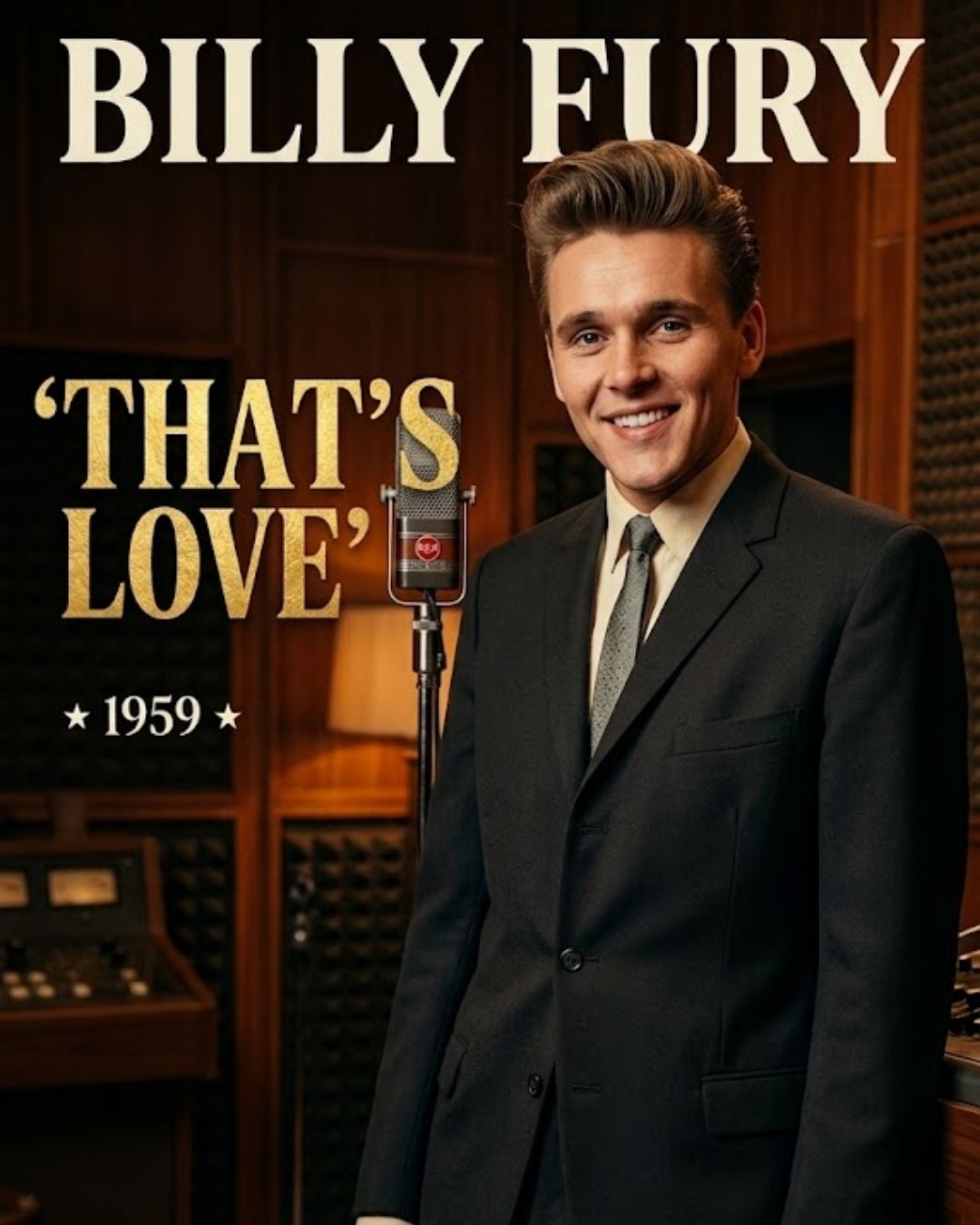
When Fury entered Decca Studios in West Hampstead to record “That’s Love,” he brought together an extraordinary ensemble of visionary talent. Producer Jack Good helped assemble a tight, organic backing unit featuring nineteen-year-old virtuoso Joe Brown on lead guitar, pianist Reg Guest, bassist Alan Weighell, and drummer Andy White. Providing the rich, swinging doo-wop harmonies behind Fury were The Four Jays, a fellow Liverpool vocal outfit that would soon evolve into Merseybeat stars The Fourmost.
From the opening rhythm guitar strum, “That’s Love” establishes an irresistible, easy-rolling groove that feels instantly alive. Joe Brown’s electric guitar delivers bright, twangy licks reminiscent of Scotty Moore and Cliff Gallup, while the rhythm section locks into a relaxed shuffle that breathes with natural space. Over this lean instrumental framework, Fury’s vocal performance is masterfully understated. Rather than shouting to project power, he glides across the melody with effortless warmth, shifting seamlessly from a playful rockabilly hiccup to a soft, romantic sigh. The track captures the joy and confusion of youthful devotion with disarming sincerity, culminating in the spontaneous studio charm of Fury exclaiming, “That’s love, fellas!”
Released in May 1960 as both a standalone single and the opening statement of Fury’s seminal ten-inch debut LP, The Sound of Fury, the track climbed to number nineteen on the UK Singles Chart. While mainstream charts of the era favoured glossy, string-laden ballads, “That’s Love” endured as a monumental triumph of artistic independence. Fury proved that a working-class British artist could write and perform authentic, homegrown rock ‘n’ roll with genuine soul. Decades later, pioneers from The Beatles to Morrissey have celebrated the song as an essential cornerstone of British popular music.