INTRODUCTION
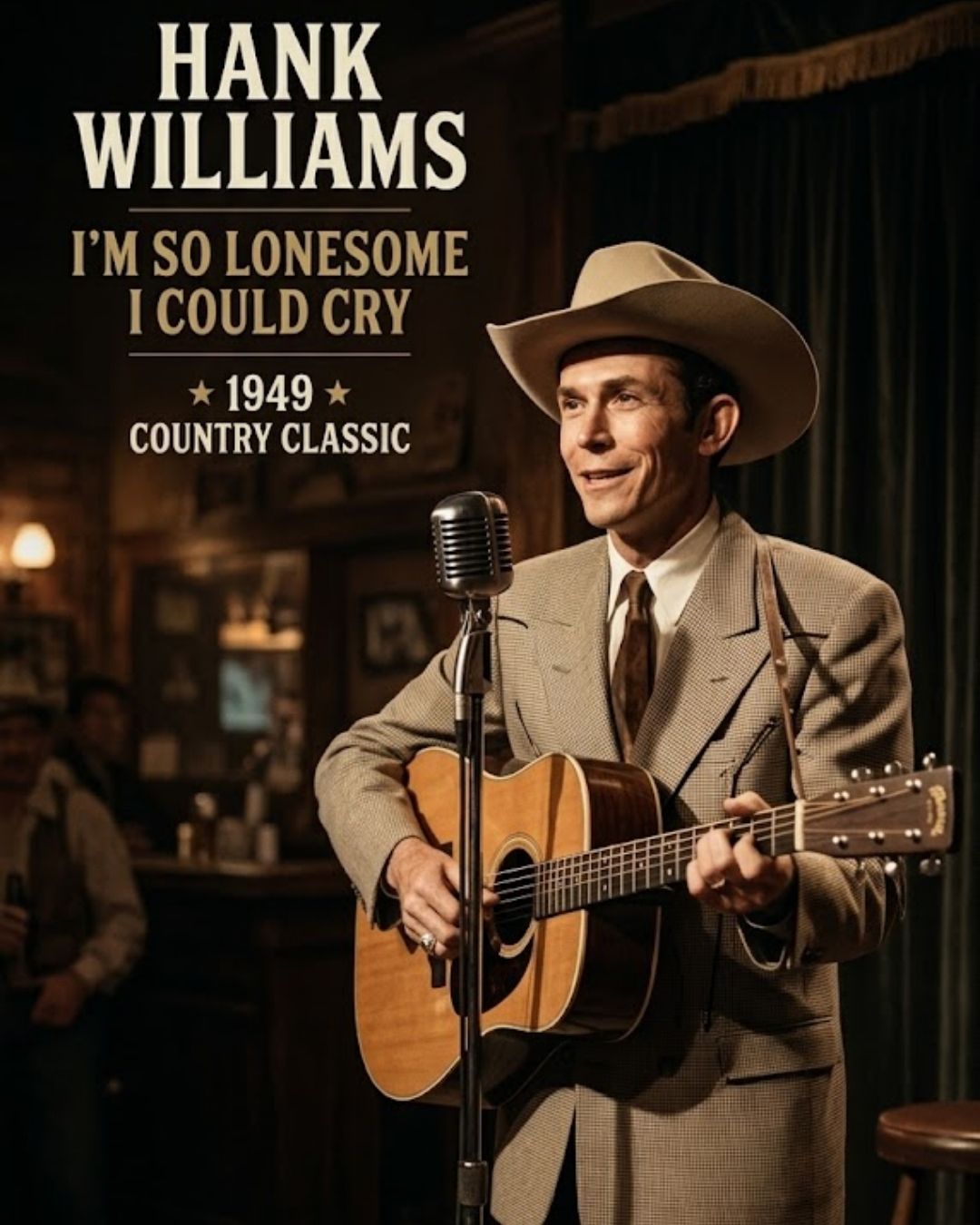
On August 30, 1949, inside Cincinnati’s Herzog Studio, a frail young singer leaned toward the microphone with only an acoustic guitar and an aching spirit. Behind him, Don Helms prepared his steel guitar to strike notes that sounded like weeping. What drove a rising star at the height of commercial momentum to unleash such terrifying, unfiltered despair?
THE DETAILED STORY
By the summer of 1949, Hank Williams had conquered Nashville. His breakthrough performance of “Lovesick Blues” had earned him an unprecedented six encores at the Grand Ole Opry, securing his status as country music’s premier attraction. Yet behind the dazzling white suits and ecstatic crowds lay an agonizing personal reality. Williams was trapped in a volatile, disintegrating marriage with Audrey Sheppard, while battling severe back pain caused by undiagnosed spina bifida occulta and self-medicating with heavy drinking. In the rare quiet spaces between chaotic tour dates, he sought refuge not in celebration, but in stark, poetic confession.
Legend holds that Williams initially sketched the lyrics as a spoken-word recitation, intending it for his moralizing alter ego, Luke the Drifter. Recognizing the profound weight of the verse, he chose instead to set it to a fragile, swaying three-quarter waltz. Lyrically, the song broke entirely from the formulaic complaints of contemporary hillbilly music. Williams did not merely lament a broken heart; he projected his inner torment onto the American landscape. The natural world became an accomplice to his grief: a whippoorwill too weary to fly, a midnight train weeping across distant tracks, and a dying moon hiding behind a cloud.
When Williams entered Cincinnati’s Herzog Studio to record the track, the sonic arrangement was kept deliberately skeletal. Don Helms provided the track’s iconic voice through his steel guitar, playing high, piercing chimes on the upper register that echoed Williams’ mournful vocal breaks. Ernie Newton’s walking bass and Jerry Rivers’ gentle fiddle provided an unobtrusive foundation, allowing the desolate poetry to command the foreground. Williams delivered each line with an aching cadence, letting his voice crack on the sustained vowels to reveal raw emotion without theatrical pretense. There were no lavish studio embellishments or sweet harmonies, only naked grief preserved in analog warmth.
MGM Records viewed the composition as too bleak for radio playlists and relegated it to the B-side of the jaunty novelty tune “My Bucket’s Got a Hole in It”. Yet history dramatically reversed the label’s priorities. While the A-side enjoyed fleeting commercial favor, “I’m So Lonesome I Could Cry” emerged as the foundational cornerstone of modern American songwriting, hailed by icons from Bob Dylan to Elvis Presley as the definitive portrait of human loneliness.