INTRODUCTION
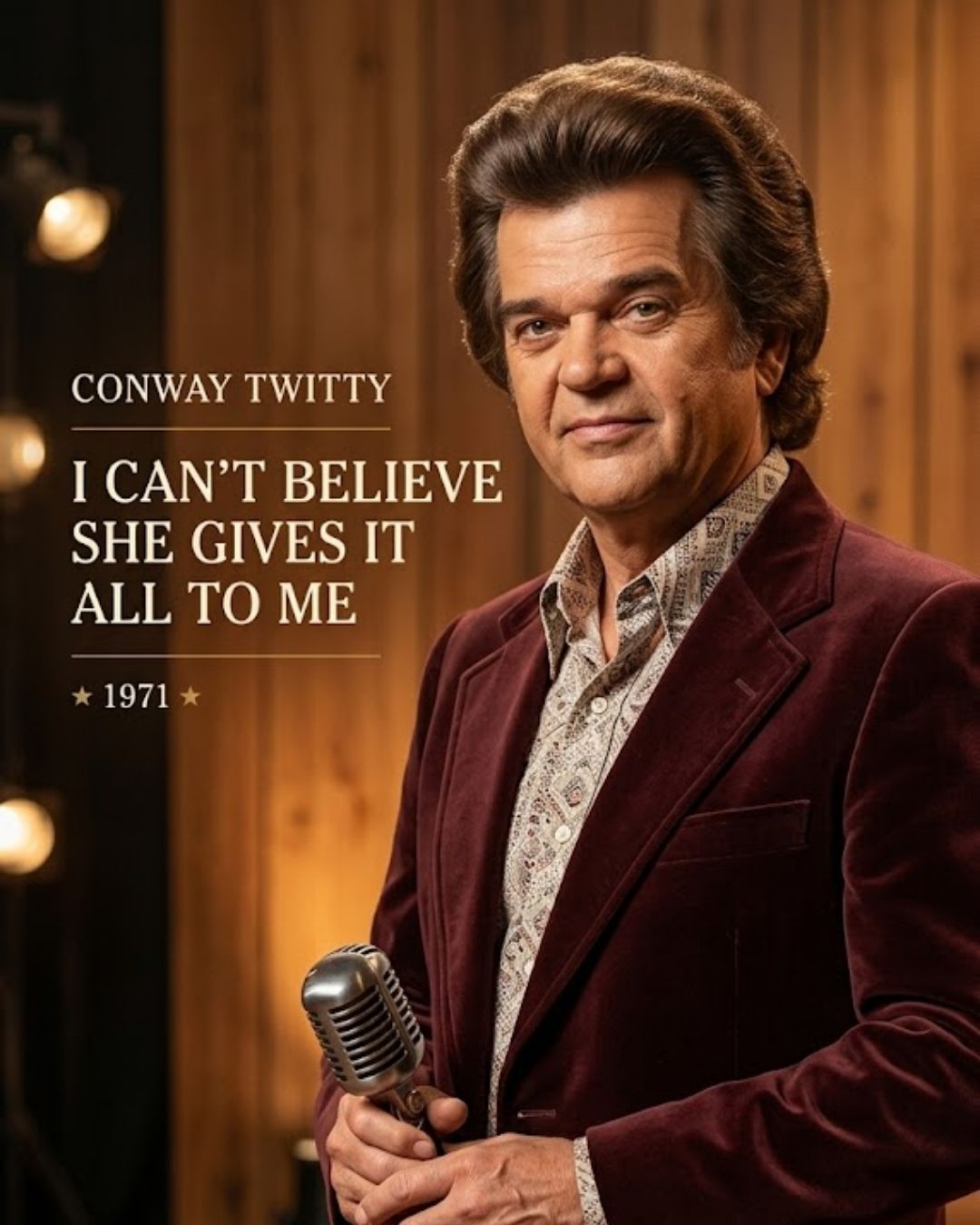
On January 4, 1974, Conway Twitty stepped into Bradley’s Barn in Mount Juliet, Tennessee, carrying an uncharacteristically intimate self-penned ballad. Rather than the dramatic heartbreak that often defined classic country radio, this quiet masterpiece celebrated absolute gratitude and emotional surrender. But how did a song recorded years earlier suddenly become one of the defining country anthems of late 1976?
THE DETAILED STORY
By the mid-1970s, Conway Twitty had established himself as Nashville’s premier interpreter of romantic intimacy, earning the enduring moniker “The High Priest of Country Music”. While many contemporary peers relied almost exclusively on outside songwriting talent in Music City, Twitty possessed a rare, instinctive gift for crafting deeply personal narratives from his own pen. When he brought “I Can’t Believe She Gives It All to Me” to legendary producer Owen Bradley at Bradley’s Barn studio, the artistic objective was not to deliver a booming honky-tonk number, but rather to construct a tender, slow-burning portrait of utter awe and domestic reverence.
Lyrically, the composition stands as a striking departure from the era’s prevailing country music tropes. Instead of chronicling bitter infidelity, barroom loneliness, or shattered vows, Twitty explored the humbling sensation of unconditional devotion. He portrayed an ordinary man who gazes upon his partner with genuine disbelief, deeply overwhelmed that someone so beautiful, gentle, and pure chooses to bestow her entire heart, soul, and physical affection upon him. His signature vocal delivery—a nuanced blend of spoken-word intimacy, raspy sighs, and soaring melodic passion—elevated the lyric from a standard love song into an emotionally charged, sacred confession that resonated deeply across generations.
Musically, Bradley framed Twitty’s rich baritone with immaculate countrypolitan finesse. Built around an understated rhythm section, gentle acoustic strums, and expressive pedal steel guitar embellishments, the track breathes with deliberate restraint. The arrangement never competes with the singer’s expressive phrasing; instead, it gently cushions every whispered dynamic shift and subtle pause. This sonic spaciousness creates an aura of late-night solitude, giving listeners the distinct sensation of eavesdropping on a deeply private moment of marital gratitude and emotional peace.
Released as a lead single in November 1976, the song resonated instantly with radio audiences throughout the United States and Canada. It climbed steadily across national playlists before capturing the number one spot on Billboard in early 1977, marking Twitty’s 18th career chart-topper on the Hot Country Songs survey. The track proved that mature romance and respectful vulnerability could dominate commercial radio just as effectively as traditional tales of sorrow. Today, the recording endures as a timeless masterclass in country songwriting, vocal sincerity, and Nashville craftsmanship.