INTRODUCTION
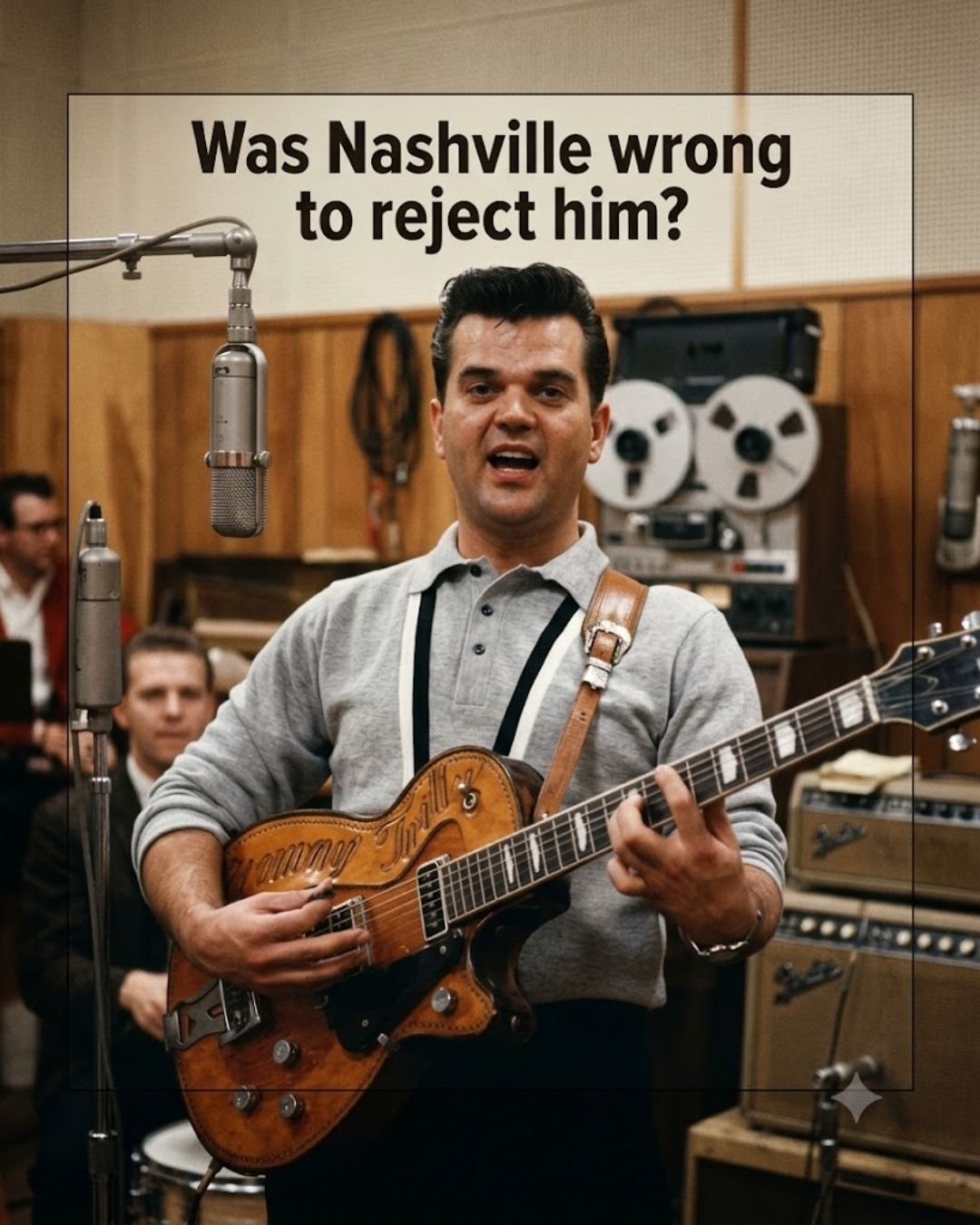
In the mid-1960s, a polished artist who had topped the Billboard Hot 100 sat inside a quiet office on Music Row, facing outright rejection from the very industry he admired. Harold Lloyd Jenkins, known to millions worldwide as Conway Twitty, had already tasted international pop fame, moving millions of records across the globe. Yet as he walked into Nashville recording studios seeking to record traditional country music, prominent record executives treated him not as an elite talent, but as an interloper whose glory days were long behind him. Insiders openly whispered that his arrival was a cynical, desperate bid to rescue a fading career. How did a global rockabilly icon dismantle Nashville’s fierce skepticism to secure the most improbable second act in modern music history?
THE DETAILED STORY
When Conway Twitty released “It’s Only Make Believe” in 1958, the track surged to No. 1 on the Billboard pop charts and transformed him into an international teen idol. He appeared in Hollywood films, toured major arenas, and earned a fortune singing high-energy rockabilly and romantic pop ballads. Yet Jenkins had grown up listening to the Grand Ole Opry in Helena, Arkansas, and the pull toward traditional honky-tonk remained unshakeable. By 1965, despite skepticism from his managers, he made the calculated decision to walk away from pop entirely.
Nashville in 1965 was notoriously insular. The Music Row establishment prided itself on protecting the purity of the country format from outside commercial trends. Label executives viewed incoming rock artists with immense suspicion, seeing them as opportunists attempting to squeeze one last paycheck out of an aging demographic. Columbia Records executive Don Law initially rejected him, and industry figures openly mocked the idea of a former rock and roller headlining country charts.
The turning point arrived when producer Owen Bradley heard Jenkins’ raw vocal depth and signed him to Decca Records. Bradley understood that Jenkins was not adopting a costume; he was returning home. The sessions stripped away the polished pop echo, relying instead on weeping steel guitars and deliberate phrasing. In 1968, his single “Next in Line” reached No. 1 on the Billboard Hot Country Singles chart, completely silencing his critics.
That breakthrough sparked one of the most dominant runs in American music history. Twitty went on to capture an astounding 55 No. 1 singles across major trade charts over the next two decades, cementing his place in the Country Music Hall of Fame. His transition shattered the myth that country audiences would forever reject pop pioneers, laying the strategic foundation for generations of boundary-crossing artists.