INTRODUCTION
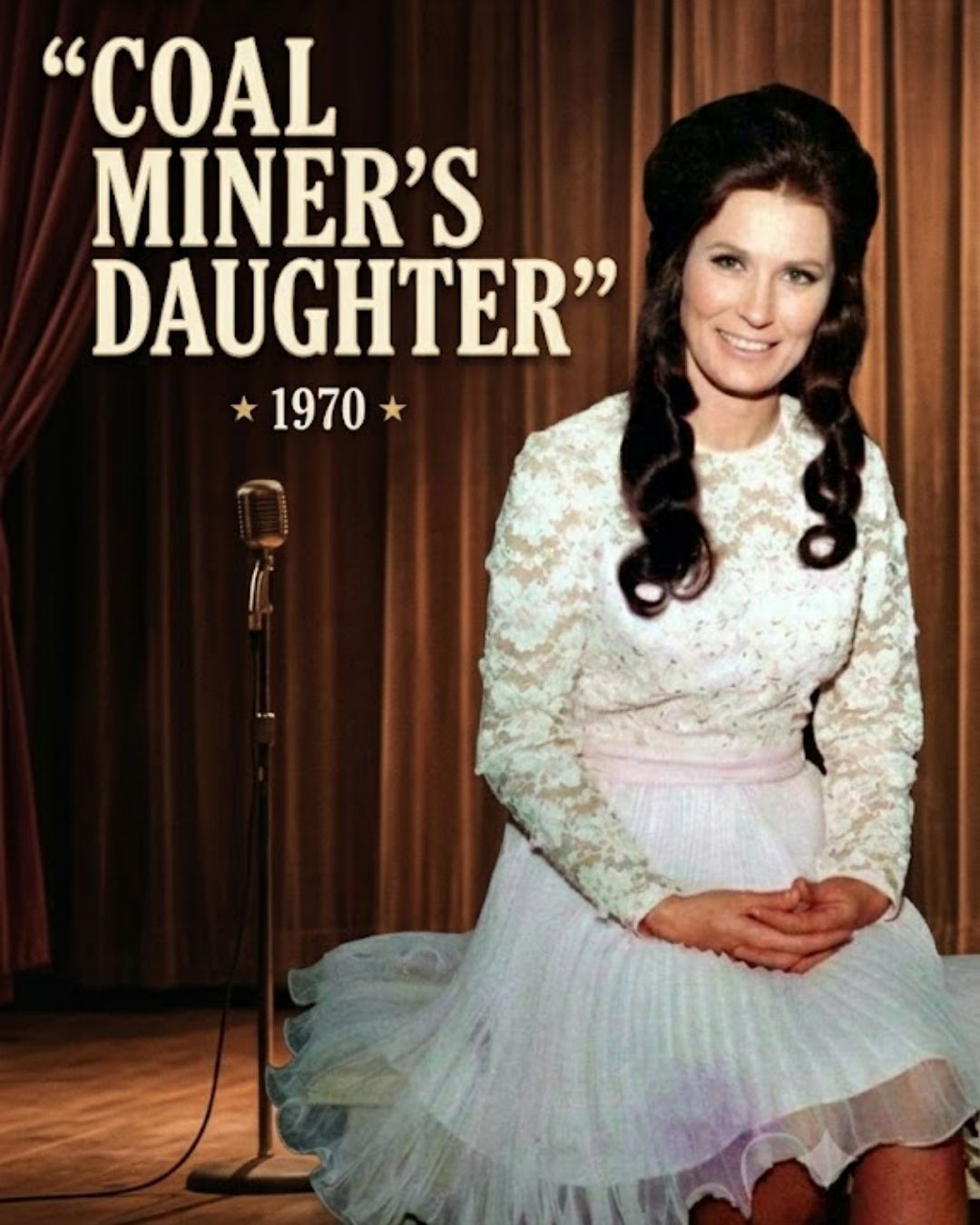
Inside Bradley’s Barn studio in Mount Juliet, Tennessee, producer Owen Bradley urged Loretta Lynn to trim nine verses down to six. Holding a pencil and yellow legal paper, the Kentucky native refused to dilute her upbringing. She insisted every detail of Butcher Hollow remain intact. Why did this unvarnished recollection of rural poverty become one of music history’s greatest triumphs?
THE DETAILED STORY
When Loretta Lynn sat down with a yellow legal pad in 1969, country music was rapidly embracing polished orchestral arrangements. Yet Lynn looked backward into the misty hollows of Van Lear, Kentucky, to craft an unadorned portrait of survival. Her father, Melvin “Ted” Webb, had spent decades laboring underground for the Consolidation Coal Company, trading his physical health for meager wages during the difficult years of the Great Depression. Rather than softening the harsh realities of her mountain youth, Lynn chronicled every memory with crystalline clarity and unshakeable pride.
Under the guidance of legendary producer Owen Bradley at Bradley’s Barn in Mount Juliet, Tennessee, the recording captured a delicate balance between rural mountain authenticity and the emerging Nashville sound. The arrangement was intentionally understated, allowing Lynn’s bright, emotive Appalachian soprano to lead the narrative without unnecessary studio embellishment. Acoustic guitar strums, subtle steel accents, and a steady, workaday rhythm mirrored the relentless cadence of daily manual labor. Lynn painted vivid sensory vignettes: scrubbing laundry on a washboard until her mother’s fingers bled, drawing water from a cold well, and walking barefoot through summer dust.
What separated the song from conventional country ballads was its total absence of self-pity or bitterness. Lynn presented poverty not as a badge of shame or a romanticized myth, but as lived human truth defined by parental sacrifice and unconditional familial devotion. When released in October 1970, the track struck an immediate emotional chord across America, climbing to number one on the Billboard Hot Country Singles chart by December and crossing over onto the mainstream pop charts.
The cultural resonance of the song proved monumental and transformative. It redefined the creative possibilities for female singer-songwriters in Nashville, proving that deeply personal, unvarnished working-class narratives could achieve massive commercial dominance. The song provided the title and emotional foundation for Lynn’s bestselling 1976 autobiography and the acclaimed 1980 biographical film that earned actress Sissy Spacek an Academy Award. Inducted into the National Recording Registry by the Library of Congress in 2009, the track remains a timeless monument to the grit of the American working class. Through sheer honesty, Lynn immortalized Butcher Hollow, ensuring that the dignity of coal-mining families would echo across music history forever.