INTRODUCTION
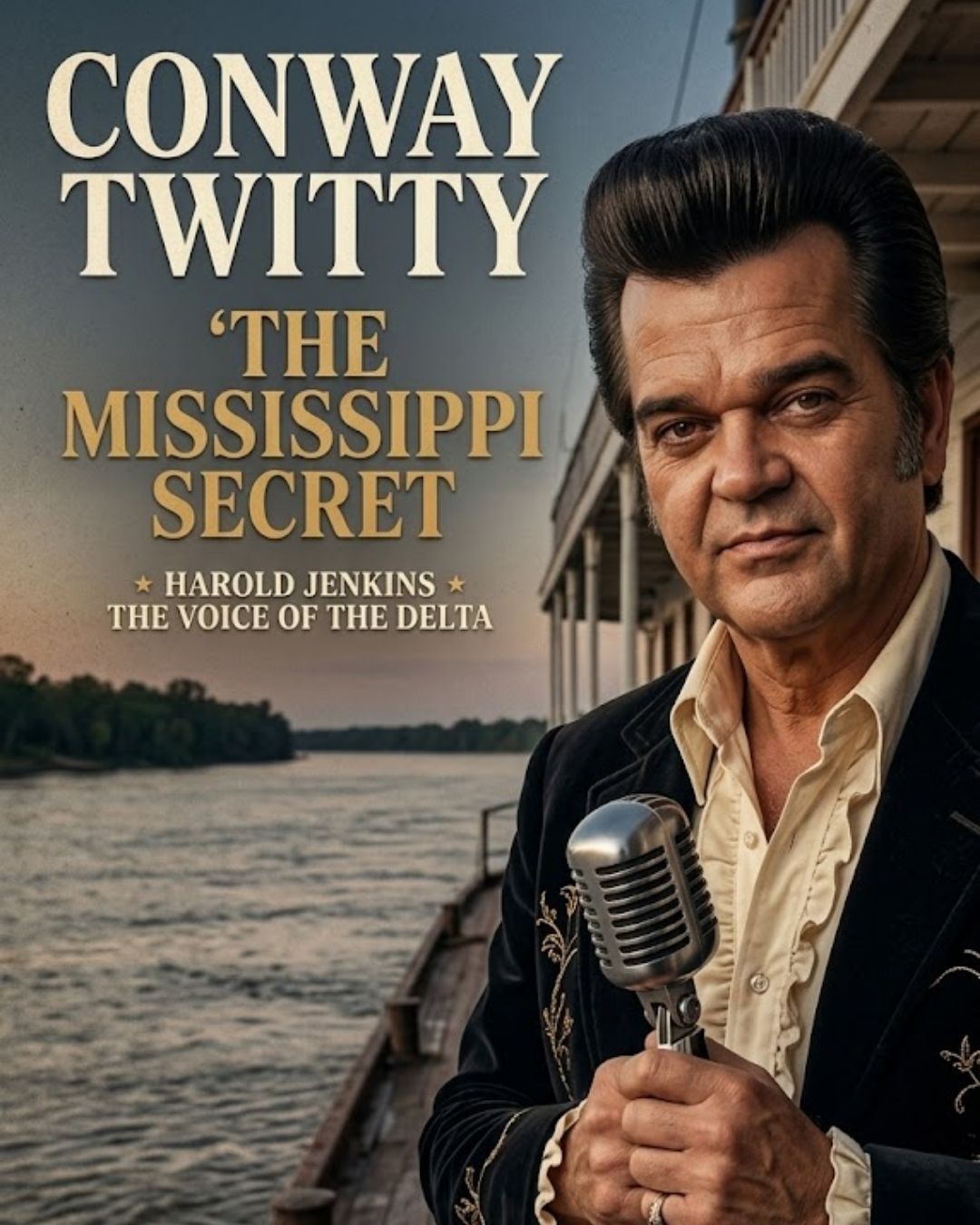
Long before the flashing marquees of Nashville and the polished stages of the Grand Ole Opry, the boy who would become Conway Twitty stood on the wooden deck of a Mississippi River ferryboat. Born Harold Lloyd Jenkins in 1933, he spent his formative years in Helena, Arkansas, where the rhythmic churn of paddlewheels and the deep, mournful hum of diesel engines formed the soundtrack of his daily life. His father, Floyd Jenkins, piloted the vessel across the muddy expanse, navigating dense fog and unpredictable currents while young Harold absorbed the atmospheric isolation of the Delta. It was an upbringing removed from commercial polish, steeped instead in raw Southern heritage. How did the quiet solitude of an Arkansas river crossing transform a ferryman’s son into one of the most resonant voices in American music history?
THE DETAILED STORY
The Mississippi River has long served as a cradle for American art, but for Harold Lloyd Jenkins, it was a masterclass in tone and timing. While drifting between the riverbanks, the young boy listened intently to the African American deckhands and local bluesmen who gathered near the Helena docks. Their soulful cadences, paired with the steady, bass-heavy vibrations of the ferry engine, introduced him to a style of singing rooted in unvarnished sincerity rather than theatrical bravado. He acquired his first guitar at age ten, practicing for hours beneath the wide Southern sky, translating the melancholy weight of river life into melodic phrasing.
When he adopted the stage name Conway Twitty in the late 1950s—initially capturing international rockabilly fame with his 1958 breakthrough hit “It’s Only Make Believe”—the recording industry celebrated his commanding delivery. Yet his truest artistic evolution occurred when he transitioned fully into country music during the mid-1960s. Where many contemporaries relied on standard nasal twang or uptempo novelty arrangements, Twitty deployed a rich, brooding baritone characterized by dramatic pauses, nuanced control, and immense emotional gravity. Producers and historians frequently noted that his vocal delivery felt uniquely intimate, possessing a natural resonance that seemed drawn directly from the humid Delta mist.
This distinct sonic signature ultimately propelled Twitty to an astonishing fifty-five number-one singles across major trade charts, standing as a testament to the enduring power of his understated delivery. He did not merely sing lyrics; he delivered dramatic, heartfelt monologues set to melody, consistently inviting listeners into a private confession. Musicologists trace this conversational intimacy directly back to his formative years on the water, where communicating across wide rivers required clarity, patience, and deep vocal projection. By grounding his legendary craft in the working-class realities of his Mississippi boyhood, Twitty permanently broadened the emotional scope of country music, proving that timeless artistry often begins far from the limelight, forged in the quiet currents of the American heartland.