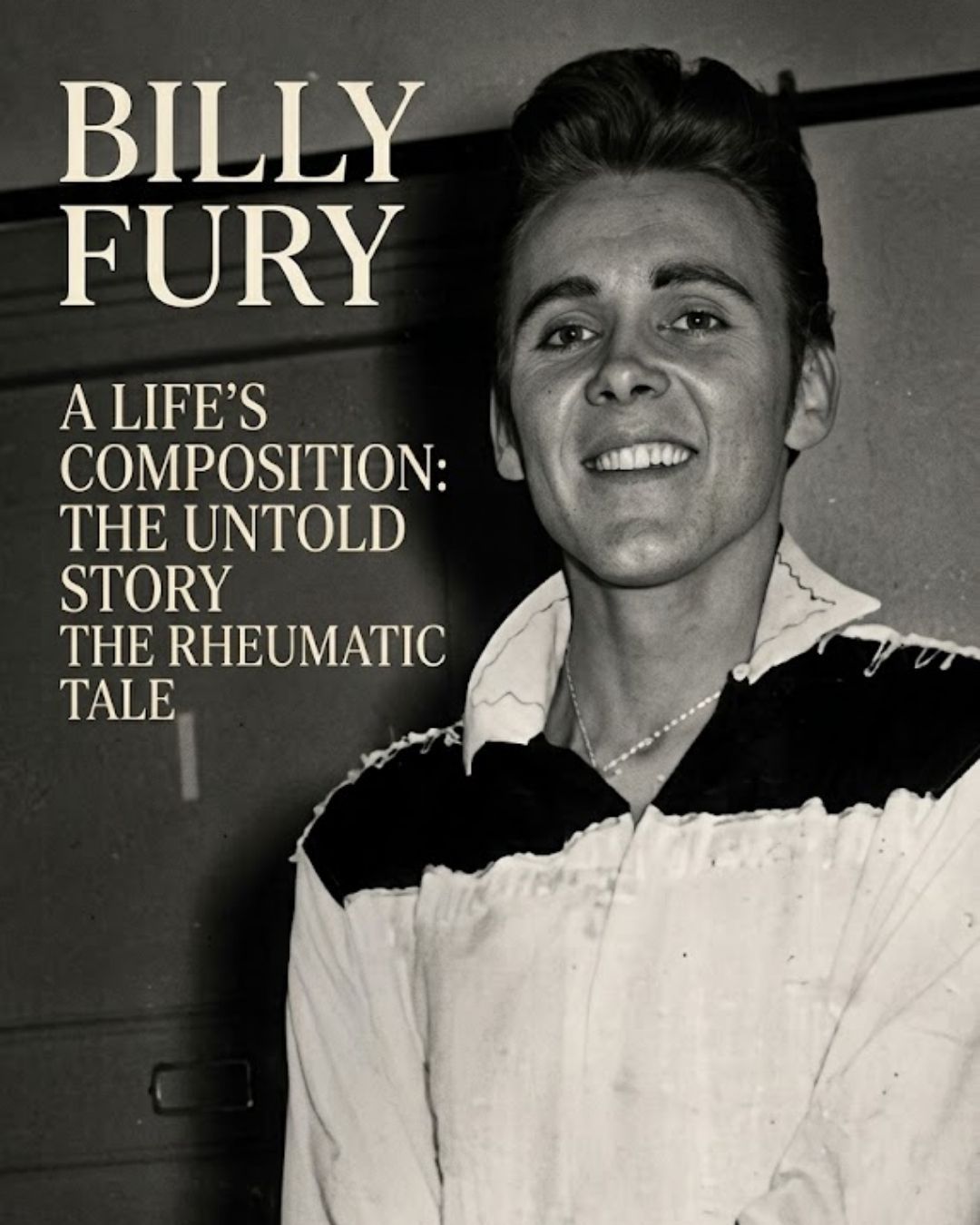
INTRODUCTION
Inside a modest terraced house in Dingle, Liverpool, during the bitter winter of 1946, six-year-old Ronald Wycherley lay immobilized by agony. The clinical verdict arrived with devastating certainty: acute rheumatic fever had irreparably scarred his heart valves. Physicians quietly warned his working-class parents that their eldest son would likely not survive past thirty. For most children, such a verdict would extinguish ambition before it ignited, confining them to fragile domestic seclusion. Yet, as Ronald transformed into Billy Fury—Britain’s brooding rock-and-roll icon—he carried this silent, rhythmic ticking clock deep inside his chest onto every stage. While frantic fans screamed at his electrifying presence and sensual swagger, nobody knew how every breath pushed his physical limits. How did a boy marked by inevitable tragedy turn borrowed time into musical immortality?
THE DETAILED STORY
Growing up near the Mersey docks in Liverpool, Ronald Wycherley never possessed the robust physical endurance of his seafaring peers. His 1946 childhood illness necessitated months of strict bed rest at Alder Hey Children’s Hospital, where he developed an introspective sensitivity and learned the acoustic guitar. By 1958, while earning modest wages as a deckhand on the tugboat Formby, he poured his vulnerability into poignant compositions. On October 1, 1958, he ventured backstage at the Birkenhead Essoldo to offer his original songs to pop impresario Larry Parnes. Stunned by the young man’s charismatic vocal delivery, Parnes shoved him directly onto that evening’s live bill and christened him Billy Fury.
What followed was a golden epoch of British pop history. Fury pioneered the nation’s authentic rockabilly sound with his 1960 landmark album The Sound of Fury, recognized by music historians as the first British rock-and-roll LP written entirely by the artist. Throughout the 1960s, he achieved 24 UK chart hits, equaling the decade’s record established by The Beatles. Standout records like “Halfway to Paradise” and “Jealousy” resonated with an aching, authentic melancholy that distinguished him from every contemporary pop idol.
Behind the velvet curtain, however, the medical prognosis of 1946 remained an inescapable reality. Backstage dressing rooms were frequently equipped with oxygen cylinders, and grueling national tours triggered recurring collapses. Fury underwent major open-heart valve surgeries in 1972 and 1976. When public performance became physically hazardous, he retreated to his tranquil farm in the Welsh borders, dedicating his remaining energy to wildlife conservation before returning to the studio for one final album.
When he passed away on January 28, 1983, at age 42, Britain mourned not merely a teen idol, but a resolute artist who defied medical prophecy. Fury transformed mortal fragility into monumental cultural resonance, proving that timeless artistry often flourishes within the sharpest constraints of human endurance.