INTRODUCTION
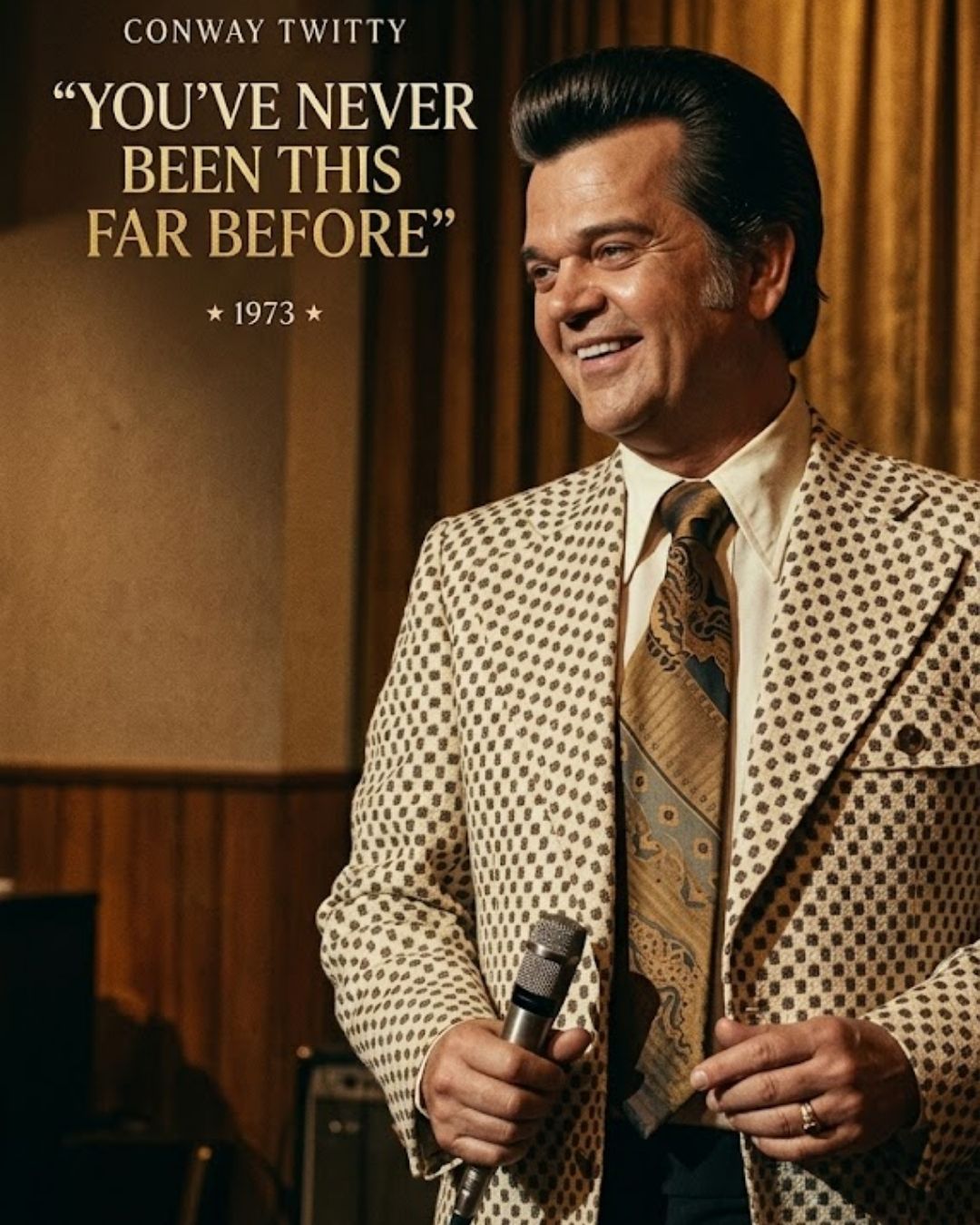
On April 4, 1973, inside Bradley’s Barn in Mount Juliet, Tennessee, Conway Twitty stepped to the microphone to record a self-penned ballad that would stun the Nashville establishment. Producer Owen Bradley added lush strings and delicate guitar accents around an unprecedentedly intimate vocal performance. Why did this tender recording provoke such fierce national backlash upon its arrival?
THE DETAILED STORY
By 1973, Conway Twitty had already established himself as a dominant commercial force in Nashville, yet nothing in his extensive catalog prepared the industry for the raw audacity of this self-penned single. Moving far beyond the conventional country tropes of heartbreak, regret, and honky-tonk lament, Twitty dared to chronicle an intensely private, tender moment of romantic consummation. The narrative captured the breathless threshold of emotional surrender, framing physical intimacy with rare lyrical vulnerability.
Under the visionary helm of producer Owen Bradley at Bradley’s Barn, the sonic architecture was sculpted with consummate cinematic restraint. Hargus “Pig” Robbins provided delicate piano figures, while John Hughey wove signature weeping steel guitar lines around a nuanced rhythm section anchored by bassist Bob Moore and drummer Tommy Markham. Twitty’s vocal performance stood out as an extraordinary masterclass in dynamic tension. Shifting effortlessly from hushed, breathy murmurs to full-throated baritone resonance, he punctuated the verse with rhythmic vocal breaths mimicking a racing heartbeat, drawing listeners directly into the sacred quiet of the room.
Upon its July 1973 release, the track ignited an immediate cultural firestorm across the music industry. Several conservative radio stations across the United States promptly banned the single, condemning its sensual lyrics as scandalous for traditional country airwaves. However, this institutional censorship backfired dramatically. Devoted listeners flooded switchboards demanding to hear the record, transforming public controversy into unprecedented commercial momentum. The song soared to the summit of the Billboard Hot Country Singles chart, remaining at number one for three consecutive weeks and securing Twitty’s tenth solo country chart-topper. Even more remarkably, it crossed cultural divides to climb to number 22 on the Billboard Hot 100, marking his only country single to conquer the pop Top 40.
Beyond its impressive commercial statistics, the track fundamentally expanded the expressive parameters of country music storytelling. Twitty demonstrated that mature romance and sensuality could be articulated with poetic dignity rather than crude shock value. In fearlessly challenging the genre’s conservative boundaries, he opened the door for future generations of country artists to explore adult themes with nuanced authenticity. Decades later, the recording endures as a timeless masterwork of romantic tension, forever cementing Conway Twitty’s legacy as a fearless architect of modern emotional expression.