INTRODUCTION
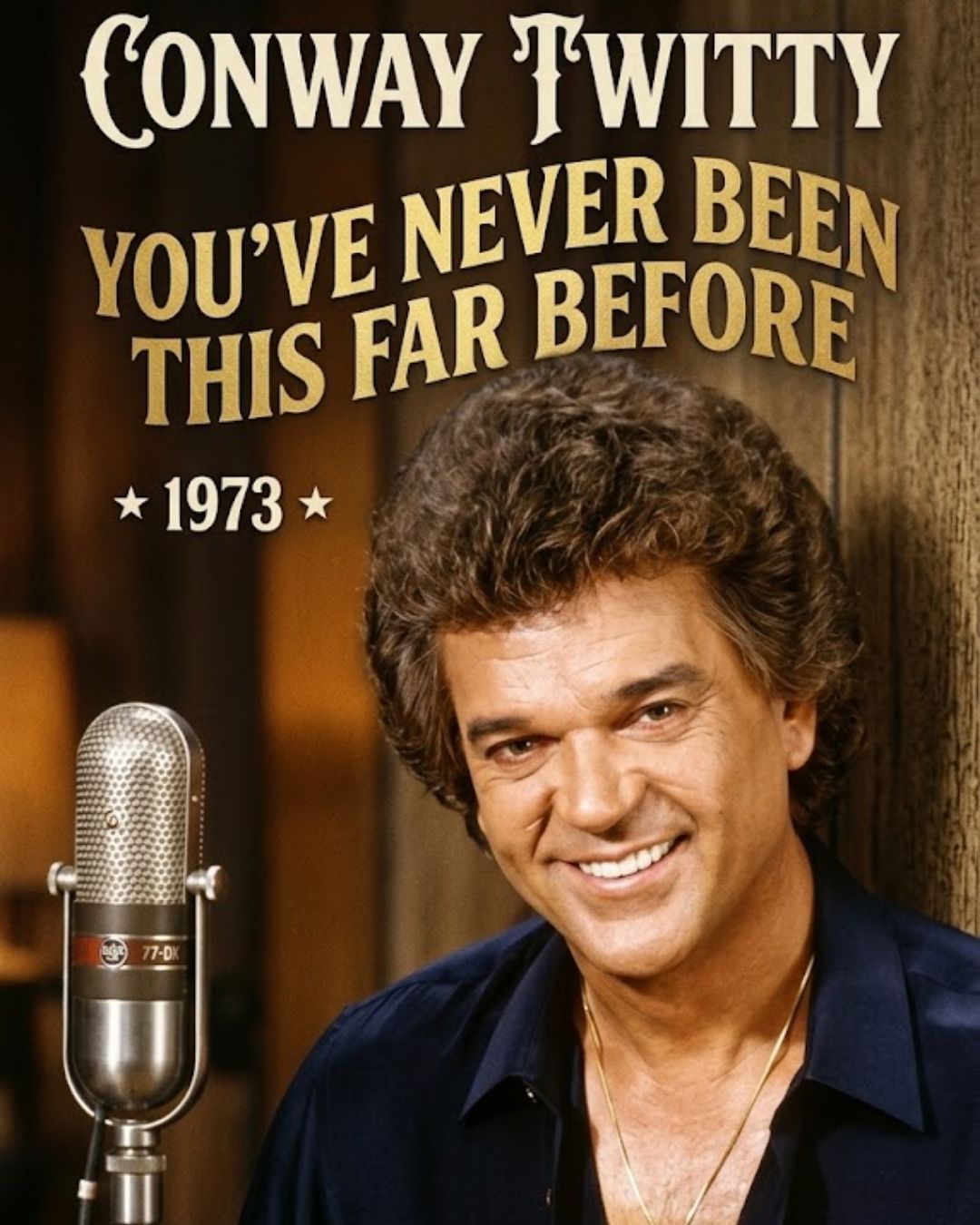
In April 1973, Conway Twitty stepped into Bradley’s Barn in Mount Juliet, Tennessee, carrying lyrics so intimate they would soon scandalize country radio. While conservative disc jockeys branded the recording too sensual for public broadcast, fans responded with unprecedented passion. What made this sultry ballad powerful enough to defy nationwide censorship and permanently alter the genre?
THE DETAILED STORY
By the early 1970s, Conway Twitty had firmly established himself as Nashville royalty, yet his creative ambition pushed far beyond conventional heartbreak songs. Written entirely by Twitty himself, You’ve Never Been This Far Before represented a daring artistic gamble that challenged the conservative boundaries of modern country storytelling. Recorded on April 4, 1973, at Bradley’s Barn under legendary producer Owen Bradley, the session abandoned standard honky-tonk tropes in favor of sparse, atmospheric tension. A steady, heartbeat-like bass groove by Bob Moore anchored the arrangement, allowing Twitty’s purring baritone, understated acoustic strumming, and John Hughey’s crying steel guitar to construct an intoxicating aura of private romance.
Rather than relying on overt sensationalism, Twitty crafted poetic intimacy with surgical precision. His hushed, spoken-word interludes and evocative lyrics depicting trembling hands crossing emotional thresholds captured a couple stepping together into profound passion. However, this frank depiction of romantic surrender provoked immediate resistance. Upon its official release in July 1973, several influential radio programmers deemed the lyricism too sexually suggestive, pulling the record from station rotations across the American South and Midwest. Yet this censorship quickly backfired, sparking immense listener curiosity and transforming the single into an unstoppable cultural phenomenon that dominated jukeboxes nationwide.
The track ascended rapidly, spending three consecutive weeks at No. 1 on the Billboard Hot Country Songs survey and remaining on the charts for sixteen weeks. More remarkably, it crossed format barriers, climbing to No. 22 on the Billboard Hot 100, marking Twitty’s highest-charting solo crossover hit of the modern era. While earlier country records often framed desire through guilt or tragic consequences, Twitty validated tender devotion with complete sincerity. His dynamic vocal control allowed the music to swell alongside the protagonist’s breathing, delivering an immersive sonic experience that felt unprecedented on commercial radio.
Decades later, the recording stands as a masterclass in mood, restraint, and fearless songwriting. It demonstrated that country music fans welcomed mature themes delivered with genuine sophistication, permanently cementing Twitty’s stature as the “High Priest of Country Music.” The enduring power of the track lies in its unflinching emotional authenticity, securing its place among the most influential romantic masterpieces in Nashville history.