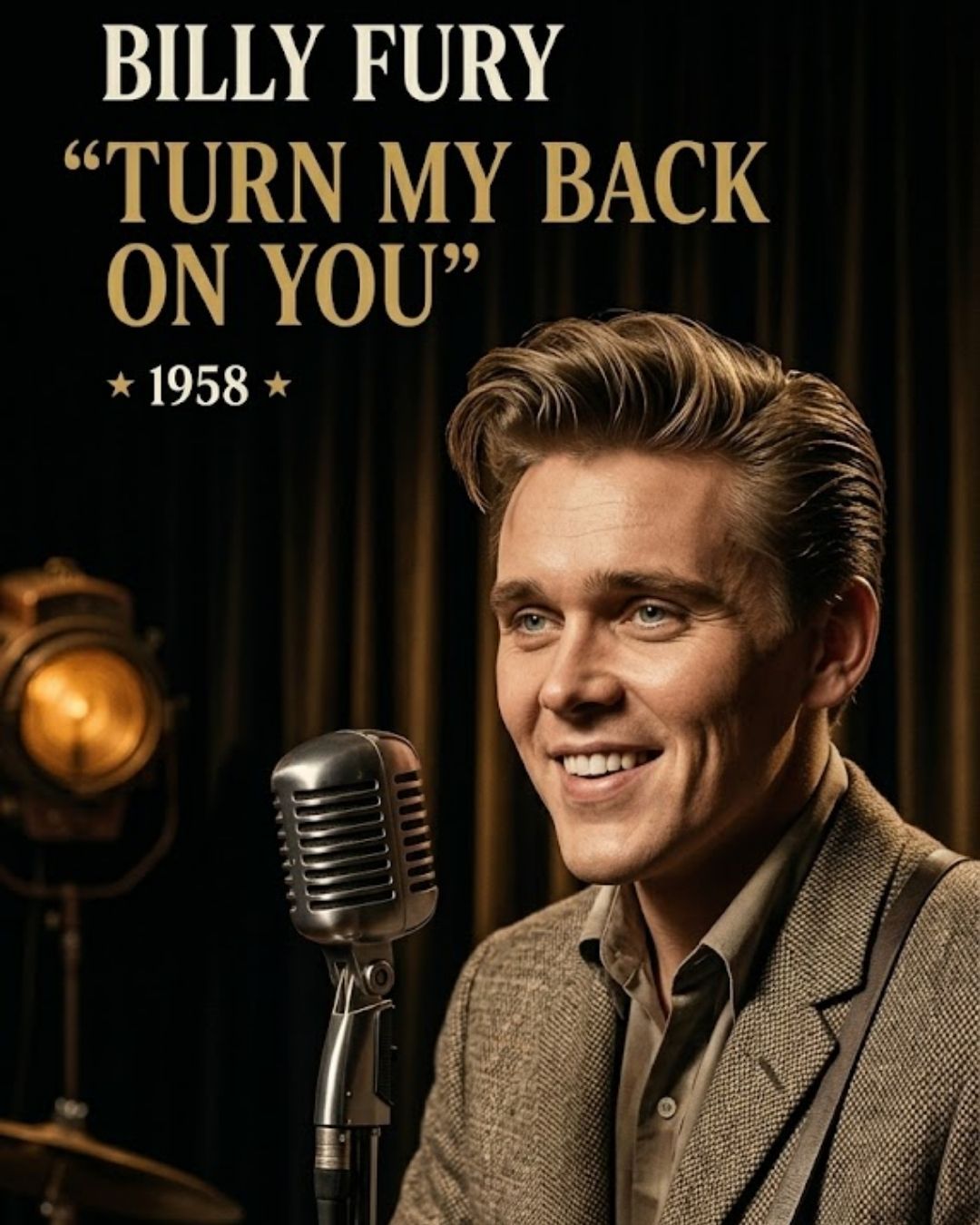
INTRODUCTION
On a chilly session inside Decca Studio 3 in West Hampstead, twenty-year-old Ronald Wycherley stepped up to the microphone without sheet music. Producer Jack Good stripped away the polish, letting raw tape flutter and slapback echo define the performance. What drove a shy Liverpool boy to cut Britain’s most authentic rockabilly anthem before the world even recognized his genius?
THE DETAILED STORY
When Billy Fury entered the studio in 1960 to assemble his seminal 10-inch LP, The Sound of Fury, British pop was trapped in an era of sanitized covers and orchestra-backed crooners. Record executives routinely forced young singers to perform safe Tin Pan Alley material. Fury, however, possessed an instinctive musicality that defied the establishment. Crediting his self-penned compositions to the pseudonym Wilbur Wilberforce to avoid seeming boastful, he insisted on laying down his own uncompromising rockabilly material. “Turn My Back On You” emerged as the rawest, most visceral track from those sessions, demonstrating a masterclass in minimalist tension.
Producer Jack Good understood that Fury’s power lay in unvarnished sincerity rather than glossy commercial sheen. To capture the genuine edge of American Sun Records recordings, Good stripped the studio arrangement down to the bare essentials. While backing vocalists the Four Jays and pianist Reg Guest sat out, guitarist Joe Brown unleashed blistering, Scotty Moore-inspired riffs. Behind him, drummer Andy White—who would later play on The Beatles’ debut single “Love Me Do”—locked into a relentless shuffle alongside Bill Stark’s propulsive upright slap bass.
At the heart of the track was Fury’s vocal delivery, enhanced by heavy console manipulation and slapback flutter echo. Unlike American peers whose rockabilly anthems celebrated hot rods and dance crazes, Fury channeled deep romantic angst and personal betrayal. His wounded baritone shifted seamlessly from simmering vulnerability to defiant rejection. The lyrics depicted a man reclaiming his dignity after heartbreak, refusing to remain subordinate to a deceptive lover. That emotional realism gave the performance an enduring grit that stood in stark contrast to the sugary teen-idol ballads dominating the contemporary British airwaves.
Though shifting commercial tides soon pushed him toward lush orchestral ballads, “Turn My Back On You” stands as an unassailable milestone in UK musical history. Decades later, historians and critics celebrate this landmark recording as irrefutable proof that Britain had developed its own fiery rock & roll language years before the Merseybeat revolution took the globe by storm. Fury did not simply copy his transatlantic heroes; he redefined the genre with fierce originality, profound working-class grit, and an enduring emotional power that still reverberates today.