INTRODUCTION
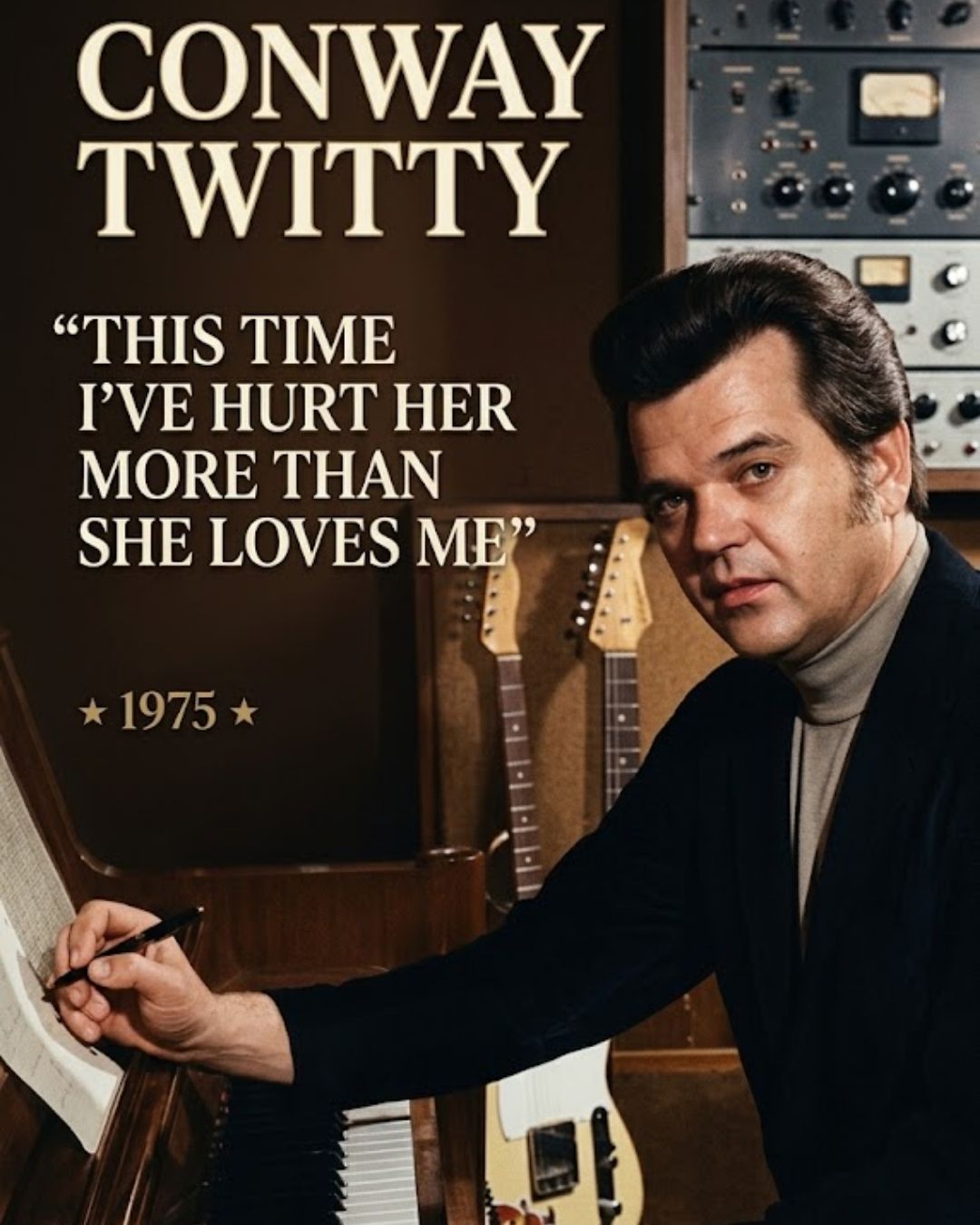
On July 10, 1975, inside Bradley’s Barn in Mount Juliet, Tennessee, producer Owen Bradley cued the tape for a session that would redefine heartbreak. Conway Twitty stood before the microphone, ready to cut an unsparing ballad written by an unknown songwriter named Earl Thomas Conley. Why did this particular recording mark an irreversible turning point for traditional country storytelling?
THE DETAILED STORY
Before “This Time I’ve Hurt Her More Than She Loves Me” became a defining milestone in classic country music, songwriter Earl Thomas Conley spent years agonizing over its central premise. The core concept originated from Mary Larkin, who drew raw inspiration from the mounting emotional strain within her own marriage to music executive Nelson Larkin. Conley initially struggled with the composition, setting the early draft aside because he felt the emotional mechanics were misaligned. Only after relocating to Nashville did he reconstruct the verses, honing an uncompromising narrative of domestic tragedy: the exact, agonizing moment a partner’s capacity to endure neglect is permanently exhausted.
When Conway Twitty received Conley’s spec demo at his Nashville office, he immediately recognized an unmatched maturity in the song’s perspective. In the mid-1970s, honky-tonk anthems frequently romanticized the wandering, hard-drinking protagonist. Yet this composition completely shattered that familiar trope. It forced the narrator into absolute moral accountability, opening with the chilling observation of a lover wearing that unmistakable “falling out of love look”. The protagonist openly admits that his reckless lifestyle, chronic drinking, and broken promises on the family Bible have finally crossed the fatal threshold into irreversible heartbreak.
Recorded at Bradley’s Barn under the meticulous production of Owen Bradley, the arrangement eschewed orchestral bombast in favor of suffocating intimacy. Steel guitarist John Hughey delivered weeping, masterfully placed accents, while pianist Hargus “Pig” Robbins and guitarist Grady Martin established a somber, deliberate tempo. Over this sparse sonic foundation, Twitty delivered one of the most emotionally nuanced vocal performances of his storied career. Moving effortlessly from gravelly contrition to an aching falsetto cry in the upper register, Twitty did not seek pity; he embodied genuine remorse.
Released in late 1975 as the lead single from the album Twitty, the track climbed rapidly to the peak of the Billboard Hot Country Singles chart in January 1976. It not only solidified Twitty’s standing as the unrivaled master of adult emotional drama, but also launched Conley’s career as one of country music’s most revered craftsmen. Decades later, the recording endures as an essential masterclass in country realism, proving that true artistry lies in confronting the quiet ruins of our own making.