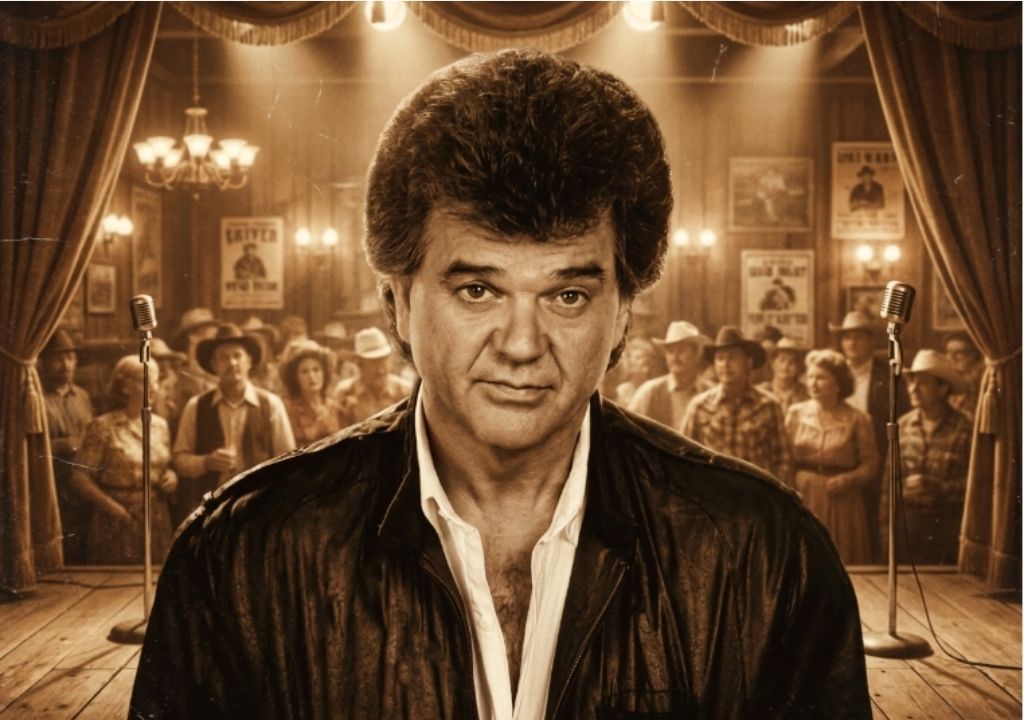
Introduction
There is a unique, irreplaceable atmosphere that takes over a room when the night grows late, the world goes quiet, and the rhythmic patter of rain begins to drum against the windowpane. It is a setting that naturally invites reflection, pulling forgotten memories from the shadows and turning the mind toward old, familiar longings. Few songs in the history of American music capture this exact emotional temperature quite like “Rainy Night In Georgia.” Originally penned by the master of swamp rock, Tony Joe White, and made immortal by Brook Benton, the song underwent a breathtaking transformation in 1993. Brought together for the landmark collaborative album Rhythm, Country and Blues, country music icon Conway Twitty and soul legend Sam Moore joined forces to deliver a rendition that stands as a staggering, cinematic masterpiece of vocal storytelling.
To fully appreciate this recording, one must look at the immense musical lineages colliding within it. Conway Twitty was the definitive high priest of country music romance, a man whose growling, emotionally charged delivery had spent decades making listeners feel every ounce of heartbreak, passion, and vulnerability standard prose could never convey. On the other side stood Sam Moore, the volcanic voice behind the legendary soul duo Sam & Dave, representing the absolute pinnacle of dynamic, gospel-infused Southern R&B. On paper, it was a meeting of two distinct musical worlds; in reality, it was a beautiful reminder that country and soul are merely two branches of the very same emotional root.
The performance unfolds like a timeless noir film, opening with a slow, sultry groove that instantly evokes the image of a solitary traveler wandering down a damp, misty street beneath the lonely glow of flickering streetlights. When Conway takes the first verse, his voice is a deep, weathered purr, rich with the wisdom of a man who has lived through a thousand lonely midnights. Tragically, this would be one of the final recordings Conway ever made before his passing in June 1993, a fact that imbues his performance with an almost haunting, prophetic weight. When Sam Moore enters, the contrast is spectacular. His voice rises with an effortless, soaring passion, injecting a soulful ache that perfectly complements Conway’s grounded, heartbreaking gravitas. They trade lines not as competitors, but as two old friends sharing a heavy burden, their harmonies intertwining like smoke rising from a late-night hearth.
As the track reaches its emotional peak, the production allows both men to unleash the full depth of their expressive powers. The instrumentation remains beautifully balanced—elegant blues-tinted guitar licks, a steady, hypnotic bassline, and a swelling horn section that mimics the rising tide of internal sorrow. It is a masterclass in musical empathy. Conway and Sam take a song about profound isolation and turn it into a shared sanctuary where anyone who has ever felt lonely, forgotten, or far from home can find solace. Even decades after its release, this extraordinary duet remains a shimmering testament to the power of vocal artistry, reminding us that when true legends speak from the heart, the artificial boundaries of genre simply melt away into the pouring rain.