INTRODUCTION
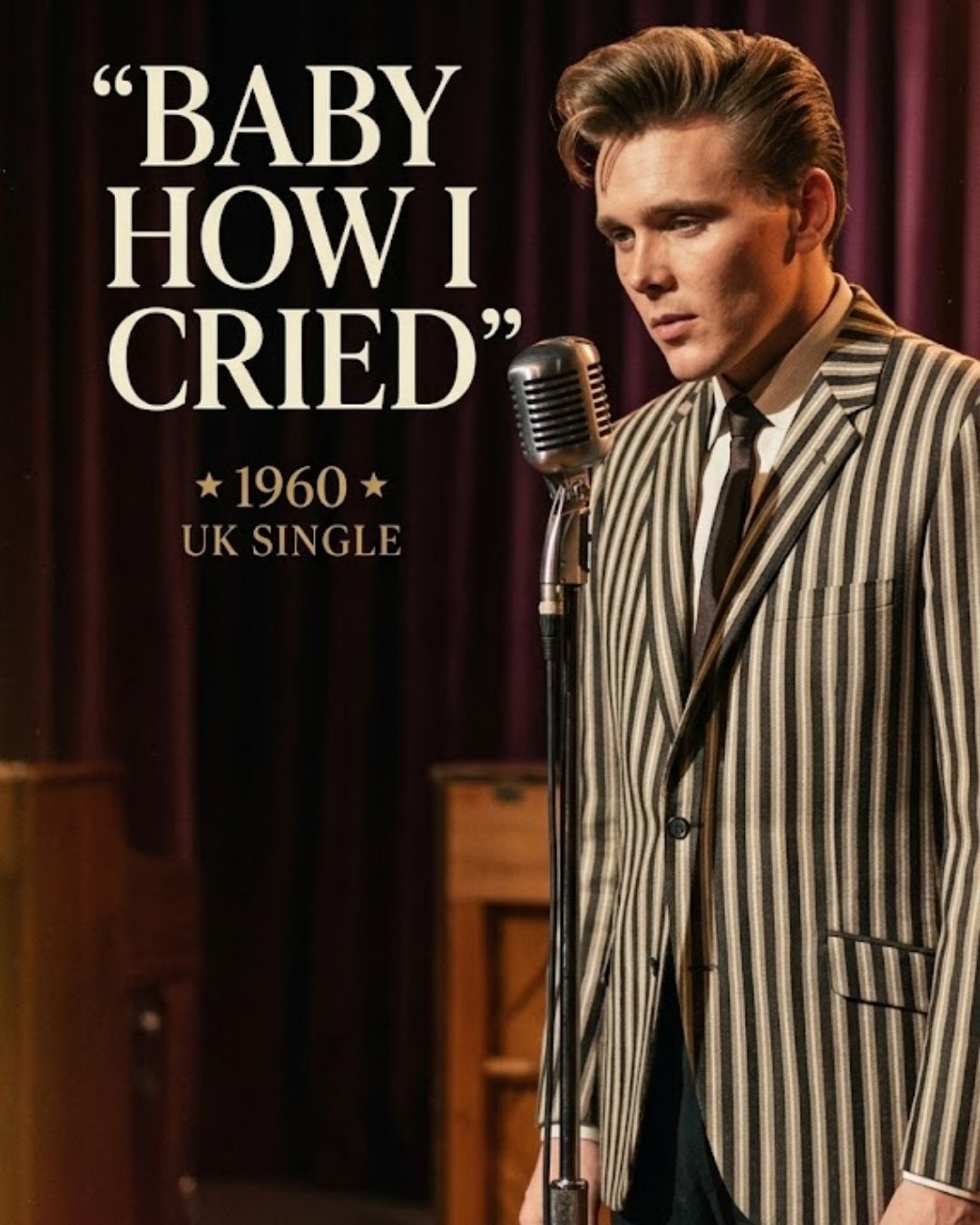
On January 8, 1960, nineteen-year-old Ronald Wycherley stood before the microphone at Decca Studios in West Hampstead, London. Known to the nation as Billy Fury, the Liverpool dock worker turned teen idol carried a frail heart and a profound, quiet sorrow. How did an unheralded B-side capture a level of emotional truth that transformed British rock history forever?
THE DETAILED STORY
When impresario Larry Parnes discovered young Ronald Wycherley backstage at Birkenhead’s Essoldo Theatre in 1958, he expected to manage another pliable pop idol. Instead, he encountered an instinctive singer-songwriter possessing a brooding sensitivity that early British rock had never witnessed. By January 1960, as recording sessions commenced at Decca Studios, Fury insisted on cutting his own original compositions. While the infectious rockabilly track “Colette” was selected as the commercial A-side, it was the delicate flip-side, “Baby How I Cried,” that truly revealed the Liverpool artist’s deep interior world.
Musically, “Baby How I Cried” broke away entirely from the loud, formulaic skiffle and polished novelty pop dominating the British airwaves. Built upon an exceptionally sparse arrangement of gentle acoustic rhythm, understated electric guitar flourishes, and atmospheric studio reverb, the track created an intimate, almost spectral sonic landscape. Fury’s vocal delivery drew comparisons to Gene Vincent and early Elvis Presley, yet it possessed a distinctly haunting European melancholy. Rather than projecting standard teenage swagger, he approached the microphone with hushed restraint, allowing his voice to crack with authentic, unadorned desolation.
This vulnerability was deeply anchored in Fury’s personal reality. Having contracted severe rheumatic fever during childhood, which permanently weakened his heart valves, he lived with an acute awareness of his fragile lifespan. That haunting sense of fleeting time permeated his songwriting. In “Baby How I Cried,” the grief is never performative; it is a quiet, devastating confession of romantic loss, loneliness, and emotional surrender. At a time when male pop stars were pressured to project invincible bravado, Fury bravely introduced an entirely new archetype of male tenderness and poetic sorrow.
When Decca released the single in January 1960, “Colette” quickly ascended to number nine on the UK Singles Chart, establishing Fury as a national sensation. However, discerning listeners, critics, and fellow musicians repeatedly turned the vinyl over to marvel at “Baby How I Cried”. The track served as a crucial creative milestone, foreshadowing the historic triumph of his landmark 1960 album, The Sound of Fury. More than six decades later, “Baby How I Cried” endures as a masterclass in rock ‘n’ roll intimacy, proving that quiet sincerity resonates far longer than manufactured trends.