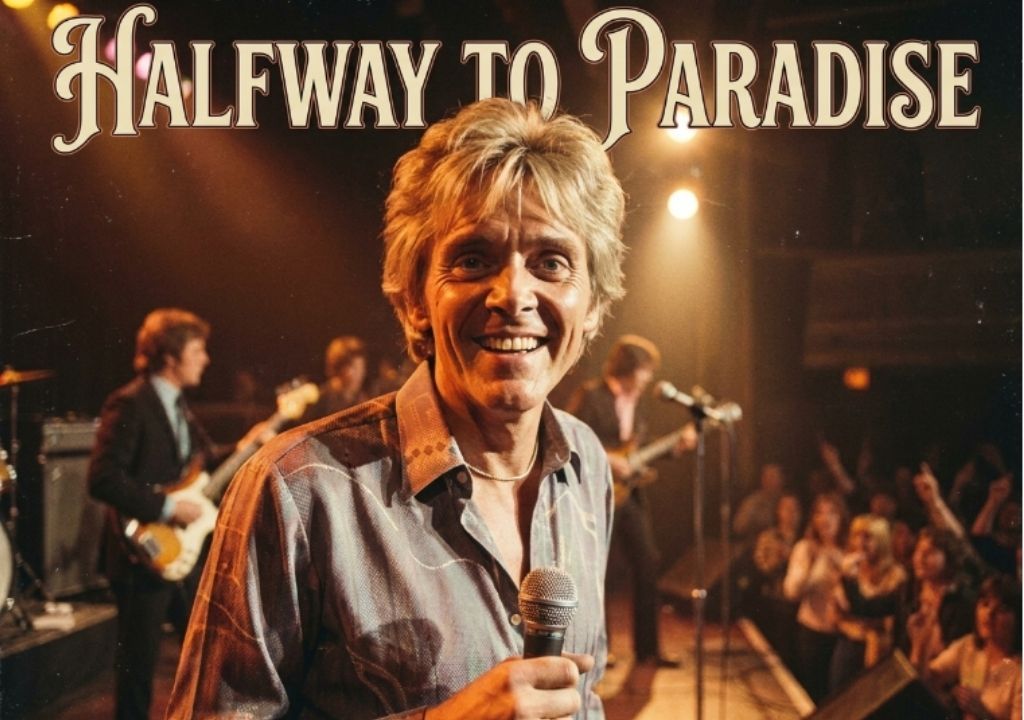
Introduction
Billy Fury remains one of the most enigmatic yet profoundly impactful figures of the British rock and roll revolution. Often described as the UK’s answer to Elvis Presley, Fury possessed a rare, vulnerable magnetism that separated him from his contemporaries. While others relied on sheer energetic showmanship, Fury brought an intense, cinematic melancholy to the stage, a quality beautifully epitomized in his legendary 1961 masterpiece, “Halfway to Paradise.” Written by the powerhouse songwriting duo Gerry Goffin and Carole King, the track became a defining anthem of an era caught between the raw rebellion of early rock and the lush, emotional orchestration of the pre-Beatles sixties.
When you listen to the opening notes of “Halfway to Paradise,” you are instantly transported back to a time of smoky dance halls, vinyl records spinning on heavy turntables, and the bittersweet pangs of youthful romance. The song opens with a dramatic, sweeping arrangement, but it is Fury’s voice that commands the emotional landscape. He doesn’t just sing the lyrics; he inhabits them with a striking tenderness. His vocal delivery balances perfectly on the edge of desire and despair, capturing the exact feeling of being tantalizingly close to love, yet painfully aware of the distance that remains. This emotional dualism is what makes the track resonate so deeply, decades after its release. It evokes a distinct sense of nostalgia for a simpler, yet emotionally charged time.
During the late fifties and early sixties, the musical landscape was shifting rapidly. Fury, born Ronald Wycherley in Liverpool, was a pioneer who wrote much of his own material early on, showing immense artistry. However, with “Halfway to Paradise,” he took a song rooted in the American Brill Building pop tradition and infused it with an undeniably British sense of soulful longing. The production is a masterclass in early sixties pop orchestration, featuring soaring strings, a driving beat, and backing vocals that echo Fury’s lead like a chorus of distant heartbreaks. Yet, despite the grand production, the intimacy of his performance never wavers. Every sigh, every slight vocal tremble feels direct, confidential, and deeply personal.
For anyone who grew up during this golden age of music, or for modern listeners discovering the treasures of the past, this song stands as a monument to the power of a perfect pop ballad. It captures a fleeting moment in cultural history when melody and raw emotion reigned supreme. Billy Fury’s legacy is preserved in these three minutes of sonic perfection—a timeless reminder of how music can turn a simple heartache into an immortal piece of art.