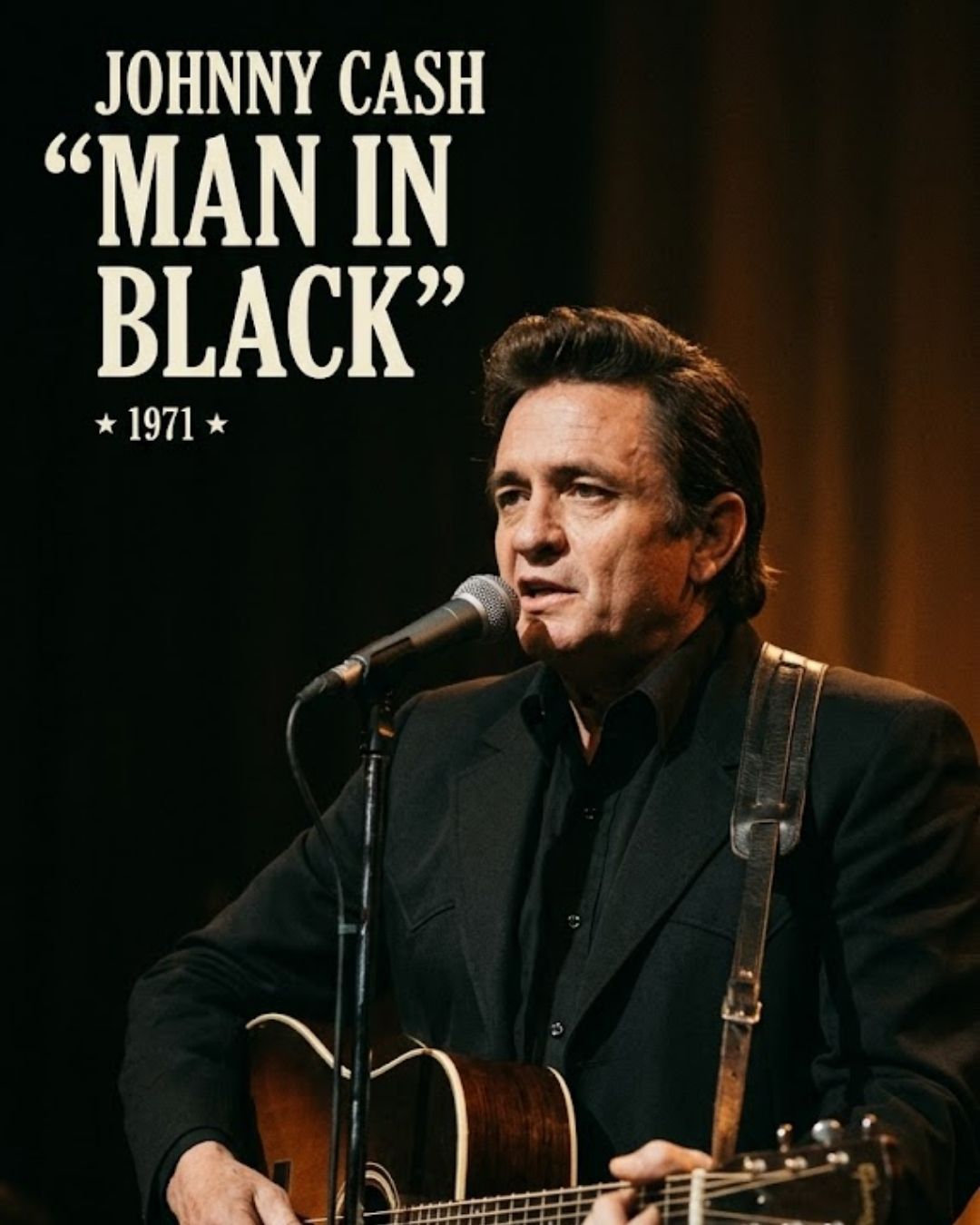
INTRODUCTION
On February 16, 1971, Johnny Cash entered Columbia Recording Studios in Nashville carrying handwritten verses scribbled just hours before. While television producers clamored for glitz and rhinestone suits, Cash prepared an unapologetic artistic revolt draped in pitch-black fabric. Why would a country icon at the pinnacle of network fame risk his entire commercial empire to sing for society’s condemned outcasts?
THE DETAILED STORY
By the arrival of 1971, Johnny Cash occupied a rare, exalted space in American popular culture. Hosting his groundbreaking ABC variety program at the Ryman Auditorium, he commanded millions of living rooms weekly. Yet beneath the glittering surface of network television, the country was fractured by the Vietnam War, racial tension, and deep economic disparity across the nation. While Music City embraced flashy rhinestones and escapist polish, Cash remained restless. A visit with college students in Nashville had sharpened his focus on how deeply disillusioned the younger generation felt about the establishment. Determined to explain his long-standing preference for dark attire, Cash sat down with a legal pad and drafted a complete spiritual and political manifesto.
The following evening, Cash walked onstage with his lyrics discreetly taped to a music stand and performed the song for the very first time. Recorded at Columbia Studios, the composition avoids extravagant embellishment. Driven by the legendary boom-chicka-boom cadence and subtle acoustic interplay alongside electric guitar work from Carl Perkins, the rhythm serves solely as an unpretentious engine for Cash’s gravitas. His baritone, earthy, weary, yet utterly resolute, carries the full moral weight of the narrative.
Lyrically, the song systematically strips away any assumption of gothic vanity. Verse after verse, Cash accounts for every thread of his dark wardrobe: he wears it for the poor and beaten down who never see the light, the prisoner who has paid his debt yet remains an exile, the neglected elderly enduring cold rooms, and the thousands of young soldiers dying in an undeclared war. By declaring that he would gladly wear a rainbow if the world were just, Cash inverted the traditional celebratory ethos of country music into a radical act of public mourning.
Released as a Columbia Records single in March 1971, the track surged to number three on Billboard’s country charts while crossing into mainstream consciousness. It permanently christened Cash with the iconic moniker that defined the remainder of his storied life and career. Decades later, “Man in Black” endures not simply as a signature anthem, but as a timeless, unforgettable testament to how a legendary artist can courageously wield massive commercial power as a relentless instrument of social conscience.