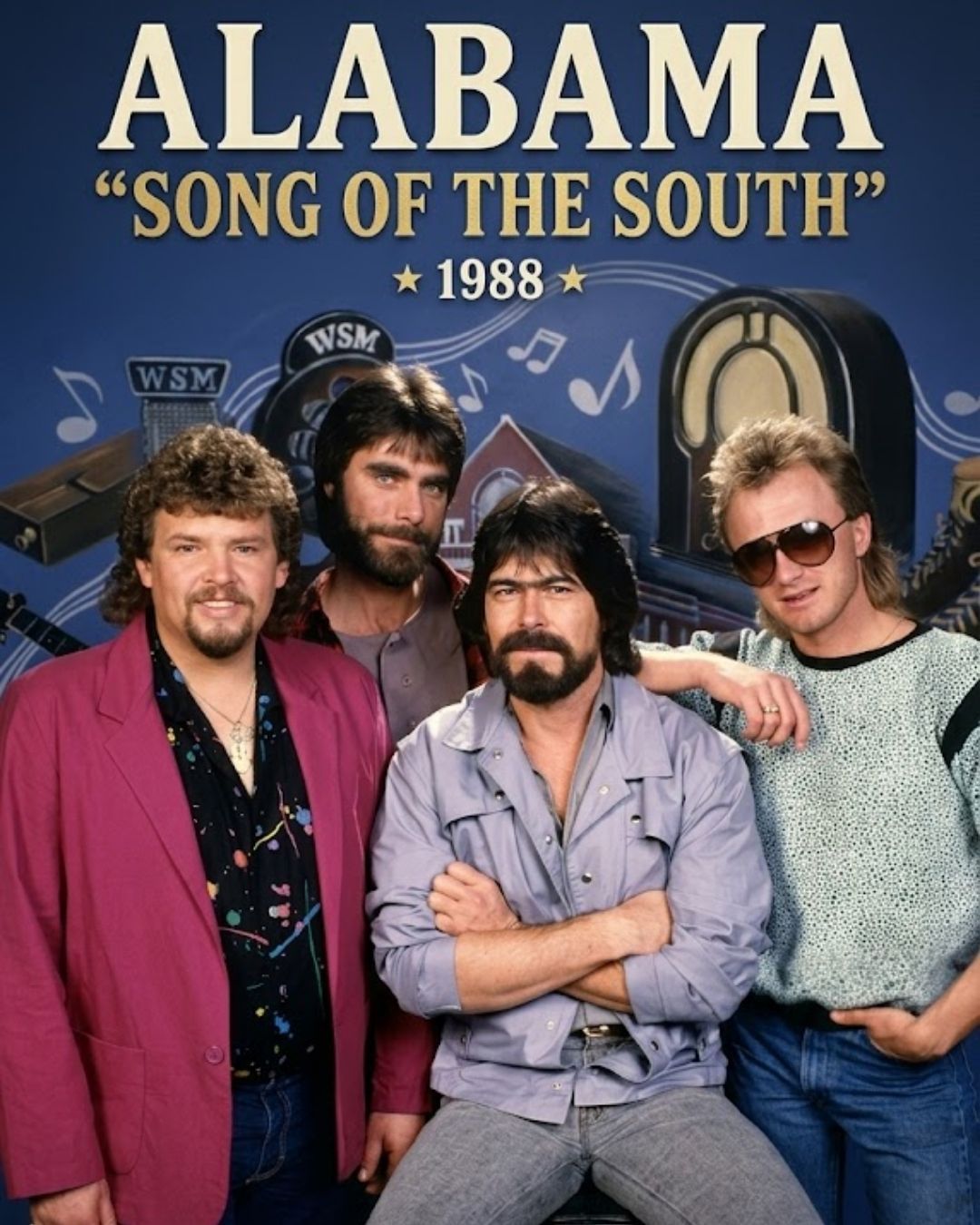
INTRODUCTION
In 1980, legendary Nashville songwriter Bob McDill penned a poetic reflection of poor Southern tenant farmers enduring the Great Depression. Though earlier recordings by Bobby Bare and Tom T. Hall failed to achieve breakout success, country supergroup Alabama recognized the song’s electric soul. How did a modest chronicle of economic hardship transform into one of country music’s most triumphant stadium anthems?
THE DETAILED STORY
When songwriter Bob McDill sat down to write about the rural South, he drew directly from the oral histories of families who lived through the Great Depression. The lyrics paint an unflinching portrait of poverty in the 1930s: cotton crops ruined by weeds, county welfare lines, and subsistence living on sweet potato pie. McDill captured the authentic social landscape of tenant farming across the American South. Yet he balanced this adversity with monumental historical shifts, specifically noting the transformative arrival of Franklin D. Roosevelt’s New Deal and the Tennessee Valley Authority, which brought hydroelectric power, public jobs, and economic dignity to isolated rural communities.
Before Alabama approached the track, it had circulated across Nashville for nearly a decade. Country icons Bobby Bare, Johnny Russell, and Tom T. Hall had each recorded their own versions during the early 1980s, treating the song with traditional, understated folk sensibilities. However, when lead singer Randy Owen and his bandmates heard the composition, they recognized an untapped energy waiting to be unleashed. Alabama envisioned the song not as a somber lament, but as an exuberant celebration of endurance and communal pride.
Entering the studio for their 1988 album Southern Star, Alabama completely reimagined the arrangement under the guidance of producers Harold Shedd and Larry Michael Lee. They paired blistering fiddle riffs, acoustic guitars, and dynamic percussion with Randy Owen’s soaring lead vocal and the band’s signature rich four-part harmonies. The resulting juxtaposition was magnetic: deeply serious socio-economic storytelling delivered through an electrifying, arena-ready sing-along chorus. Rather than focusing solely on deprivation, Alabama framed the narrative around the dignity of labor, family solidarity, and profound gratitude for survival.
Released as the lead single in late 1988, the track made an immediate impact across country radio. In January 1989, it climbed to number one on the Billboard Hot Country Singles chart, marking Alabama’s twenty-fourth chart-topping hit. The accompanying music video, blending vibrant live performance footage with historical archival imagery of Depression-era workers, further amplified its emotional resonance. Beyond commercial success, the song became a multi-generational cultural touchstone, connecting modern Southern audiences to their agrarian roots. Decades later, it remains one of the most celebrated anthems in the band’s catalog—a masterclass in transforming historic struggle into timeless musical triumph.