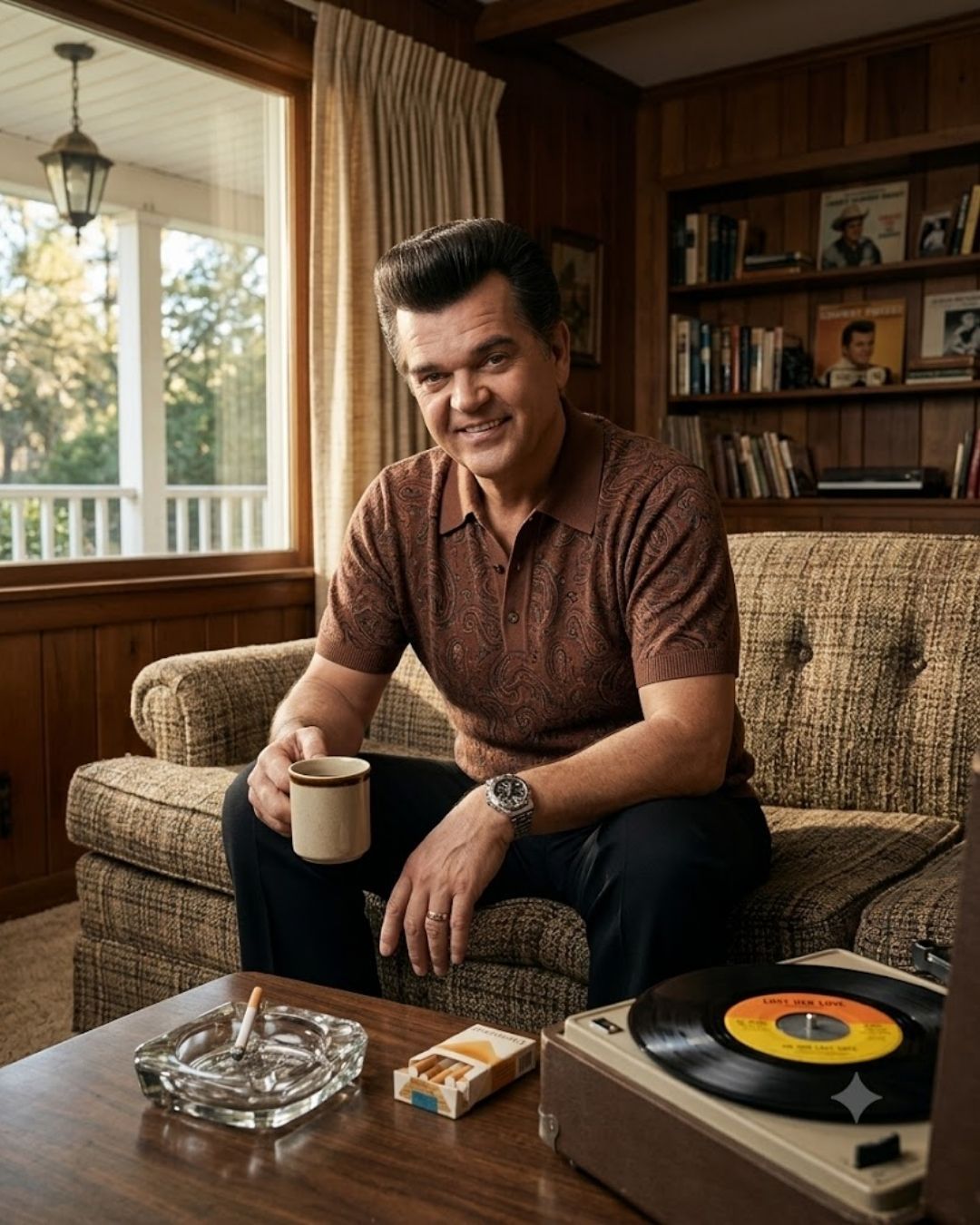
INTRODUCTION
In early 1972, Conway Twitty entered the recording studio determined to tackle a legendary melody known across the world as an iconic piano piece. Instead of simply paying tribute, he penned an intensely vulnerable confession that gave a famous melody an entirely new emotional identity. How did a celebrated instrumental become one of the most defining heartbreak anthems in country music history?
THE DETAILED STORY
The origins of the song trace back to 1960, when master studio pianist Floyd Cramer captivated music lovers with his smash hit instrumental Last Date. Built around his pioneering slip-note piano technique, the recording soared to the upper reaches of both pop and country charts, establishing an instantly recognizable melody. Although earlier vocal adaptations followed, most notably a pop-country version by Skeeter Davis, the tune remained firmly associated with Cramer’s iconic keyboard styling. More than a decade later, Conway Twitty recognized an untapped reservoir of profound emotional power waiting beneath the melody, deciding to reshape the piece into an unforgettable male country narrative.
Rather than offering a simple vocal homage, Twitty crafted an entirely new lyrical perspective centered on the crushing agony of self-inflicted heartbreak. His narrative recounts the painful moments of walking away from a lover, taking back a ring from trembling hands, and leaving in pride, only to realize the devastating finality of the mistake. Through vulnerable phrasing and candid confession, Twitty portrayed a protagonist paralyzed by foolish decisions and lingering guilt. His delivery avoided melodrama, relying instead on the weathered, sincere conviction of an artist who understood how unchecked pride often shatters genuine romance.
Musically, Twitty made a bold and unexpected production choice by removing the famous piano lead entirely from the track. In its place, he introduced weeping pedal steel guitar flourishes, warm acoustic strums, and a gentle rhythm section that created an intimate Nashville sound atmosphere. This strategic shift transformed the composition from a melodic instrumental showcase into a brooding honky-tonk confessional. Twitty’s rich baritone embraced every pause with precision, letting his signature vocal catches and hushed phrasing underscore the deep grief embedded within the lyrics.
Issued by Decca Records, the single quickly scaled the country charts, securing Twitty’s seventh solo chart-topper on the Billboard Hot Country Singles list in May 1972. Its enduring appeal proved so profound that country music icon Emmylou Harris recorded Twitty’s lyrical version a decade later in 1982, taking the exact composition back to number one. Today, the track stands as a definitive testament to Conway Twitty’s storytelling brilliance, demonstrating how an extraordinary vocal interpretation can permanently redefine a timeless melody.