Few voices could stop the world with just two spoken words. When that velvet baritone delivered a bittersweet greeting to a lost love, country music changed forever. Did you know this timeless masterpiece was nearly abandoned in the studio before conquering the airwaves? What treasured memory does this melody awaken in you?
INTRODUCTION
Standing inside Columbia Recording Studio in Nashville, Conway Twitty leaned toward the microphone and uttered a gentle, spoken phrase that would redefine his artistic destiny. Behind that intimate opening lay years of quiet hesitation and an intense creative struggle. How did a hesitant spoken intro transform a simple heartbreak tune into an immortal masterpiece?
THE DETAILED STORY
By the late 1960s, Conway Twitty had already engineered a remarkable artistic rebirth, successfully transitioning from a 1950s rockabilly sensation into a respected country stylist. However, he remained determined to write a signature masterpiece that would permanently solidify his stature among Nashville’s songwriting elite. The creative spark ignited in 1969 when Twitty began developing a poignant lyrical narrative about two former lovers unexpectedly crossing paths in a public setting. Rather than resorting to melodrama or outward resentment, the narrator maintains a polite, dignified facade, concealing profound inner heartbreak beneath mundane pleasantries and genuine wishes for her happiness.
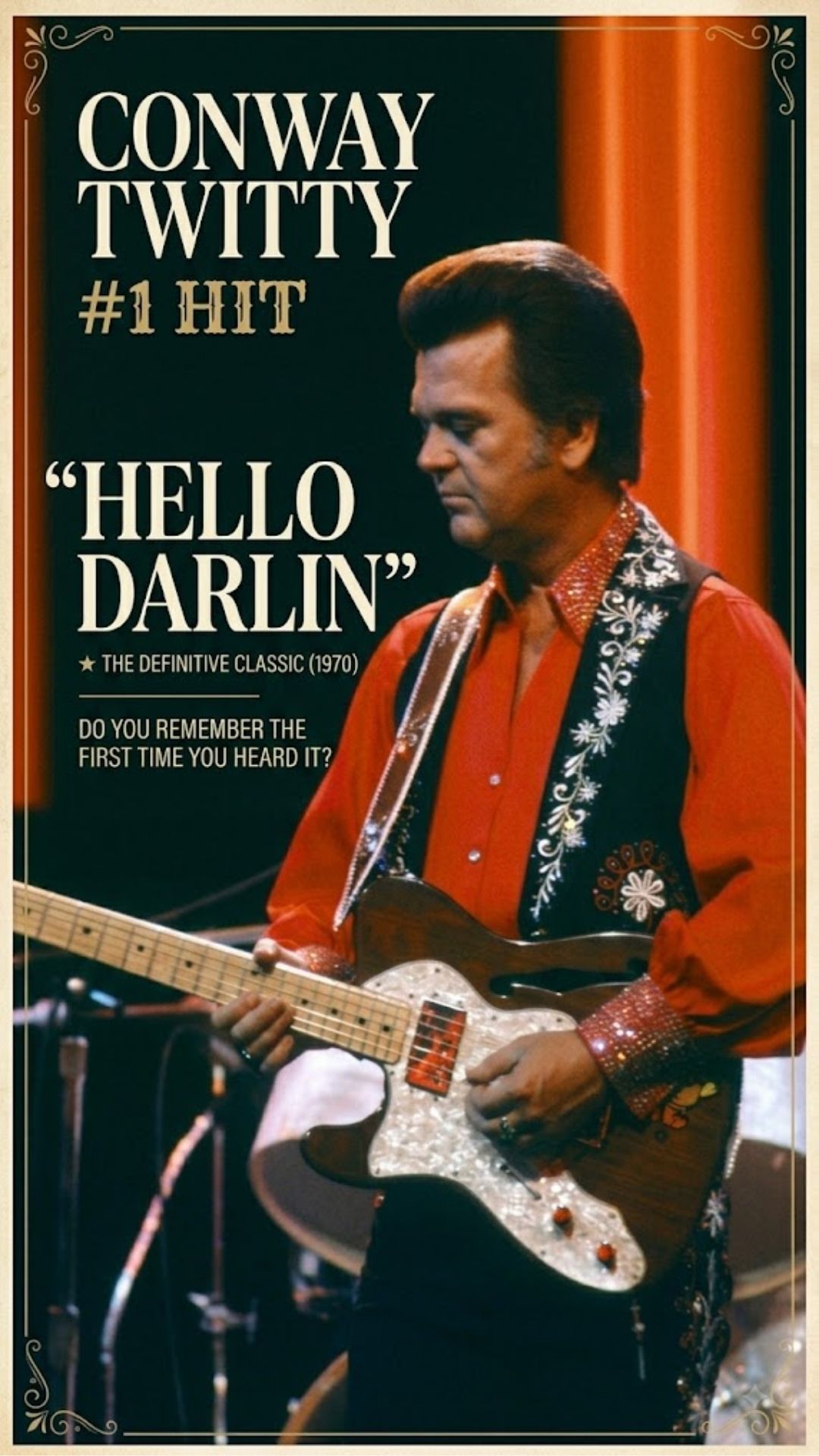
Despite the song’s melodic strength, Twitty hesitated for months over the vocal arrangement. He worried that opening the record with a spoken monologue might appear overly theatrical or alienate traditional country radio programmers. In March 1970, inside Nashville’s historic studio with legendary producer Owen Bradley, Twitty stepped up to the microphone and took a daring artistic risk. Lowering his voice to an intimate whisper, he delivered the iconic opening line: “Hello darlin’, nice to see you.” Bradley immediately complemented this electrifying spoken greeting with weeping pedal steel guitar, understated piano lines, and lush orchestral strings, creating an irresistible sonic backdrop.
Issued as the title track of his 1970 studio album, the song resonated instantly with audiences. It surged to the summit of the Billboard Hot Country Singles chart, where it dominated for four consecutive weeks and eventually ranked as the number-one country song of 1970. Beyond chart metrics, the track revolutionized country vocal performance by blending southern gentlemanly charm with unvarnished emotional vulnerability. For the remainder of his illustrious career, Twitty used that sultry opening line as his official concert greeting, triggering roaring ovations the second he touched the microphone.
The ballad achieved an extraordinary global milestone during the historic Apollo-Soyuz Test Project in July 1975. As American astronauts and Soviet cosmonauts completed their joint orbital mission, the recording was broadcast directly from space in both English and Russian as a gesture of goodwill. This unforgettable moment cemented the track’s status as a universal anthem of connection. Today, the song endures as a timeless masterclass in vocal restraint, lyrical economy, and the eternal power of unspoken longing.