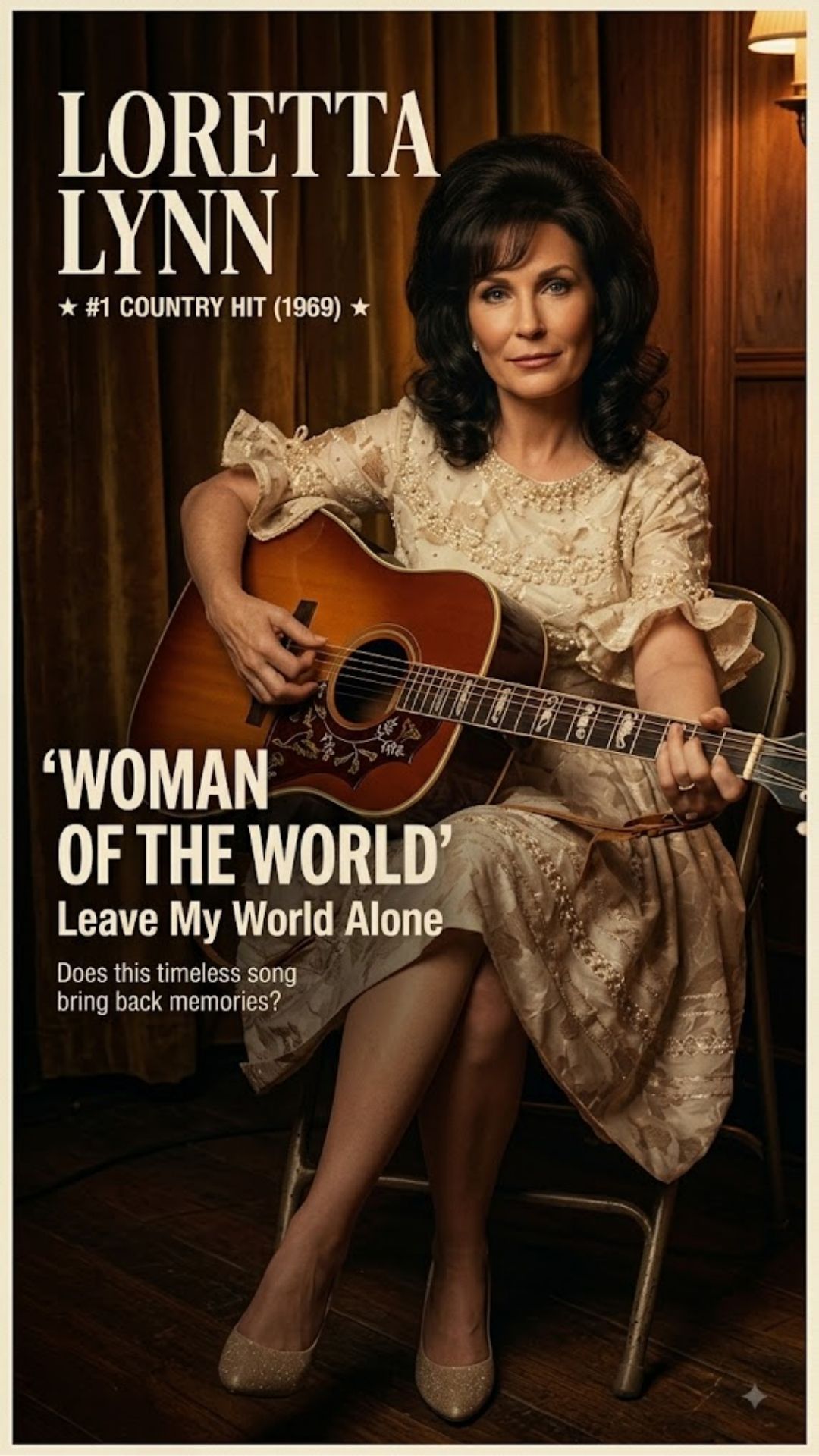
Few records captured rural marital resilience like Loretta Lynn did in February 1969. Confronting sophisticated city temptation with unvarnished country pride, she fiercely defended her home from an alluring outsider. Do you remember the chills when her defiant honky-tonk warning first echoed across your local radio dial?
INTRODUCTION
Inside Bradley’s Barn on November 18, 1968, producer Owen Bradley cued the tape as Loretta Lynn stepped up to deliver a fiery composition by Sharon Higgins. Rather than weeping over infidelity, Lynn drew an uncompromising line against an urban interloper. What gave this rural housewife the courage to confront cosmopolitan temptation so boldly on national airwaves?
THE DETAILED STORY
Penned by gifted Missouri songwriter Sharon Higgins, the track presented a dramatic departure from standard heartbreak tropes of late-1960s country music. Instead of portraying a passive victim grieving a fractured marriage in quiet tears, the narrative established an immediate, face-to-face showdown. Lynn addressed the glamorous city woman who viewed a simple country husband as mere casual sport. By contrasting the superficial allure of high society against the hard-earned devotion of a working-class household, the lyrics transformed domestic defense into a profound declaration of rural pride, personal dignity, and unyielding moral authority.
In the studio at Bradley’s Barn, legendary producer Owen Bradley crafted a vibrant sonic landscape that perfectly accentuated Lynn’s Appalachian fire. Deliberately avoiding the polished, pop-oriented string arrangements of the prevailing Countrypolitan movement, Bradley anchored the recording in hard-driving honky-tonk fundamentals. A brisk two-step rhythm section drove the tempo forward, while weeping pedal steel guitar counter-melodies and sharp electric guitar fills framed Lynn’s piercing vocals. Her delivery crackled with authentic resolve, turning everyday conversational phrases into formidable rhythmic declarations that commanded total attention on both home record players and crowded roadhouse jukeboxes.
Released as a lead single in February 1969, the record struck an immediate, visceral chord with listeners navigating the shifting cultural tides of the era. Working-class women across North America found an empowering champion who validated their sacrifices and refused to surrender her domestic life without a fierce fight. The record climbed steadily across nationwide playlists, culminating in April 1969 when it secured the number one spot on the Billboard Hot Country Singles chart, officially marking Lynn’s fourth solo chart-topping hit.
The massive triumph of the single established a pivotal commercial benchmark, serving as the vibrant title centerpiece for her celebrated studio album Woman of the World. Beyond its impressive chart accolades, the song permanently solidified Lynn’s reputation as the foremost musical chronicler of blue-collar womanhood. By elevating raw domestic realism over sanitized romanticism, she expanded the thematic boundaries of what women in country music could boldly articulate. The master track remains a towering monument of twentieth-century American songwriting, capturing an iconic artist defending her family with unmatched conviction, vocal brilliance, and enduring honesty.