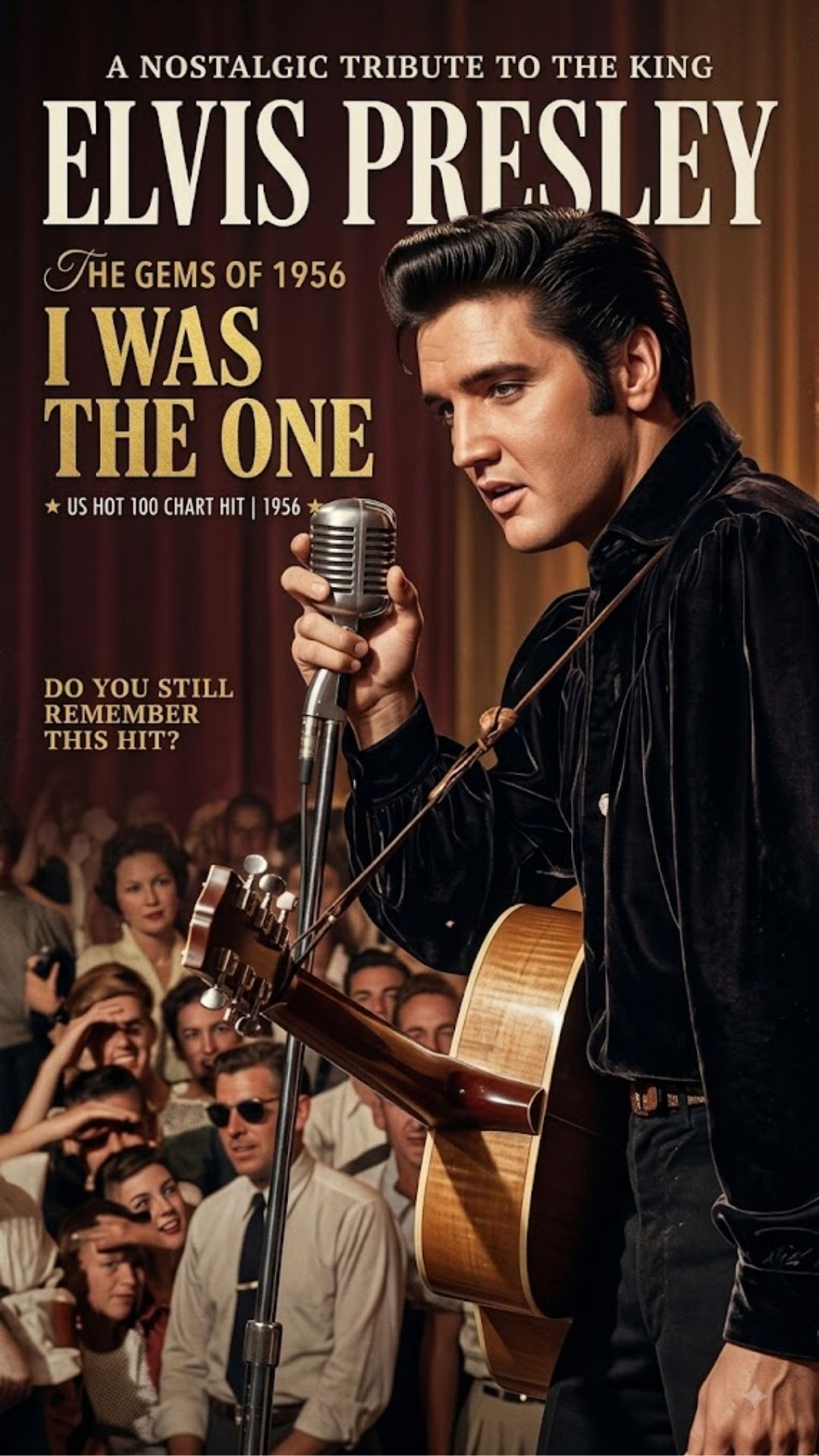
Do you remember the poignant ache of that legendary B-side? Tucked behind a historic rock breakthrough, this tender ballad proved the young singer possessed a depth far beyond sheer rebel energy. Did you know this overlooked gem actually revealed the true soul behind the King’s rise to global fame
INTRODUCTION
On January 11, 1956, inside a modest Nashville recording studio, a twenty-one-year-old Elvis Presley stepped up to the microphone to cut a vulnerable rhythm ballad. While label executives focused on flashy rock anthems, this delicate recording captured an unprecedented emotional maturity. How did a modest B-side quietly become one of the most revealing performances in early rock history?
THE DETAILED STORY
When Elvis Presley arrived in Nashville for his first historic recording sessions with RCA Victor, music industry veterans were eager to define his untamed sound. The day after capturing the haunting echoes of his revolutionary breakthrough single, Elvis made a daring creative turn. Rather than doubling down on raw, up-tempo rockabilly fervor, he chose to record I Was the One, a tender doo-wop-infused ballad penned by Aaron Schroeder, Claude Demetrius, Hal Blair, and Bill Peppers.
The recording session at the McGavock Street studio revealed an unexpected sophistication that caught producers completely off guard. Backed by the refined piano touch of Floyd Cramer, whose gentle gospel-tinged triplets anchored the track’s melodic structure, Elvis delivered a vocal performance marked by striking vulnerability. Lead guitarist Scotty Moore contributed understated, crystalline fills, while bassist Bill Black and drummer D.J. Fontana maintained a subtle, warm rhythm. Enriched by backing vocal harmonies from Gordon Stoker and the Speer family, the arrangement allowed Elvis to display breathtaking range, shifting effortlessly from a rich baritone to delicate falsetto breaks.
Lyrically, the composition explored an agonizing paradox of young love: a man reminiscing about teaching a naive lover how to kiss, hold hands, and cry, only to watch her walk away and bestow those exact lessons onto someone else. Where standard pop balladeers of the era might have approached the lyrics with melodramatic theatricality, Elvis treated the song with genuine heartbreak, conversational phrasing, and deep southern blues reverence. His intimate delivery proved his appeal was rooted in authentic vocal artistry rather than mere stage wildness.
Released on January 27, 1956, as the flip side to Heartbreak Hotel, the song accomplished an extraordinarily rare feat in popular music. Radio disc jockeys spun the single relentlessly, causing the B-side to take on a vibrant life of its own. It surged onto national jukeboxes, peaked at number nineteen on the Billboard Top 100, and secured a top-ten placement on the country music charts.
Though often eclipsed by its historic A-side companion, the ballad remained one of Elvis’s personal favorites throughout his entire life. Decades later, it stands as a timeless recording that permanently silenced early skeptics, confirming his place as an incomparably soulful balladeer in American music history.