INTRODUCTION
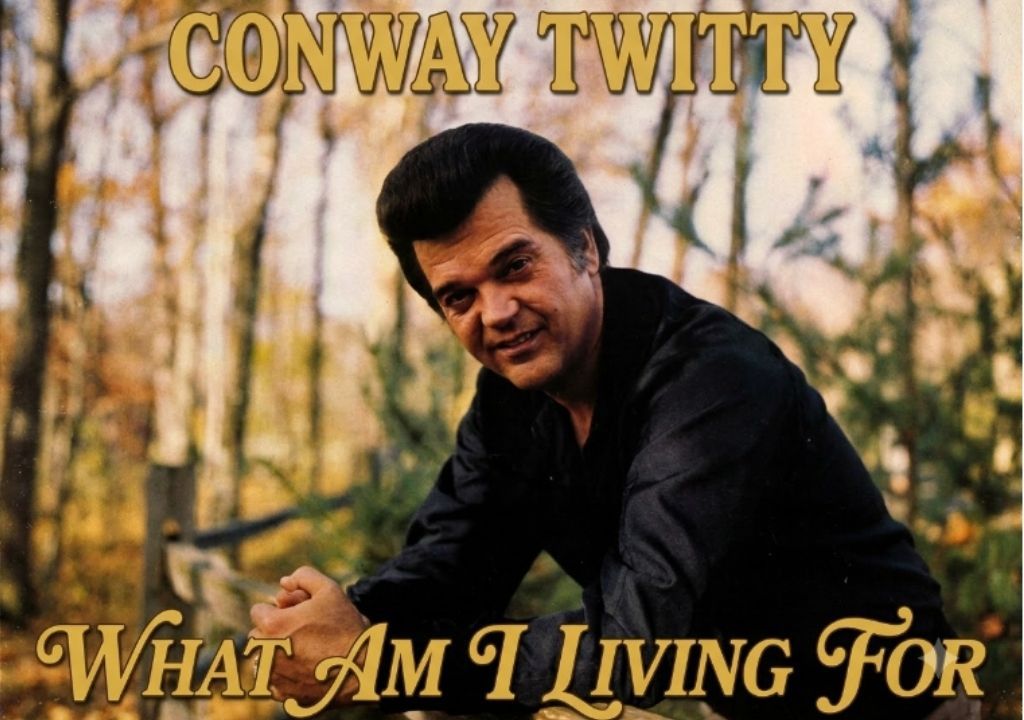
In the rich tapestry of mid-century American music, few voices could bridge the raw energy of early rock and roll with the deep, soulful heartache of traditional country quite like Conway Twitty. Long before he became a country music titan with an unprecedented string of number-one hits, Harold Lloyd Jenkins—known to the world as Conway Twitty—was a brooding, charismatic performer captivating audiences with his velvety voice and dramatic emotional delivery. Included on his seminal 1960 album Lonely Blue Boy, his rendition of “What Am I Living For” remains a shimmering testament to an artist standing at the crossroads of musical history.
Originally written by Fred Jay and Art Harris, and famously recorded by R&B singer Chuck Willis in 1958, “What Am I Living For” is a timeless anthem of romantic devotion. At its core, the song asks a deeply philosophical yet intensely personal question: without love, what gives life true purpose? It explores the fragile, beautiful reality that material success, fame, and daily routines fade into insignificance when compared to the sanctuary found in the arms of a beloved partner. Twitty took this classic rhythm-and-blues standard and infused it with his unique blend of rockabilly swagger and country vulnerability, creating an unforgettable sonic experience.
Musically, Conway Twitty’s interpretation of “What Am I Living For” is a masterclass in mid-century production restraint. The arrangement opens with a gently swaying, slow-dance rhythm that immediately evokes the warm nostalgia of a dimly lit 1960s jukebox cafe. Backed by clean electric guitar licks, a steady, subtle bassline, and soft, brushed percussion, the instrumentation creates an intimate backdrop that allows the vocals to shine. There is a lush, organic warmth to the analog recording that pulls the listener directly into the room, surrounded by the golden tones of vintage tube amplifiers and natural studio echo.
It is Twitty’s vocal performance, however, that gives the track its irresistible magic. Possessing an extraordinary vocal range capable of moving from a husky, whispered growl to a soaring, impassioned croon, Twitty delivers every line with unvarnished sincerity. When he poses the song’s central query, his voice trembles with genuine longing, making every word feel deeply personal. He doesn’t merely sing the lyric; he inhabits the story, offering a performance that bridges the gap between youthful teenage romance and mature emotional depth.
Listening to “What Am I Living For” today takes us back to a cherished era of vinyl turntables, late-night radio broadcasts, and slow dances under soft hall lights. Decades after its release, Conway Twitty’s classic recording continues to touch the human spirit, offering a poignant reminder that love remains life’s ultimate inspiration.