INTRODUCTION
In the damp, monochrome landscape of post-war Liverpool in 1956, fifteen-year-old John Lennon felt trapped in an era defined by ration books and polite orchestral music. British airwaves rarely offered anything beyond solemn BBC broadcasts and conventional crooners. Then, an electrifying American sound crackled through the static: the haunting echo and visceral pulse of “Heartbreak Hotel.” For Lennon, it was not merely a compelling new record; it was an existential shockwave that shattered his perception of what was possible. He would later crystallize that lightning-bolt moment with a startling confession: “Before Elvis, there was nothing.” But why did the co-founder of the world’s greatest band view Presley’s arrival as the definitive starting point of modern culture?
THE DETAILED STORY
When John Lennon proclaimed that nothing existed prior to Elvis Presley, he was not dismissing the foundational brilliance of blues pioneers or mid-century jazz innovators. Instead, he was articulating the profound cultural void of post-World War II Britain. To a generation raised amidst bomb craters and austere rationing, British youth culture had no distinct identity, visual language, or sonic rebellion. Mainstream entertainment was tailored strictly for adults, leaving adolescents suspended in an emotional and artistic vacuum.
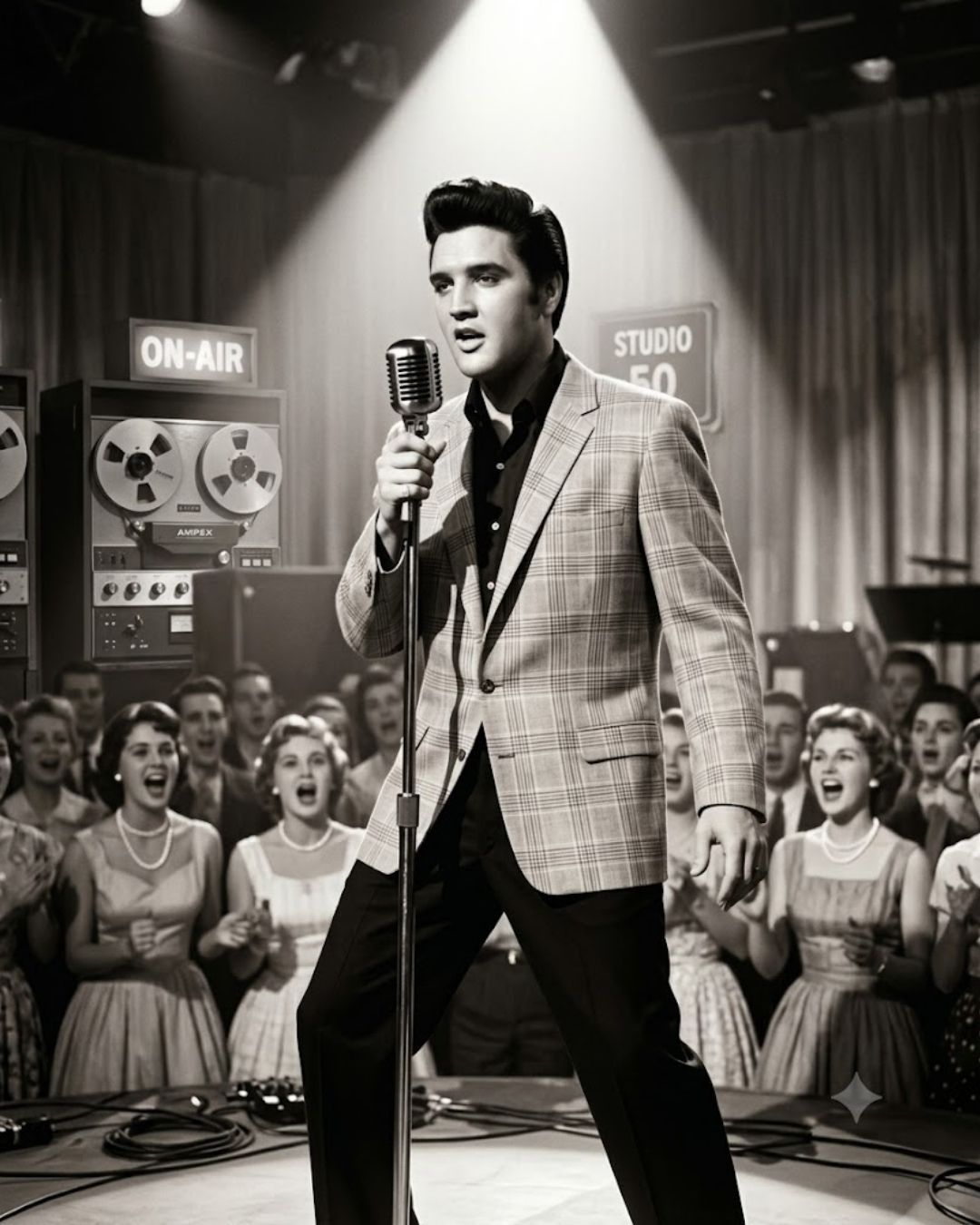
Presley’s arrival shattered that complacency overnight. When “Heartbreak Hotel” ascended the UK charts in May 1956, it delivered an unprecedented fusion of rhythm, swagger, and raw emotion that British teenagers had never encountered. The impact on Lennon was immediate and life-altering. He convinced his mother, Julia, to purchase his first acoustic guitar for five pounds and ten shillings, promptly forming The Quarrymen—the skiffle ensemble that served as the direct precursor to The Beatles. Lennon later noted that without Presley’s disruptive energy, the British Invasion might never have gained its initial momentum.
The statement also underscored Presley’s symbolic role as the catalyst for modern youth liberation. Elvis synthesized disparate currents of gospel, country, and Black rhythm and blues, projecting them onto a global stage with magnetic vitality. For Lennon, Elvis represented absolute independence—the realization that artists could build their own universe outside established societal conventions.
Even after The Beatles conquered the global music landscape and famously met Presley at his Bel Air residence on August 27, 1965, Lennon retained deep reverence for that initial spark, even while acknowledging Presley’s later creative shifts. For Lennon, “Before Elvis, there was nothing” remained an enduring historical truth: Presley was the threshold through which an entire generation stepped into the modern era.