INTRODUCTION
On a humid evening in July 1955, three young musicians gathered inside Sun Studio with producer Sam Phillips. They were aiming to capture magic before their local recording contract expired. Armed with acoustic guitars and a standup bass, they tackled an obscure blues record about a mysterious train carrying away a lost love. How did this single session permanently alter the landscape of popular music?
THE DETAILED STORY
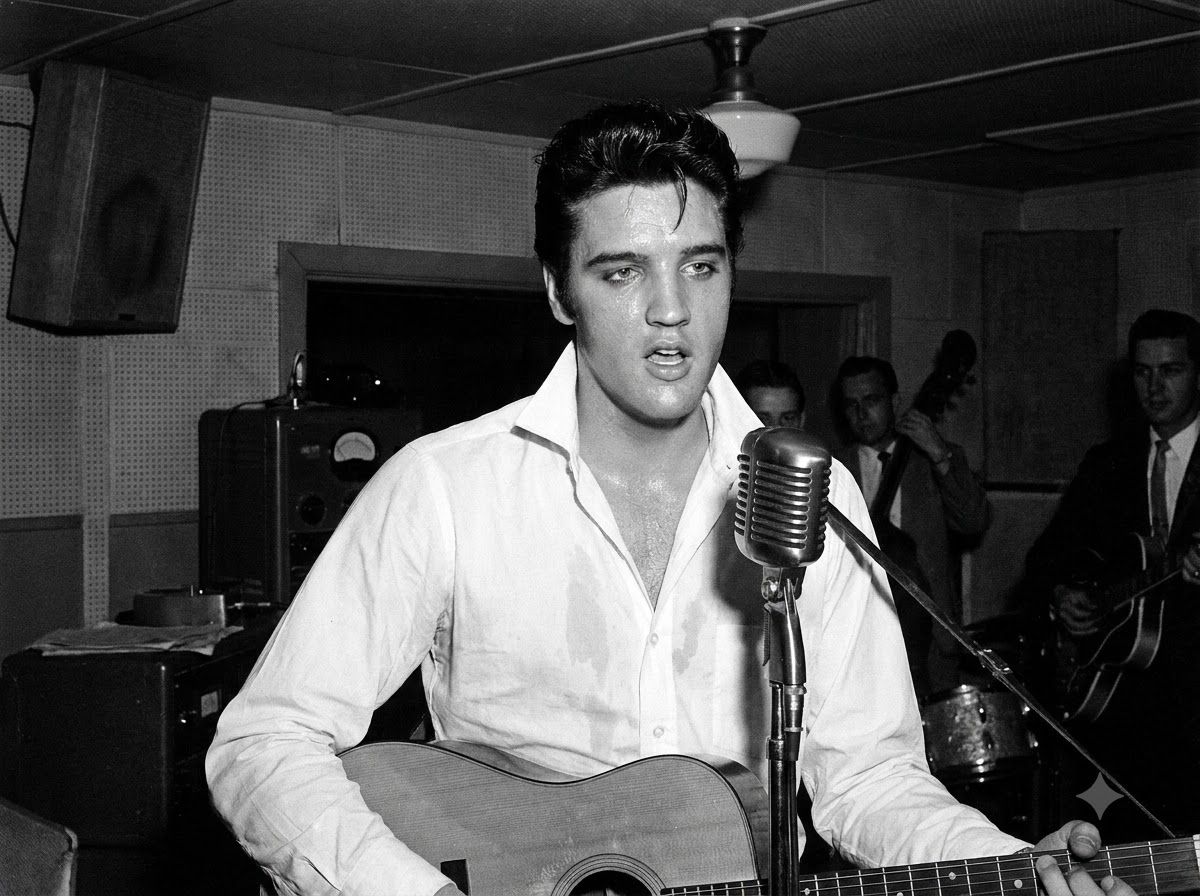
When Junior Parker recorded his original version back in late 1953, the song was a somber, slow-paced blues meditation. The train in Parker’s narrative represented overwhelming grief, an unstoppable iron giant stealing away happiness into the dark night. However, when Elvis Presley stood before the microphone at Sun Studio, he possessed an entirely different creative vision. Alongside guitarist Scotty Moore and bassist Bill Black, the twenty-year-old singer stripped away the melancholy and injected the track with blistering rhythm, youthful swagger, and unbridled kinetic energy that echoed through the room.
The transformation relied heavily on the inventive musicianship of Scotty Moore. Blending country thumb-picking techniques with sharp blues bends, Moore crafted a driving guitar riff that brilliantly mimicked the accelerating chug of a steam locomotive rolling down the tracks. Meanwhile, Bill Black slapped his upright bass strings to establish a relentless, propulsive heartbeat that anchored the sonic structure. Rather than sounding defeated by the departing train, Elvis sang with defiant arrogance. By altering a key line in the lyrics to claim that the train would never take his lover again, he flipped the emotional dynamic from helpless heartbreak to triumphant independence.
When Sam Phillips let the tape roll, the legendary performance reached a crescendo of raw, spontaneous expression. At the conclusion of the final take, Elvis broke into a confident, unscripted laugh—a magnetic moment preserved on the master tape that captured the pure joy of musical creation. When officially released on August 20, 1955, the track served as the B-side to “I Forgot to Remember to Forget,” which eventually reached the number one spot on the Billboard Country charts.
More importantly, this pivotal studio session marked a monumental turning point in modern culture. It was the final single Elvis produced under Sun Records before Sam Phillips famously sold his recording contract to RCA Victor for the unprecedented sum of $35,000. Today, musicologists and historians widely recognize the track as a foundational cornerstone of rockabilly and a quintessential milestone of American roots music. By bridging southern country traditions, African American rhythm and blues, and high-octane rock, Elvis did not merely cover a song—he radically redefined the sonic identity of a generation, turning a traditional blues record into a timeless masterpiece that echoes across decades.