INTRODUCTION
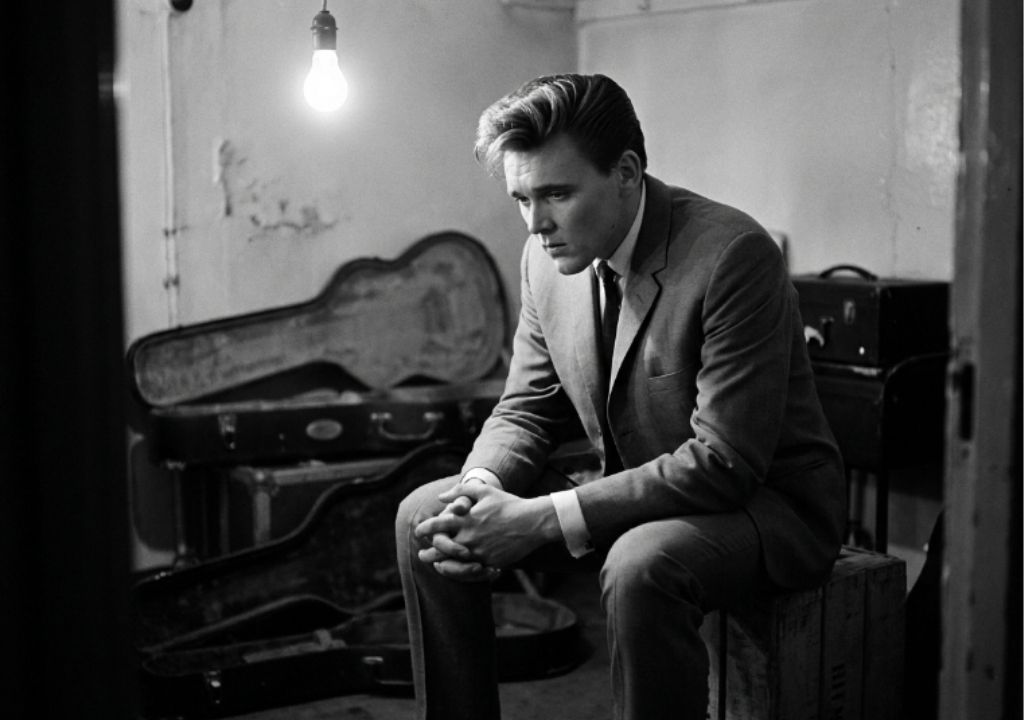
On 10/02/1958, a painfully shy nineteen-year-old named Ronald Wycherley walked into the backstage area of the Essoldo Theatre in Birkenhead, clutching a crude demo tape of raw rock-and-roll compositions. Within hours, legendary pop impresario Larry Parnes renamed him Billy Fury, thrusting a reclusive Liverpool youth into the blinding center of British music history. Yet, behind the manufactured leather-jacketed persona and the frantic adoration of millions of teenage girls, lay one of the most profoundly lonely narratives in modern entertainment. While contemporaries like Cliff Richard actively thrived under the public gaze, Fury operated as a permanent outsider, detached from the very industry he revolutionized. This structural isolation was not a deliberate marketing gimmick, but rather a tragic byproduct of an incurable childhood illness that transformed his rapid ascent into a race against an early grave.
THE DETAILED STORY
To understand the deep-seated isolation of the iconic singer, one must analyze the stark disconnect between his public commercial power and his private physical reality. During his artistic peak, Decca Records systematically deployed his smoldering, enigmatic look to capture the post-war youth market. Statistically, his catalog achieved breathtaking heights; he equalled the Beatles’ chart longevity by racking up twenty-four hit singles across a single decade. Yet, while his peers built collaborative artistic communities, the Liverpool native was entirely cut off by a profound physiological barrier. Having contracted severe rheumatic fever at age six, his heart valves were permanently compromised, leaving him on permanently borrowed time. Overhearing a hospital doctor predict he would never survive past age thirty, he developed a deeply insular psychological defense mechanism, viewing his fame as a fleeting distraction from an inevitable early mortality.
This permanent medical vulnerability forced him to avoid the excessive lifestyle typical of mid-century rock-and-roll stars. While his ruthless manager Larry Parnes demanded relentless, high-pressure touring packages alongside pop acts like Marty Wilde, Fury’s body routinely collapsed under the strain, forcing publicists to cover up severe heart failures as simple cases of exhaustion or influenza. Because he was treated like a highly profitable commercial commodity rather than a fragile human being, he found zero solace in the chaotic London nightlife, choosing instead to withdraw entirely from show business society. He spent his quietest years on a remote farm in Wales, dedicating his finite energy to horse breeding and quiet bird watching. This deep communion with nature was his true sanctuary, a peaceful environment far removed from the predatory entertainment industry that routinely mismanaged his royalties and forced him into eventual bankruptcy in 1978. When a sudden heart attack finally claimed his life on 01/28/1983, at just forty-two years old, he died not as a standard Hollywood casualty, but as a deeply gentle, solitary soul who completed his journey exactly as he started it—completely alone in his own world.