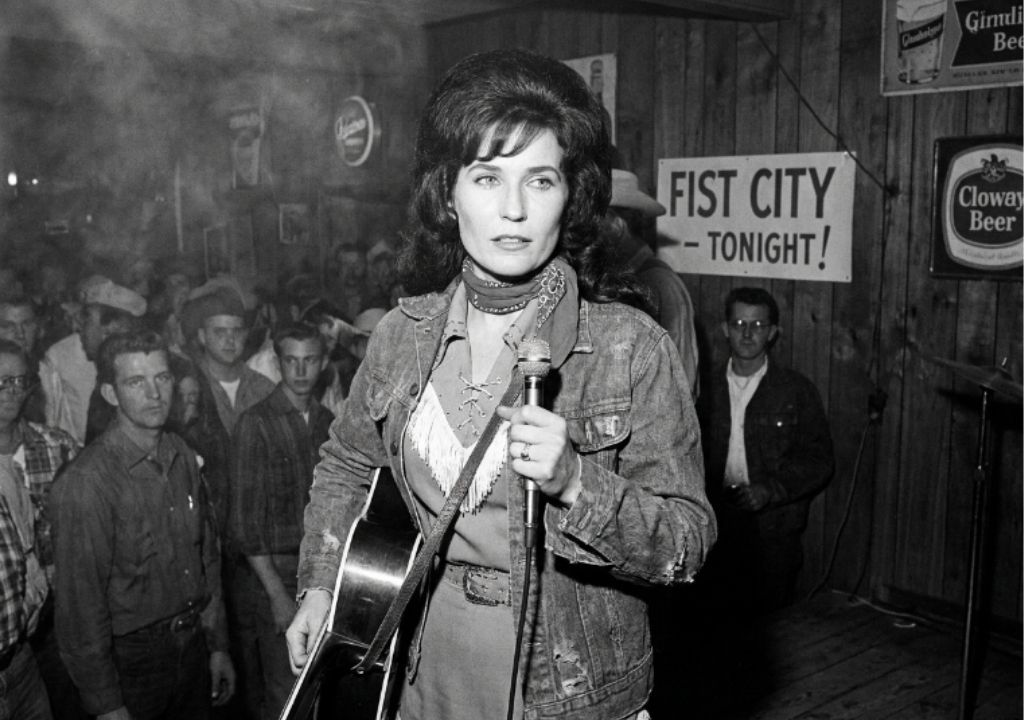
Introduction
In the late 1960s, country music was navigating a delicate crossroads between the polished elegance of the Nashville Sound and the raw, unvarnished grit of the honky-tonks. Women in the genre were often expected to sing songs of heartbreak, passive longing, or demure domesticity. Then came Loretta Lynn. Striding out of Butcher Holler with an acoustic guitar and an unbreakable spirit, she rewrote the rulebook of what a female country artist could say. When she released “Fist City” in 1968, she didn’t just top the Billboard country charts; she delivered a cultural thunderbolt that resonated across living rooms and barrooms throughout America.
“Fist City” is a masterclass in autobiographical storytelling, a domain where Lynn reigned supreme. The song wasn’t a fictional tale spun for radio airplay; it was born out of real-life fire. While Loretta was away on the road, exhausting herself to build a career and support her family, a local woman in Hurricane Mills, Tennessee, began making advances toward her husband, Oliver “Doolittle” Lynn. Instead of breaking down in tears or singing a melancholic ballad about betrayal, Loretta did what any proud, fierce Appalachian woman would do: she picked up a pen and issued an uncompromising, public ultimatum.
From the very first note, the musical atmosphere of “Fist City” grabs you by the collar. The unmistakable, sharp twang of the electric guitar sets a driving, no-nonsense tempo that mirrors the urgency of Lynn’s message. When her vocals cut through the mix, there is no hesitation, no polished veneer—just pure, mountain-clear conviction. She addresses her rival directly, painting a vivid picture of a woman who is about to cross a dangerous line. Lyrics like “You’ve been making your brags around town” and the iconic warning that she will “show you what a country girl can do” are delivered with a brilliant mixture of homespun charm and lethal earnestness. It is this exact duality that makes the song a cinematic experience; you can practically see the dust kicking up on a gravel road as two forces prepare to collide.
What makes “Fist City” endure as a timeless monument in country music history is its radical authenticity. Lynn championed the frustrations of working-class women who refused to be pushed around. Her delivery is completely devoid of pretense, embodying the exact era when traditional country music was the unadulterated voice of ordinary people’s lived realities. Listening to the track decades later is like opening a pristine time capsule of 1960s honky-tonk culture. The crisp instrumentation, the steady rhythm, and Lynn’s unparalleled vocal attitude remind us of a time when music didn’t hide behind digital gloss. It was human, it was messy, and it was fiercely real. “Fist City” remains a triumphant celebration of boundaries, loyalty, and the legendary grit of a woman who refused to let anyone take what she had worked so hard to build.