Introduction
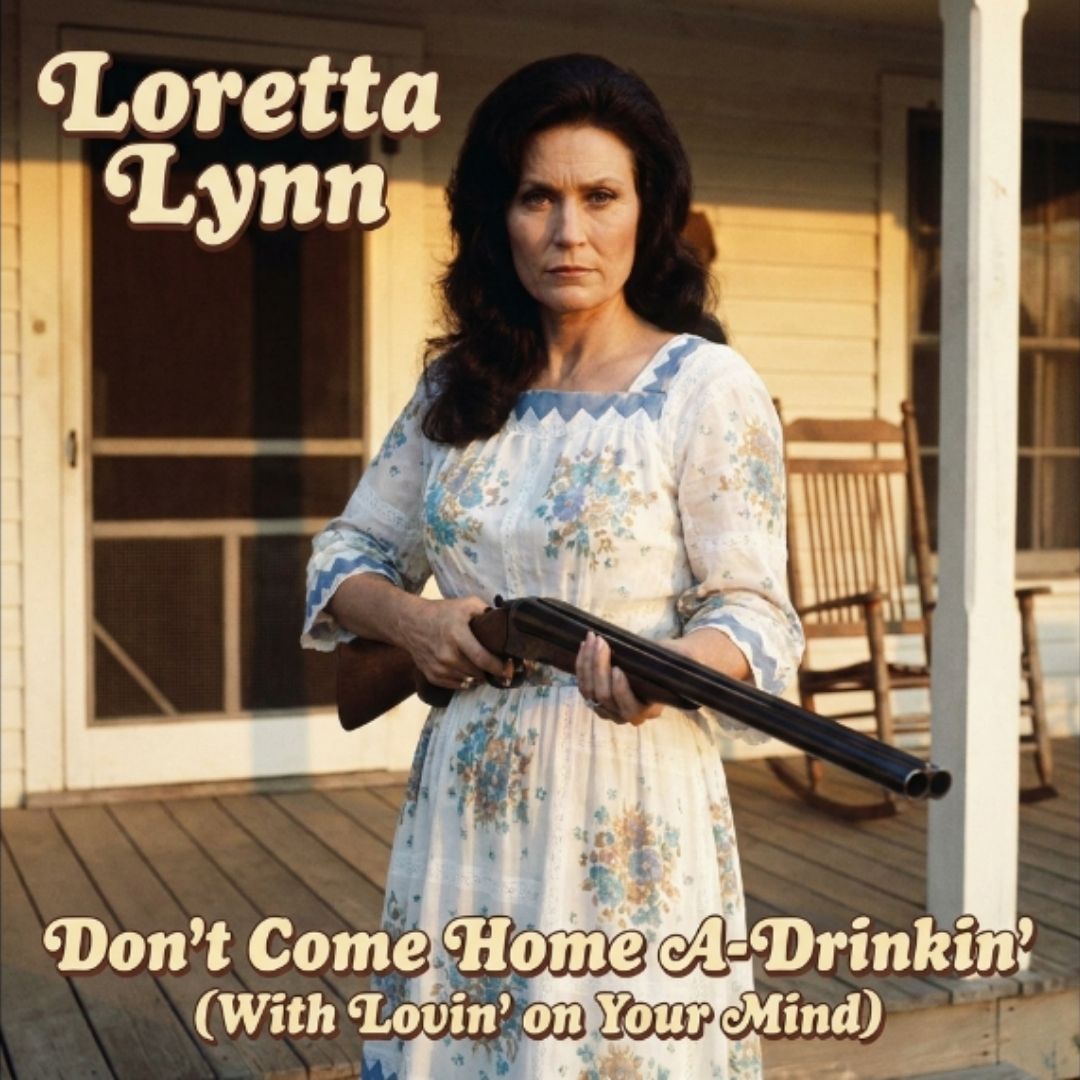
There is a specific kind of smoke-filled, neon-lit nostalgia that only classic country music can stir up. It transports you back to an era where the floors were covered in sawdust, the jukeboxes were glowing amber, and the stories spun into melodies were raw, unfiltered truth. In the heart of the 1960s, Nashville was a landscape dominated heavily by male perspectives. Women in country music were often expected to sing of heartbreak with a quiet, submissive tears-in-my-beer resignation. Then came a force of nature straight out of Butcher Hollow, Kentucky, who completely rewrote the rules of the game. That woman was Loretta Lynn, and the song that drew a permanent line in the sand was her groundbreaking 1966 masterpiece, “Don’t Come Home A-Drinkin’ (With Lovin’ on Your Mind).”
To truly understand the weight of this track, one has to submerge themselves in the social fabric of the late sixties. It wasn’t just a song; it was a revolution wrapped in a honky-tonk rhythm. With a voice that possessed the sharp, crystal-clear resonance of the Appalachian mountains, Loretta captured the exhausting reality of a working-class housewife pushed to her absolute limit. The narrative is cinematic in its simplicity yet profound in its defiance: a husband spends his night carousing at the local tavern, only to return home in the early morning hours expecting affection. Instead of compliance, he is met with a locked door and a woman who refuses to be an afterthought.
The sonic architecture of the song is pure gold. It kicks off with that classic, weeping pedal steel guitar and a driving, rhythmic bassline that sets an uncompromising pace. When Loretta begins to sing, there is no hesitation, no trembling in her delivery. Her phrasing is conversational yet fiercely melodic, a masterclass in emotional storytelling. She sings with the authority of someone who lived every single syllable, turning personal frustration into a universal anthem of self-respect. It was bold, it was controversial for its time, and it was entirely necessary. Radio stations initially hesitated, shocked by its bluntness, but listeners flooded the phone lines, demanding to hear it again and again. It rightfully soared to become her very first number-one country hit.
Decades later, the song has lost none of its original fire. It remains a vivid, living testament to the era of authentic honky-tonk, a time when music didn’t hide behind polished production or vague metaphors. Loretta Lynn proved that country music was at its greatest when it dared to look real life dead in the eye. Listening to it today is like stepping into a vintage photograph, feeling the cool draft of a midnight breeze, and witnessing the exact moment a legend stood her ground and changed the course of musical history forever.