INTRODUCTION
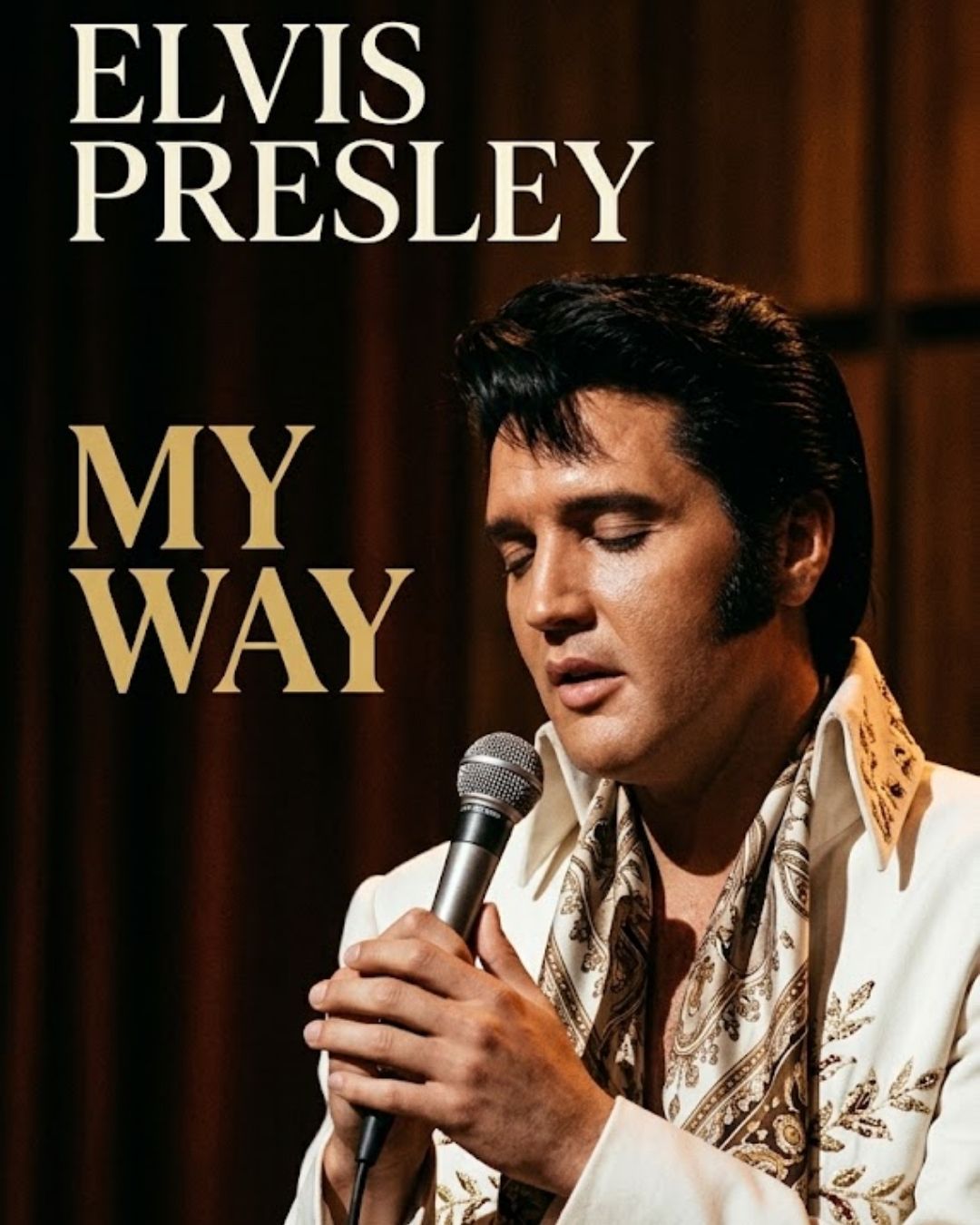
On June 21, 1977, in Rapid City, South Dakota, a visibly exhausted King of Rock and Roll stepped toward the microphone. Holding lyric sheets to steady his focus, he unleashed a vocal performance of breathtaking intensity. How did a French pop tune become the definitive, heartbreaking epitaph of the greatest icon in music history?
THE DETAILED STORY
Originally conceived in France as “Comme d’habitude” by Claude François and Jacques Revaux, the composition found global immortality when Paul Anka penned English lyrics tailored for Frank Sinatra in 1968. Where Sinatra approached the piece with stoic defiance and the cool satisfaction of an untouchable titan, Elvis Presley transformed the song into something fundamentally different: a sacred catharsis, a dramatic confession, and an emotional reckoning.
Elvis first introduced the song to massive worldwide audiences during his historic 1973 “Aloha from Hawaii” satellite broadcast. Yet, it was during the grueling tour dates of 1977 that the song transcended routine concert spectacle. Facing declining health, intense personal isolation, and relentless media scrutiny, Elvis turned to the melody not merely as a setlist staple, but as an unfiltered spiritual release.
Musically, the arrangement is a masterclass in dynamic tension. Beginning with delicate acoustic piano and gentle orchestral shading, the instrumentation steadily swells, mirroring the mounting emotional stakes of the lyrical narrative. His rhythm section, anchored by Ronnie Tutt’s commanding percussion, navigates the tempo shifts with sympathetic precision, creating an expansive sonic canvas that frames the vocals. When the brass section ascends and drives into the climactic verses, Elvis’s operatic baritone rises to meet the wall of sound with astonishing resonance. He does not glide across the phrasing with effortless detachment; rather, he leans into every syllable with palpable effort, breathing life into themes of regret, resilience, and personal triumph.
The definitive recording captured on June 21, 1977, in Rapid City, South Dakota—just weeks before his untimely passing on August 16—stands as one of the most haunting documents in American music. Released as a posthumous single later that autumn, the live recording soared to number 22 on the Billboard Hot 100 and climbed to number 2 on the Country singles chart, earning gold certification.
Decades later, Elvis’s interpretation of “My Way” endures because it strips away all pretension. It is not the anthem of a man congratulating himself on a flawless existence, but the unvarnished testament of an extraordinary human who lived completely in the public eye, bore immense weight, and faced the final curtain with unmatched dignity.