INTRODUCTION
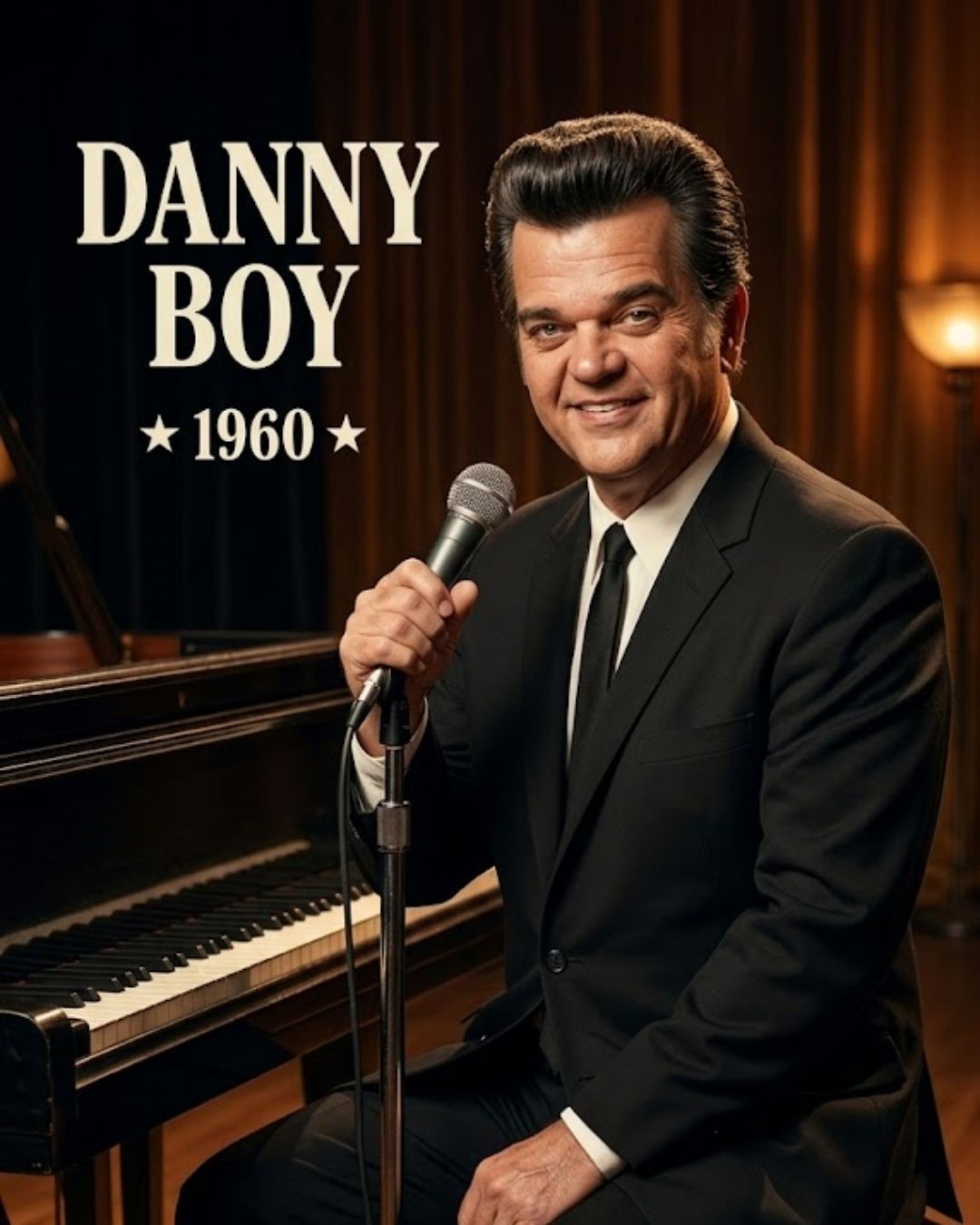
Inside a New York recording studio in the summer of 1959, young rocker Conway Twitty stood before the microphone, preparing to dismantle centuries of tradition. Armed with soaring doo-wop harmonies and an explosive rhythm section, he tackled Ireland’s most sacred lament. Why did this audacious rendition incite a swift British broadcasting ban while simultaneously captivating millions of young listeners across the globe?
THE DETAILED STORY
Following the massive international triumph of his 1958 breakout smash hit “It’s Only Make Believe,” Conway Twitty faced immense industry pressure to prove that his dramatic vocal style was not merely a fleeting sensation. Rather than relying on standard rockabilly formulas, the Mississippi-born vocalist chose an exceptionally daring creative gamble: dramatically electrifying “Danny Boy,” the revered standard originally set to the ancient Irish melody of “Londonderry Air,” cementing his reputation as a fearless studio innovator.
Twitty boldly stripped away the somber classical restraint traditionally associated with the 1913 Frederic Weatherly lyrics. In its place, the studio arrangement incorporated rolling triplet piano chords, weeping guitar licks, and lush vocal harmonies echoing the atmospheric tension of doo-wop and southern swamp pop. His vocal delivery began in a hushed, melancholic baritone, gradually building into a powerful, operatic crescendo that showcased extraordinary emotional range and raw intensity.
When MGM Records released the single in the autumn of 1959, traditional music purists on both sides of the Atlantic were profoundly scandalized. In the United Kingdom, the British Broadcasting Corporation enacted a formal airplay ban, labeling the rock-and-roll adaptation an irreverent desecration of a sacred cultural masterpiece. Traditionalists argued fiercely that a solemn folk lament dealing with parting and mortality had no place in the fast-paced world of teen-oriented pop records.
Rather than suppressing public interest, the institutional boycott turned the record into an immediate transatlantic sensation. Young listeners enthusiastically embraced the track’s rebellious passion and sweeping emotional gravitas. Defying broadcast censorship, the single rapidly climbed to number four on the UK Singles Chart and secured a coveted position at number ten on the US Billboard Hot 100 in late 1959, proving that historical folklore could connect powerfully with modern audiences.
Ultimately, this controversial recording represented a vital artistic turning point in Twitty’s early career. Long before he transitioned into Nashville royalty to become one of the most celebrated legends in country music history, this bold performance proved his unique ability to transcend rigid genre boundaries. By infusing ancient folk melancholy with the electric fire of early rock and roll, Conway Twitty created an enduring mid-century masterwork that permanently expanded the expressive possibilities of popular music.