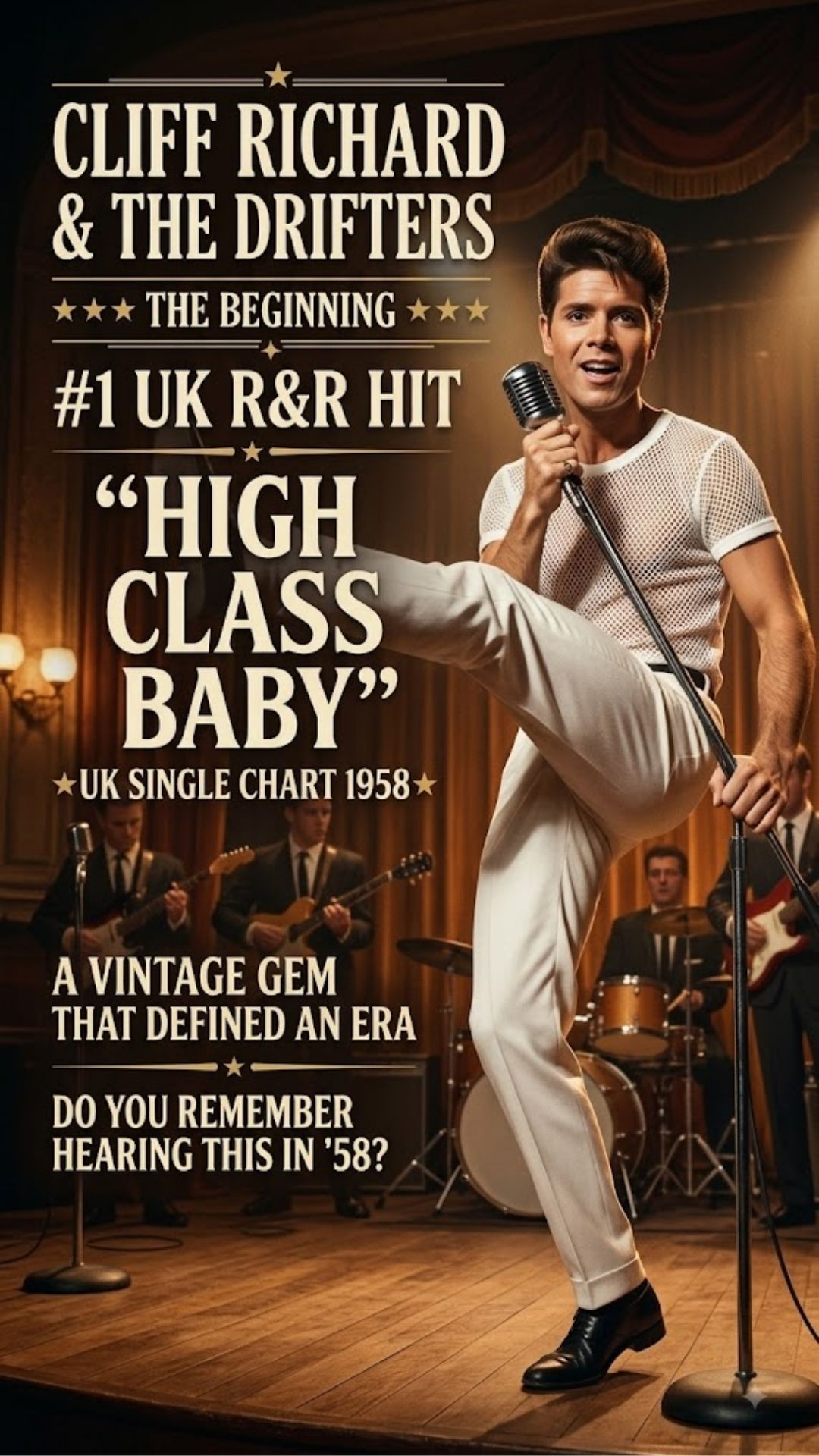
Do you remember when raw British rock and roll first shook the airwaves? Facing immense sophomore pressure, Cliff Richard delivered High Class Baby when released in November 1958, defying a sudden broadcast ban to conquer the charts. Did you know a single forbidden brand name nearly derailed this legendary early anthem?
INTRODUCTION
Inside Abbey Road Studios on October 3, 1958, a terrified eighteen-year-old singer stood before the microphone, gripped by agonizing doubt following a historic debut. Desperate to prove their initial triumph was no fluke, the young musicians unleashed an electrifying storm of twangy guitars and adolescent defiance. How did this high-stakes recording session overcome devastating personal heartbreak and an immediate national radio ban?
THE DETAILED STORY
Following the seismic cultural explosion of Move It in late summer 1958, the British music industry watched intently to see whether Harry Webb, performing under the moniker Cliff Richard, was an authentic rock phenomenon or merely a fleeting teen novelty. The burden of avoiding the dreaded sophomore slump fell heavily upon rhythm guitarist and resident songwriter Ian Samwell. Nursing bruised pride after being romantically rejected by actress Julie Cracknell, Samwell channeled his frustration into a blistering, rhythmic rocker titled High Class Baby. Its razor-sharp lyrics cleverly captured the social friction between working-class teenage bravado and unattainable upscale elegance, creating an authentic youth anthem.
Producer Norrie Paramor initially arranged for the ensemble to record an American cover, but the studio run-throughs lacked vital urgency. Recognizing that Samwell’s composition possessed a distinct, homegrown pulse, Paramor pivoted the session toward the original track on October 3, 1958. To ensure maximum rhythmic punch before the outfit embarked on their inaugural national tour, Paramor reunited seasoned session guitarist Ernie Shear and upright bassist Frank Clarke with Samwell and drummer Terry Smart. Shear unleashed rapid-fire, machine-gun guitar riffs that crackled brilliantly against Richard’s punchy, assertive vocal delivery. Yet despite the exhilarating studio playback, the young singer was suddenly overwhelmed by crushing insecurity. Convinced that the final take paled in comparison to their historic debut, Richard reportedly wept in despair at home, fearing his burgeoning career was already finished.
Fate, however, intervened in dramatic fashion. Shortly after Columbia Records released the single on November 14, 1958, the track encountered an unexpected roadblock when the BBC instituted an immediate broadcast ban. Network censors declared that the rebellious lyric mentioning a Cadillac automobile violated stringent non-commercial advertising regulations. Rather than stifling commercial momentum, the establishment ban only heightened teenage curiosity across the United Kingdom. Deprived of regular daytime radio airplay, passionate young fans flooded local record counters to purchase the vinyl single for themselves.
Propelled by rebellious word of mouth and unyielding jukebox popularity, the record surged up the national sales rankings, where it peaked at number seven on the UK Singles Chart during the winter of 1958. This triumphant commercial success firmly established Richard and his backing group as enduring rock pioneers rather than accidental one-hit wonders, permanently proving that British rock and roll was a formidable cultural force in its own right.