Introduction
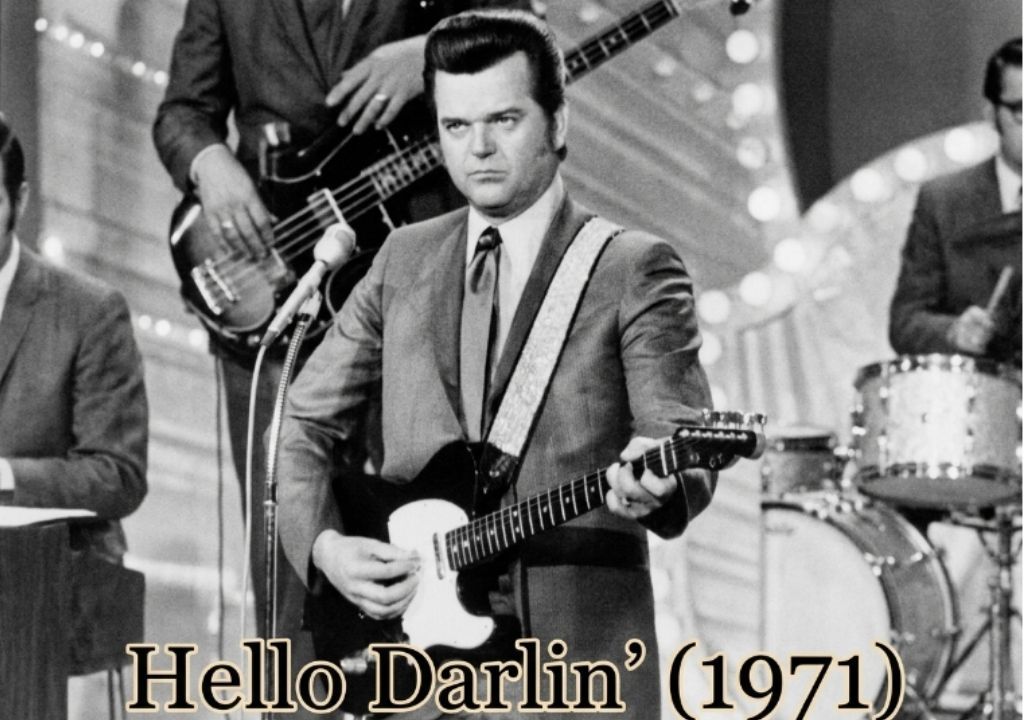
There are certain songs that do not merely play; they speak directly to the soul, instantly collapsing the decades between the past and the present. In the grand tapestry of American country music, few moments are as universally recognizable or as emotionally devastating as the opening seconds of Conway Twitty’s 1970 masterpiece, “Hello Darlin’.” Before a single guitar string is plucked or a drumbeat drops, a deep, velvety, and unmistakable voice breaks through the silence with a simple, spoken greeting: “Hello darlin’, nice to see you.” In that one breathless phrase, Twitty managed to capture the entire spectrum of human longing, regret, and enduring love, setting the stage for what would become his definitive signature song and a foundational pillar of traditional country music.
By the time the song was released in the spring of 1970, Conway Twitty had already transitioned from his early days as a rockabilly dynamo into one of Nashville’s most formidable vocal forces. Yet, “Hello Darlin'” elevated him into a completely different stratosphere of artistry. The song operates like a beautifully acted one-act play or a bittersweet short story told in real-time. It chronicles the agonizingly familiar scenario of unexpectedly running into an old flame. The narrator tries desperately to put on a brave face, asking polite questions and claiming that he is doing just fine. But as the classic melody swells, the fragile facade cracks completely, revealing a devastating truth: the passing of time has done absolutely nothing to heal the wound of their separation.
Musically, the track is a masterclass in the classic Nashville Sound of the era, perfectly balancing polished studio production with raw, honky-tonk sincerity. The weeping steel guitar provides a melancholic counterpoint to Twitty’s vocals, beautifully mimicking the tears the narrator is trying so hard not to shed. The slow, deliberate tempo allows every single word to breathe, ensuring that the listener feels the crushing weight of the unsaid things lingering between the former lovers. Twitty’s performance is nothing short of spectacular; he doesn’t just sing the lyrics, he inhabits them with a vulnerable masculinity that was revolutionary for its time. When his voice climbs into that rich, passionate upper register during the emotional climax, it carries a visceral ache that feels entirely authentic.
Decades later, “Hello Darlin'” remains a towering achievement in the landscape of popular music. It serves as a poignant reminder of an era when songs relied on pure emotional honesty and unmatched vocal delivery to captivate an audience. For anyone who has ever loved, lost, and wondered what might have been, Conway Twitty’s timeless greeting continues to feel like an old friend pulling up a chair in a quiet, neon-lit corner of the heart, sharing a story we all know all too well.