Introduction
There is a specific kind of magic buried within the vinyl grooves of the early 1970s—a collective yearning for community, warmth, and unadulterated joy that seems to have drifted away in our hyper-connected, yet deeply isolated digital age. When you drop the needle on Cliff Richard’s 1973 masterpiece, “Power to All Our Friends,” you are instantly transported back to an era where music wasn’t just consumed through sterile algorithms, but rather breathed in, shared, and celebrated like a communal feast. It was a time when the transistor radio was the heartbeat of the household, and a three-minute pop song possessed the extraordinary gravity to unite millions across borders.
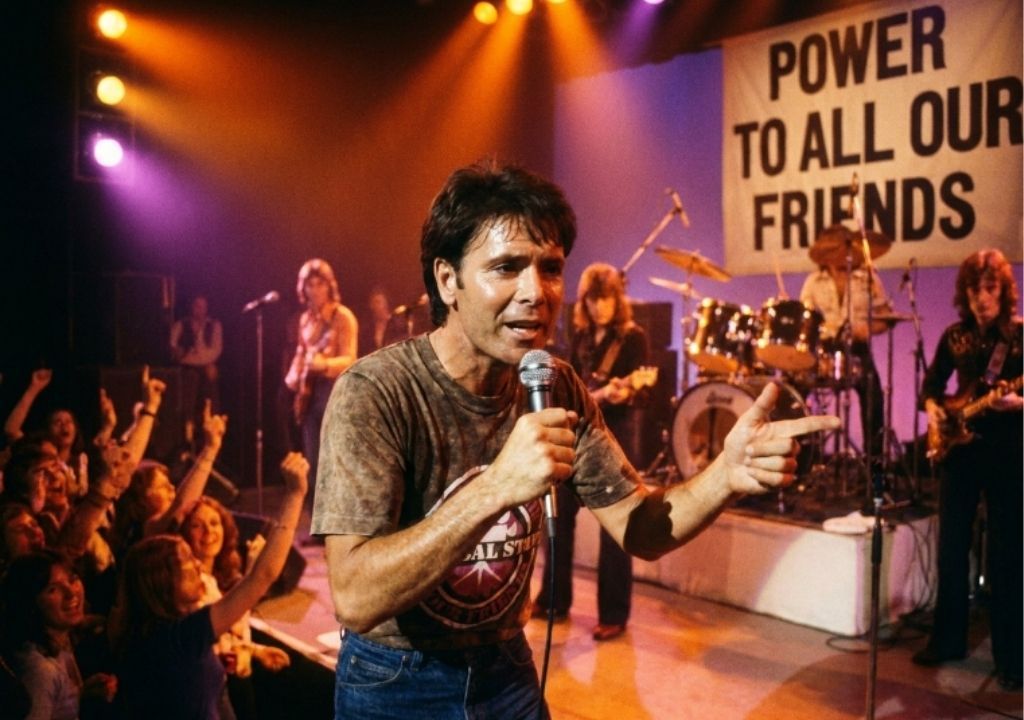
Released during a pivotal transition in British pop history, the track served as the United Kingdom’s vibrant entry into the 1973 Eurovision Song Contest. While the glam rock revolution was beginning to paint the town in glitter and theatricality, Cliff Richard stood as a reassuring, timeless anchor of melodic excellence. “Power to All Our Friends” is an absolute masterclass in uplifting songwriting, penned by the legendary duo Guy Fletcher and Doug Flett. From its opening acoustic strums and the infectious, driving rhythm section, the song builds an architectural wall of sound that feels less like a performance and more like an open invitation to a grand global sing-along. The production is rich with handclaps, swelling brass arrangements, and a soaring chorus that demands participation, capturing the raw, euphoric essence of early 70s optimistic pop.
What truly elevates this piece beyond standard pop fare is Cliff Richard’s undeniable charisma and vocal delivery. By 1973, Cliff was already a seasoned veteran of the industry, having evolved from a rebellious rock ‘n’ roll youth into the consummate, suave showman of the British empire. Yet, in this recording, his voice carries a brilliant, youthful exuberance that feels completely spontaneous. He sings with a wide-eyed sincerity, turning a simple message of camaraderie into an anthem of universal solidarity. The lyrics celebrate the unsung heroes of our everyday lives—the musicians, the listeners, the dreamers, and the friends who hold our worlds together. It is a poetic tribute to the healing power of melody itself.
Decades later, looking back through the soft-focus lens of nostalgia, “Power to All Our Friends” remains an essential capsule of historical pop culture. It reminds us of a time when the world felt a little smaller, the melodies felt a lot bigger, and a simple song could send a wave of collective optimism straight through the airwaves into our living rooms.