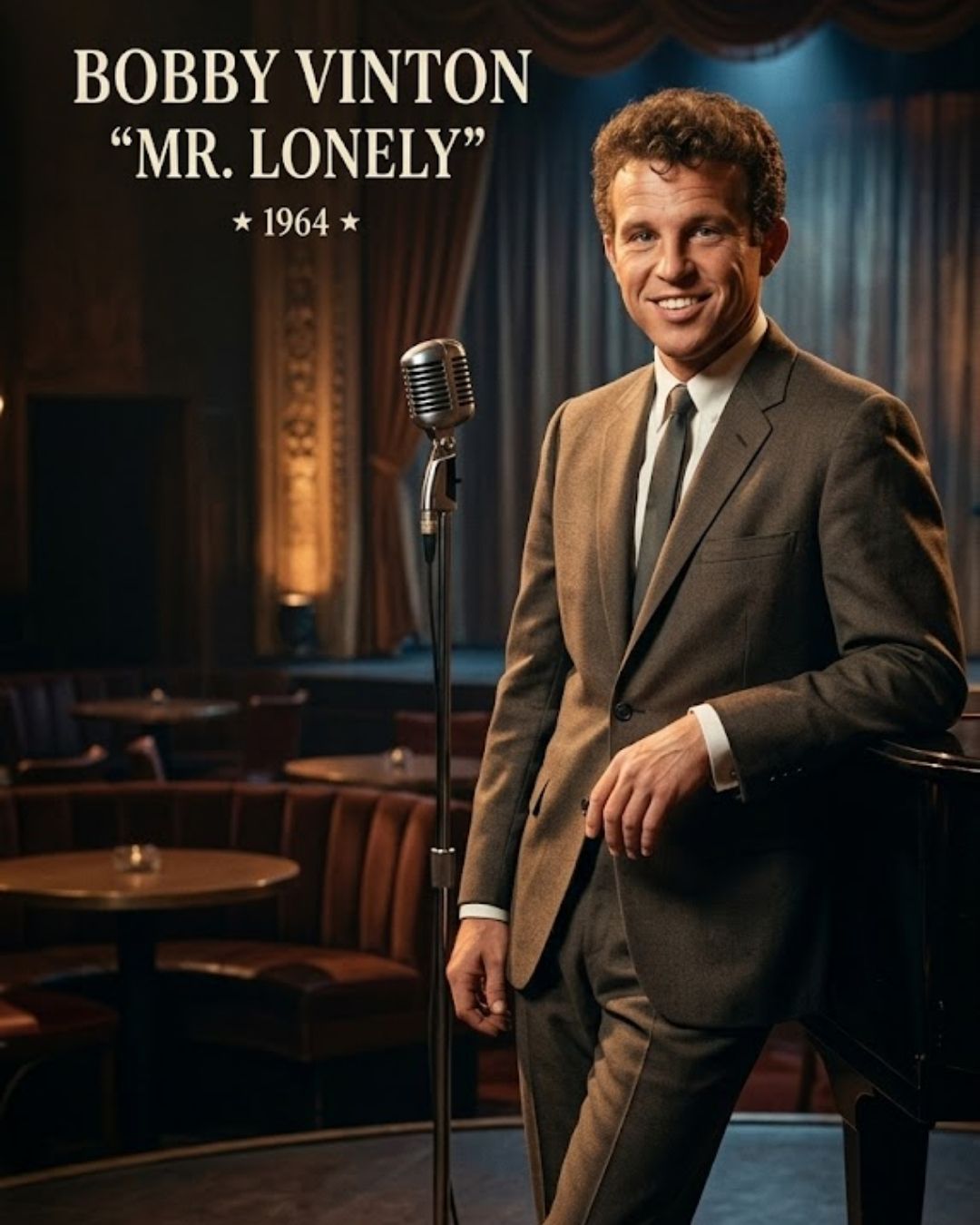
INTRODUCTION
Stationed at a bleak military base in the late 1950s, a young recruit sat alone with a notepad, wrestling with homesickness. That private diary entry seemed destined to remain a forgotten filler track on a 1962 studio record. How did an unpromoted, discarded ballad rise through the noise of the British Invasion to captivate millions across the globe?
THE DETAILED STORY
Before he became the golden-voiced “Polish Prince” of romantic pop, Bobby Vinton experienced the crushing weight of isolation firsthand. Drafted into the United States Army in the late 1950s, Vinton spent long, solitary nights away from his loved ones, channeling his profound homesickness into lyrics alongside co-writer Gene Allan. The result was a hauntingly simple composition that laid bare the raw, unfiltered vulnerability of an ordinary soldier longing for a letter from home.
When Vinton signed with Epic Records, he included the track on his 1962 breakthrough album, Roses Are Red. However, label executives heavily doubted its commercial potential as a standalone single, choosing to prioritize more conventional, upbeat romantic pop tunes. The master recording was effectively shelved, treated as mere catalog filler, and seemingly forgotten after jazz-pop vocalist Buddy Greco recorded an alternate rendition that achieved only modest chart success. To music industry insiders, the ballad appeared to have exhausted its lifespan before having a fair chance.
The dramatic turning point arrived in 1964 when Epic quietly included the original recording on Bobby Vinton’s Greatest Hits. Without any official promotional budget or advertising push, radio disc jockeys began spinning the album cut spontaneously in direct response to overwhelming listener requests. The emotional public reaction was both immediate and profound. Recognizing the undeniable grassroots groundswell, the record label swiftly rushed “Mr. Lonely” out as an official seven-inch vinyl single in the autumn of 1964.
The song’s rapid ascent occurred against extraordinary cultural odds. In a landmark year completely dominated by Beatlemania and the ferocious commercial tide of the British Invasion, traditional American vocalists were being systematically swept off the charts. Yet, Vinton’s plaintive, crystalline vocal phrasing and understated orchestral arrangement cut directly through the chaotic sonic landscape. In December 1964, the song completed its improbable journey by reaching No. 1 on the Billboard Hot 100.
Beyond commercial achievements, the record resonated deeply with young American service members deployed overseas during the turbulent early stages of the Vietnam War. Its opening confession of utter solitude struck an authentic emotional chord that polished studio productions could never replicate. “Mr. Lonely” ultimately evolved from a humble barracks diary into an enduring monument of mid-century music, demonstrating how unvarnished human vulnerability can transcend eras and connect solitary souls worldwide.