INTRODUCTION
In the late 1950s and early 1960s, British television studios buzzed with a quiet revolution as young hopefuls discovered the electrifying pulse of American rockabilly. Among them, Ronald Wycherley—soon known worldwide as Billy Fury—held a deep reverence for the Texas sound that changed popular music forever. How did a shy singer from Liverpool manage to capture the elusive magic of Buddy Holly’s immortal recordings?
THE DETAILED STORY
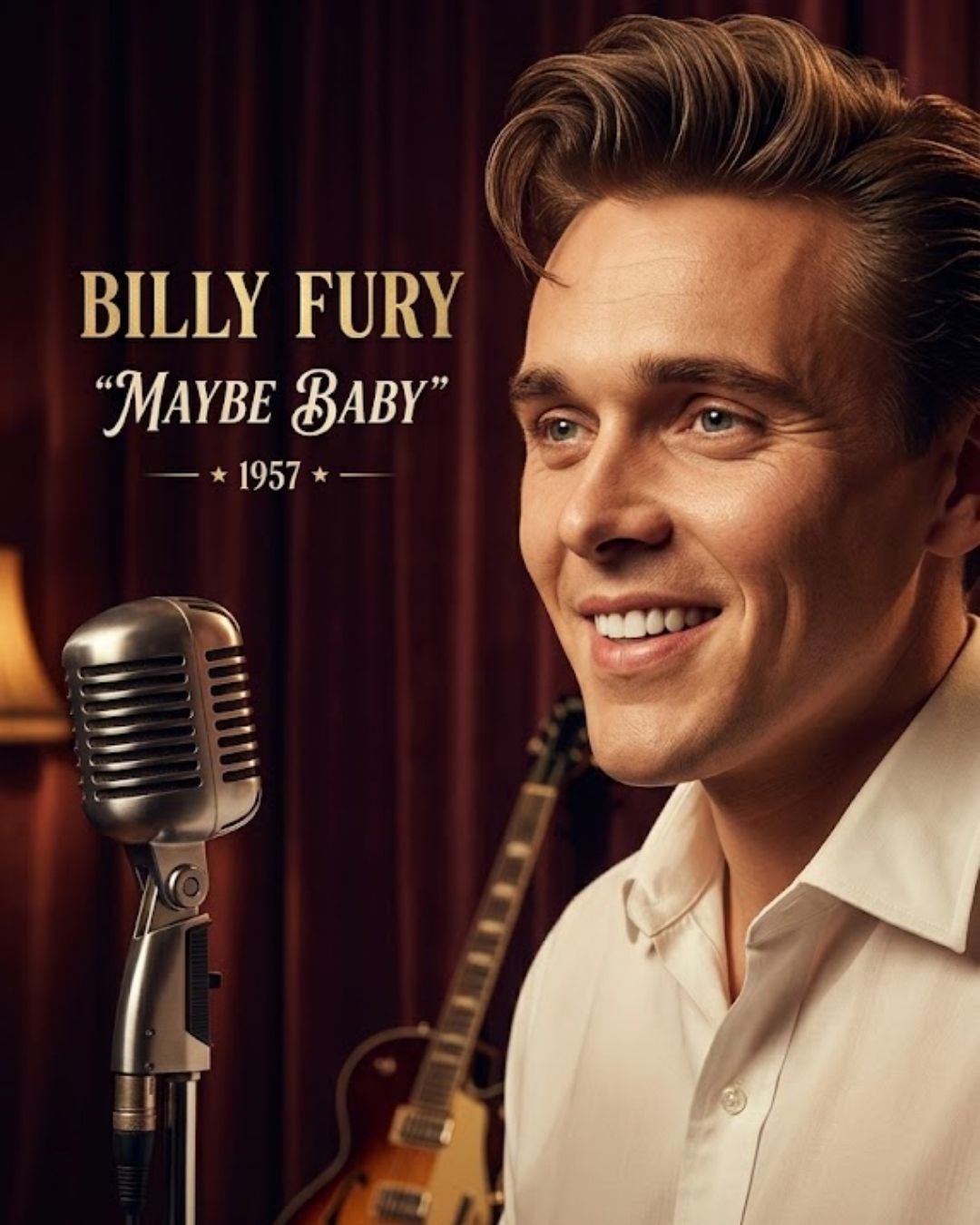
The genesis of rock and roll in the United Kingdom was an era defined by emulation, reverence, and an insatiable hunger for authentic sounds crossing the Atlantic. When Buddy Holly and the Crickets released “Maybe Baby” in 1958, recorded experimentally during a tour stop at an Oklahoma Air Force base, it became an instant transatlantic touchstone. For young British artists emerging from industrial port cities, Holly represented a new archetype of singer-songwriter: bespectacled, intense, and armed with a Fender Stratocaster that redefined rhythmic possibilities. Among the most gifted beneficiaries of this musical earthquake was Ronald Wycherley, who soon adopted the magnetic stage moniker Billy Fury. Born in Liverpool, Fury possessed a vocal delivery that blended raw rockabilly grit with an unmatched melodic vulnerability, setting him apart from his contemporaries. While Fury carved out his legendary status through monumental self-penned hits and chart-topping ballads under the guidance of producer Larry Parnes, his deep-seated admiration for Buddy Holly remained a guiding creative compass. Paying homage to his primary musical idols was never a mere exercise in replication; rather, it was an act of profound artistic translation. When he turned his distinctive, velvety yet powerful tenor toward tracks like “Maybe Baby,” he approached the material with a delicate balance of respect and interpretive boldness. The song itself, co-written by Holly and Norman Petty, relies on a deceptively simple syncopated rhythm, a driving acoustic strum undercurrent, and a soaring vocal melody that captures the bittersweet uncertainty of young love. In Fury’s hands, the track acquired a uniquely British emotional resonance, filtering the sunny optimism of Texas rockabilly through the introspective lens of a performer who understood physical frailty and emotional depth. Having battled rheumatic fever since childhood, Fury infused every performance with an underlying urgency, as if every note sung was a race against time. This physical vulnerability gave his up-tempo covers a poignant edge, transforming straightforward pop-rock numbers into masterclasses of vocal expression. Although television appearances and Decca sessions later pushed Fury toward lush orchestral ballads in the mid-1960s, his returns to pure rockabilly standards underscored an unwavering artistic integrity. These recordings preserved the vital link between American pioneers and British artists who revolutionized global music. Revisiting this track reveals the enduring heartbeat of authentic rock history.