INTRODUCTION
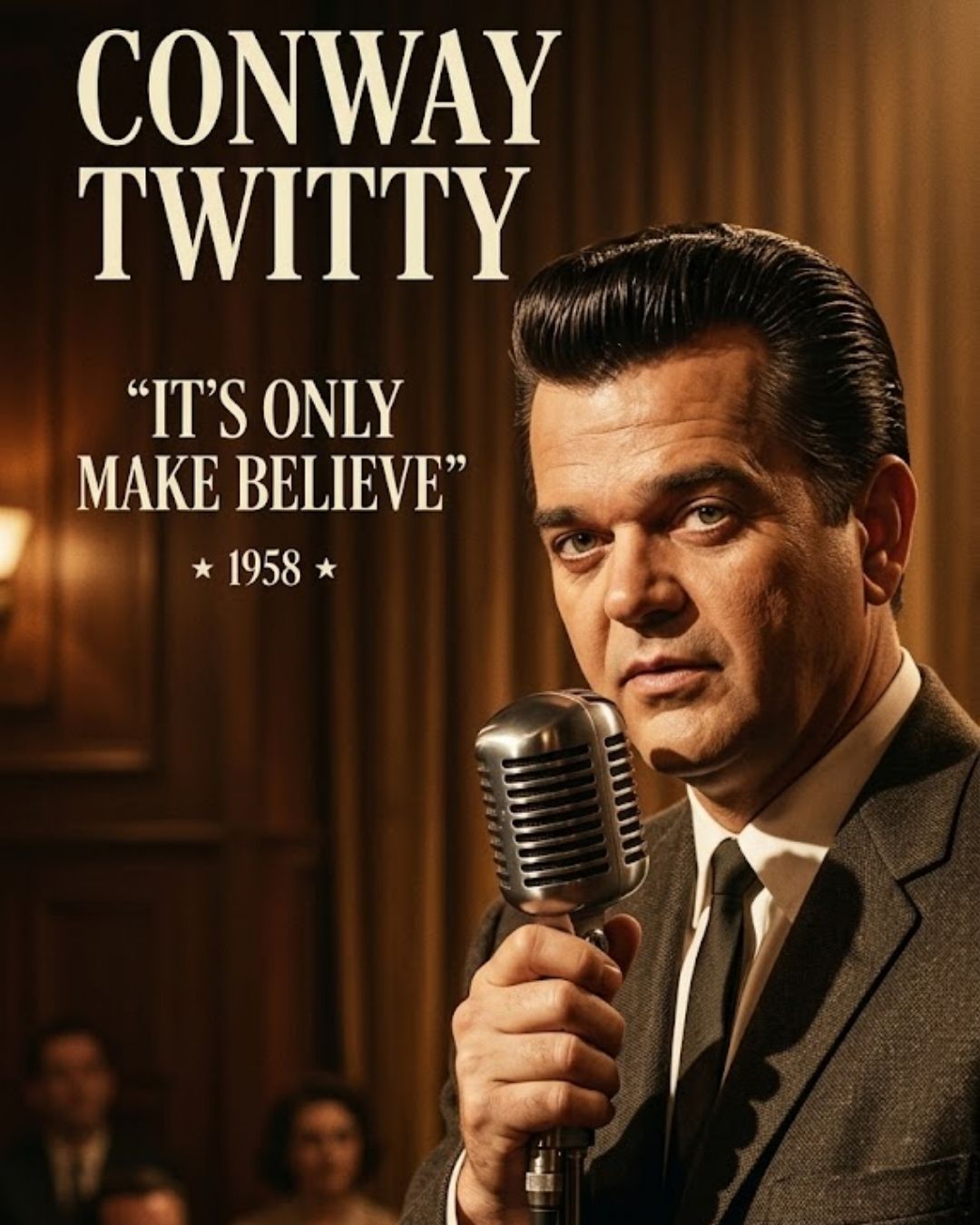
In May 1958, inside Nashville’s famed Bradley Studios, a former rockabilly hopeful named Harold Jenkins stepped up to the microphone alongside the Jordanaires. Having endured years of commercial obscurity, he cut a desperate ballad tucked away on the B-side of an overlooked single. How did this humble session turn an accidental recording into one of the most unforgettable anthems of the decade?
THE DETAILED STORY
The origins of the masterpiece trace back to an intermission at the Flamingo Lounge in Hamilton, Ontario, where Conway Twitty and his drummer Jack Nance sketched the melody in under twenty minutes. Desperate for a breakthrough after parting ways with Sun Records, Twitty poured pure emotional devastation into the lyrics, capturing the agonizing ache of unreciprocated love. When MGM Records scheduled the session at Bradley Film & Recording Studio, producer Jim Vienneau made a crucial artistic decision: he urged Twitty to lean heavily into his natural, guttural vocal growl rather than polishing it away. Supported by the Jordanaires’ soaring harmonies, Floyd Cramer’s delicate piano chords, and Grady Martin’s atmospheric guitar, the track transformed from a standard lament into a dramatic, slow-burning tour de force.
Initially released in July 1958 as the B-side to “I’ll Try,” the record seemed doomed when the A-side failed to generate interest. Twitty, disheartened by another apparent failure, briefly returned home to work on his family farm. However, fate intervened when an influential disc jockey in Columbus, Ohio flipped the vinyl and placed the B-side on heavy rotation. The reaction was immediate and overwhelming. Listeners flooded radio switchboards, convinced that Elvis Presley had secretly recorded a new masterpiece under an alias. Twitty’s operatic intensity, marked by spine-tingling crescendoes and a brooding baritone, commanded the airwaves. By November 1958, the song skyrocketed to number one on the Billboard Hot 100 and soon conquered the UK Singles Chart, ultimately selling millions of copies worldwide.
Beyond its extraordinary commercial triumph, the record altered the trajectory of American popular music. It proved that a pop ballad could harness the visceral edge of early rock and roll without sacrificing classical dramatic tension. While Twitty would later transition to country music in the mid-1960s—eventually amassing over forty chart-topping country singles—this defining 1958 performance remained his singular pop summit. The composition endured across generations through celebrated renditions by Glen Campbell, Billy Fury, and a heartfelt 1970 duet with Loretta Lynn, yet none eclipsed the volcanic power of the original master recording. More than six decades later, the track stands as a timeless monument to unrequited heartbreak, proving that sheer artistic sincerity can turn make-believe into immortal musical history.