INTRODUCTION
On a chilly October evening in 1958, an eighteen-year-old dock worker named Ronald Wycherley stood backstage at the Birkenhead Essoldo clutching a battered acoustic guitar. He hoped to sell his original songs to teen idol Marty Wilde, unaware he would be shoved onstage minutes later. How did a shy Liverpool youth turn nervous terror into the blistering swagger of a rockabilly classic?
THE DETAILED STORY
When impresario Larry Parnes pushed the trembling teenager onto the stage during the show’s interval at the Birkenhead Essoldo, Ronald Wycherley had no band, no stage costume, and no professional experience. As he struck his acoustic guitar and launched into his own original compositions, his knees shook uncontrollably from pure nervous fright. Yet the screaming audience interpreted his desperate tremors as a daringly provocative stage presence. By midnight, Parnes had signed the stunned dock worker, rechristening him Billy Fury and launching one of the most charismatic icons in British music history.
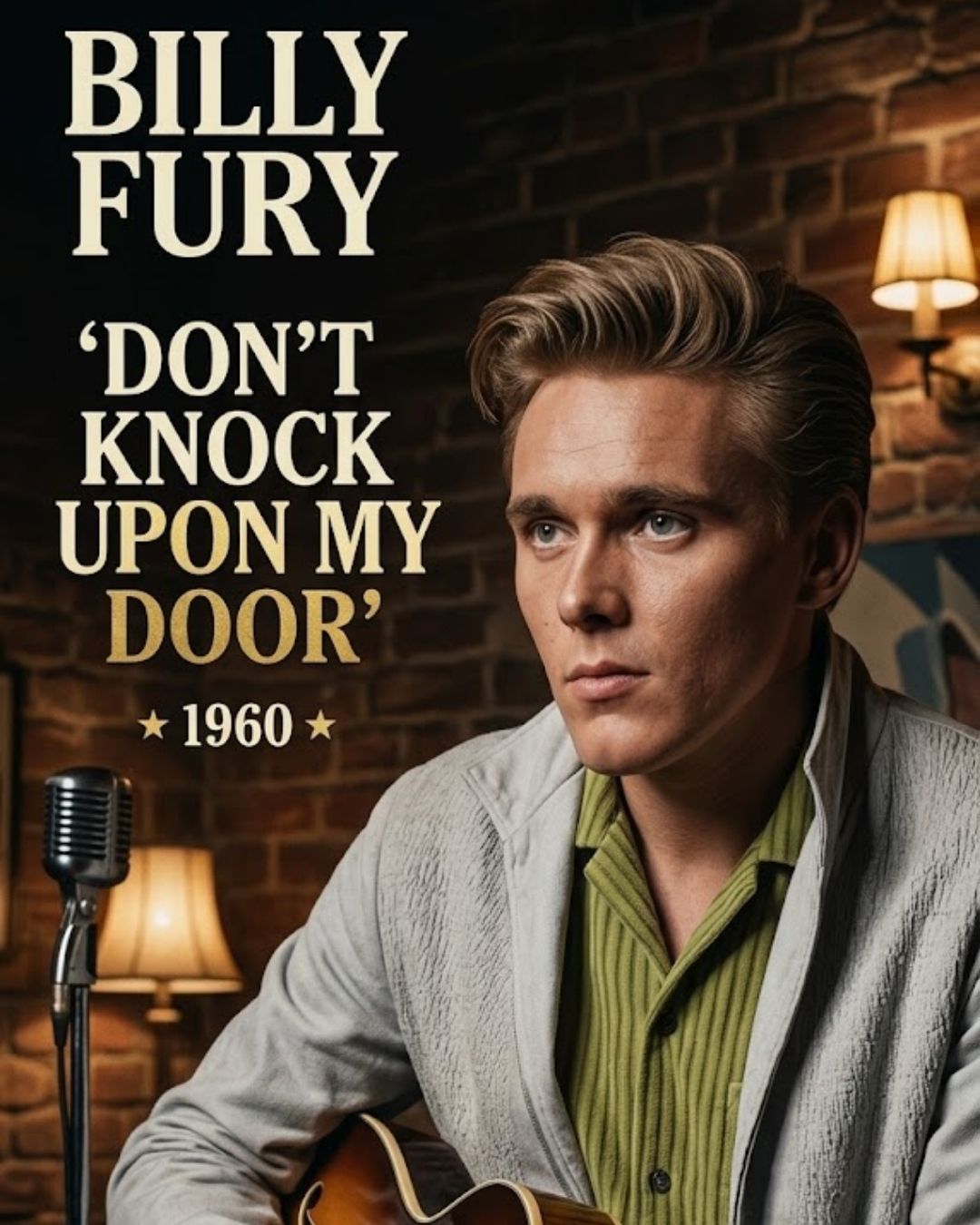
In an era when the post-war British music industry predominantly relied on sanitized, polite cover versions of American hits, Fury stood distinctly apart as a self-contained rock and roll visionary. Recorded for Decca Records and issued in April 1959 as the B-side to “Margo,” “Don’t Knock Upon My Door” exemplified his fierce creative independence. The track crackles with an unvarnished, immediate energy that deliberately bypassed polished studio orchestration in favor of raw, primal rockabilly rhythm.
Musically, the composition represents a masterclass in minimalist tension and unrelenting momentum. Propelled by Fury’s urgent rhythm guitar and a walking upright double bass, the arrangement establishes a tight, driving groove that allows his expressive voice to dominate. Stabbing electric guitar accents punctuate each verse with sharp precision, evoking the golden era of Sun Records without ever descending into mere imitation. Lyrically, the song rejects romantic deceit with biting defiance, capturing the wounded pride and uncompromising attitude of rebellious youth. Fury’s vocal delivery balances brooding vulnerability with sharp hiccups, bluesy slurs, and breathless swagger, displaying an instinctive mastery of rockabilly phrasing that few British contemporaries could match.
Although originally tucked away on the reverse side of a 45 RPM vinyl single, “Don’t Knock Upon My Door” served as a crucial foundational milestone leading directly toward his 1960 landmark album, The Sound of Fury. It proved conclusively to skeptical industry executives that British artists could write and perform authentic, homegrown rock and roll imbued with genuine working-class urgency. Decades later, this incendiary recording remains an essential historical treasure of early rock culture, capturing the timeless spirit of an 18-year-old Liverpool artist who boldly helped define the UK’s first musical revolution.