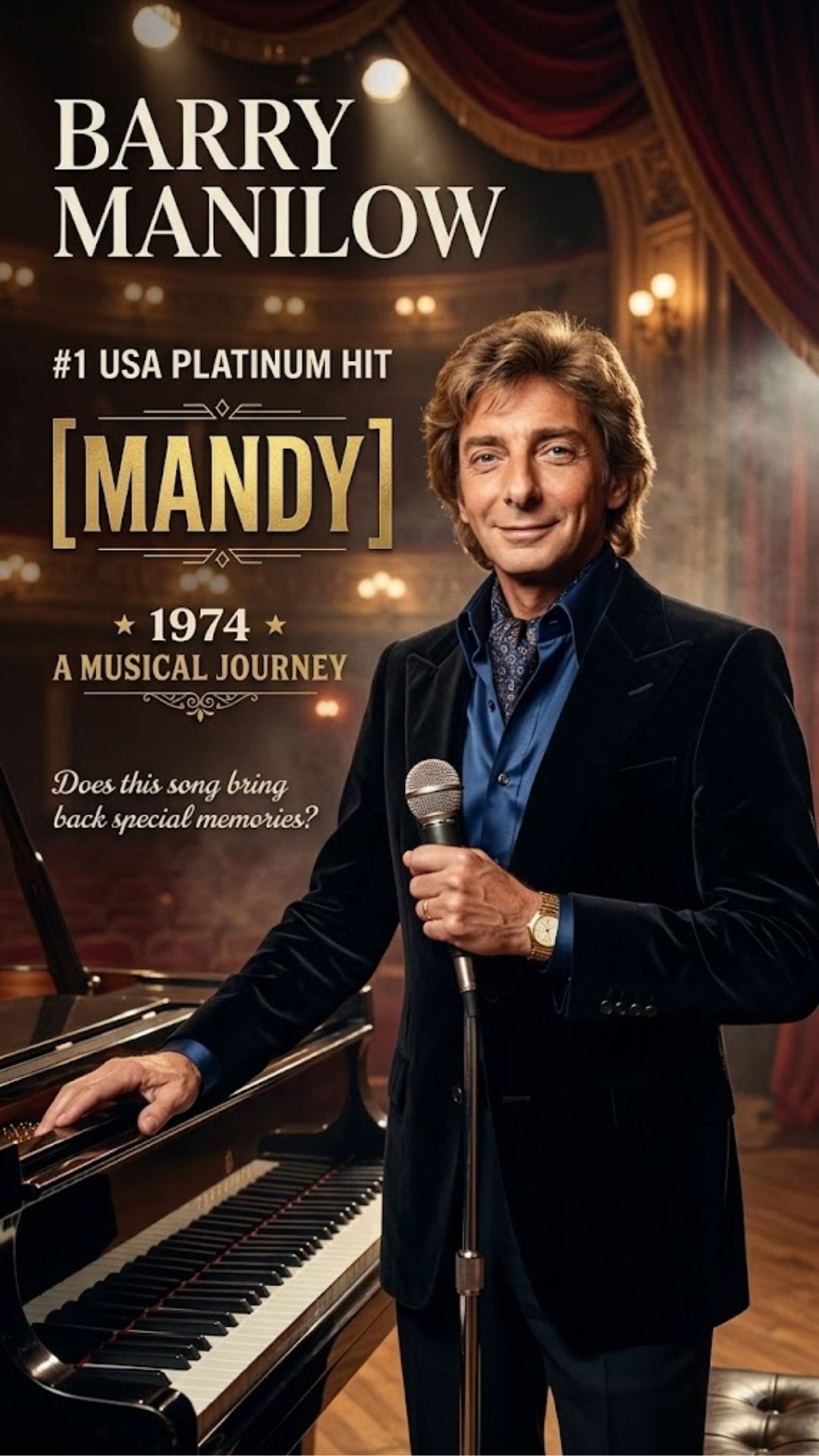
Few piano chords evoke tender memories quite like this timeless ballad of unspoken regret. When Barry Manilow reluctantly slowed down an obscure uptempo track, he created a transformative masterpiece. Yet behind its bittersweet chorus lies a hidden studio clash. What distinct memory floods back whenever that opening melody begins?
INTRODUCTION
In early 1974, a reluctant jingle writer sat at a piano in New York City, stubbornly resisting an uptempo British pop tune handed to him by record executive Clive Davis. Unwilling to record a carbon copy, the artist dramatically changed the tempo, name, and emotional core. How did an unwanted cover song unexpectedly transform Barry Manilow into an enduring global superstar?
THE DETAILED STORY
Before conquering the global music industry, Barry Manilow was primarily recognized as a brilliant commercial jingle composer and musical director for Bette Midler. When visionary music executive Clive Davis took leadership of Bell Records, he possessed an acute ear for commercial potential and urged Manilow to cover an obscure pop track first released in 1971 titled Brandy, written by Scott English and Richard Kerr.
Initially, Manilow thoroughly disliked the song. The original British cut was brisk, guitar-heavy, and rhythmically cluttered, which clashed directly with his refined musical instincts. Furthermore, the American pop group Looking Glass had recently dominated international airwaves with their massive chart smash Brandy (You’re a Fine Girl), creating a severe risk of listener confusion. Resisting intense executive pressure, Manilow agreed to record the composition only under the strict condition that he could dismantle its pacing, discard the upbeat tempo, and completely reshape its artistic soul.
Entering a Manhattan recording studio, Manilow executed two decisive creative choices that permanently reshaped his musical destiny. First, he renamed the title character to Mandy to forge an authentic, independent narrative. More importantly, he discarded the frantic rhythm track, seating himself at a grand piano to decelerate the tempo into a brooding, heartfelt cadence. Working alongside producer Ron Dante, he crafted a dynamic musical architecture that started with solitary acoustic chords and gradually blossomed into a majestic, strings-laden crescendo, perfectly amplifying the agony of missed love.
Released in October 1974 as the flagship single for the newly launched Arista Records, the record generated an immediate, electrifying response across mainstream radio stations. Audiences were captivated by the raw sincerity of his vocal delivery and the dramatic melodic build. In January 1975, the soaring ballad topped the Billboard Hot 100, securing Manilow’s first career-defining chart-topper and instantly transforming the fledgling label into an industry powerhouse.
The enduring legacy of Mandy extends far beyond its historic chart statistics. It established the modern blueprint for the orchestral pop power ballad, proving that vulnerability, acoustic intimacy, and cinematic grandeur could profoundly resonate with millions of listeners worldwide. Decades later, the track stands as an indelible masterpiece of romantic longing, capturing the timeless ache of recognizing love’s true worth only after it has slipped away forever.