INTRODUCTION
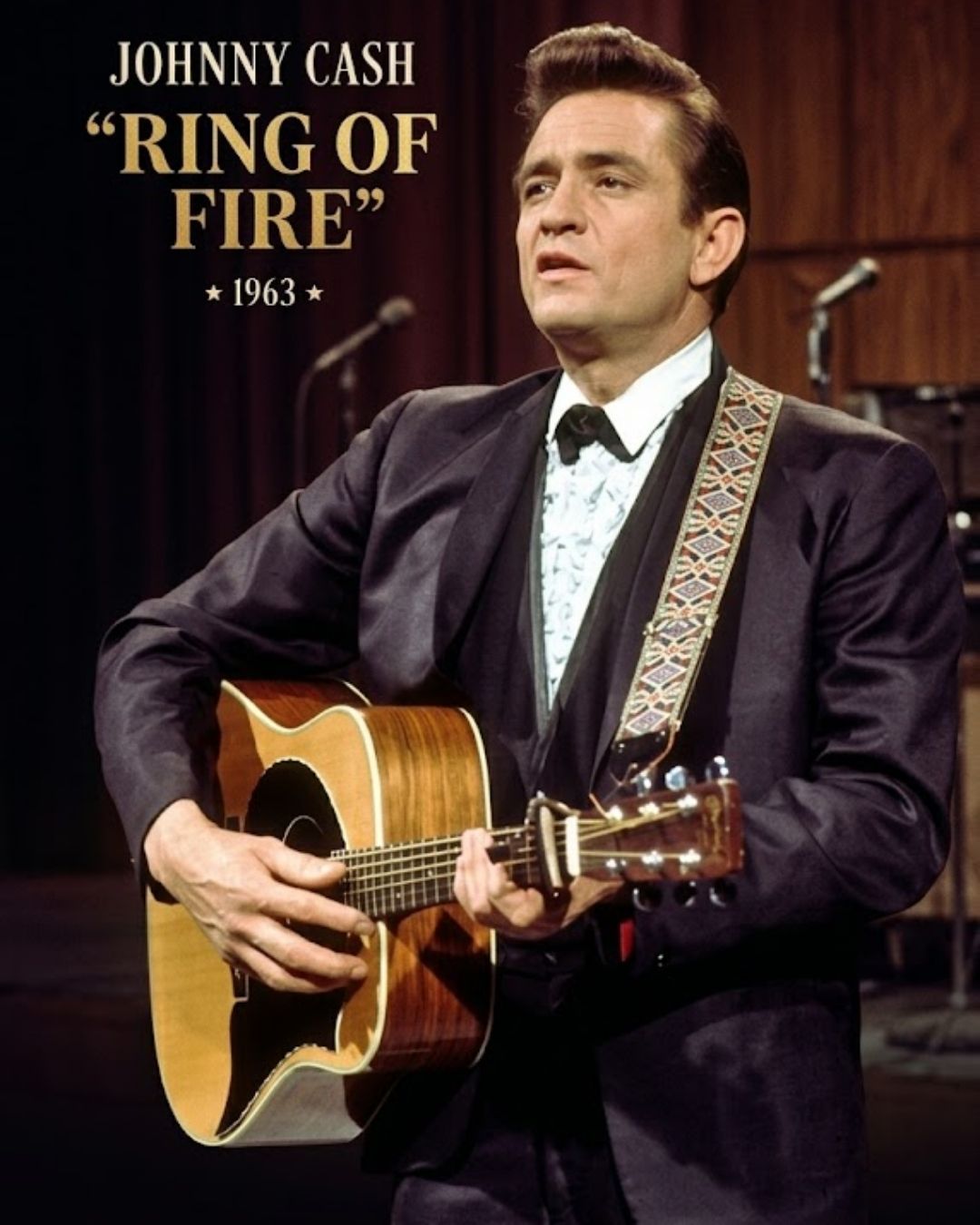
On March 25, 1963, inside Columbia Recording Studio in Nashville, session players stared in disbelief as two mariachi trumpet players walked into the room. Country traditionalists considered brass an absolute sacrilege, yet Johnny Cash remained obstinate. He claimed the horns had haunted his sleep for months. But what drove him to gamble his entire standing on a sound nobody wanted?
THE DETAILED STORY
The origin of the song was rooted in intense emotional agony and forbidden desire. In 1962, June Carter was driving aimlessly through the Tennessee countryside late at night, agonizing over her burgeoning feelings for Cash. Both were married to other partners, and Cash was rapidly spiraling into severe amphetamine addiction and destructive behavior. Describing the terrifying allure of falling in love with him, she scribbled desperate phrases about a fiery, inescapable vortex. Partnering with seasoned songwriter Merle Kilgore, she shaped the poem into music. June’s sister, Anita Carter, initially recorded the piece in late 1962 as an acoustic folk ballad titled “(Love’s) Ring of Fire.”
When Anita’s gentle rendition stalled commercially, Cash stepped in. He had revered the melody from the first listen, famously telling Anita that he experienced a recurring dream where Mexican mariachi horns surged through the verses like a vivid fever dream. Columbia Records producer Don Law and Nashville studio veterans were openly skeptical. Country traditionalists in the early 1960s fiercely rejected brass instrumentation, associating horn sections with secular jazz, pop commercialism, or border cantinas rather than genuine hillbilly authenticity.
Cash remained completely obstinate. On March 25, 1963, he walked into Columbia Recording Studio with trumpeters Gene Mullins and Karl Garvin, boldly layering south-of-the-border fanfare over the locomotive boom-chicka-boom rhythm of Luther Perkins’ guitar and Marshall Grant’s bass. Backed by the soaring, church-hewn harmonies of Mother Maybelle and the Carter Sisters, Cash unleashed his subterranean baritone. The resulting collision of Mexican brass and Appalachian gospel generated a startling sonic tension, capturing the simultaneous ecstasy and terror of surrender.
Released in April 1963, the groundbreaking track obliterated industry skepticism. It rapidly conquered the charts, holding the number one spot on Billboard’s Hot Country Singles for seven consecutive weeks while crossing over to peak at number seventeen on the Hot 100. The monumental success revitalized Cash’s career and fundamentally expanded what country radio could sound like, proving that southern roots could assimilate cross-cultural elements without losing authenticity. Decades later, its hypnotic cadence, triumphant brass, and visceral lyrics continue to reverberate across generations. It stands as an enduring monument to artistic audacity, cementing Johnny Cash as a fearless visionary who transformed private torment into an immortal standard of American music.