INTRODUCTION
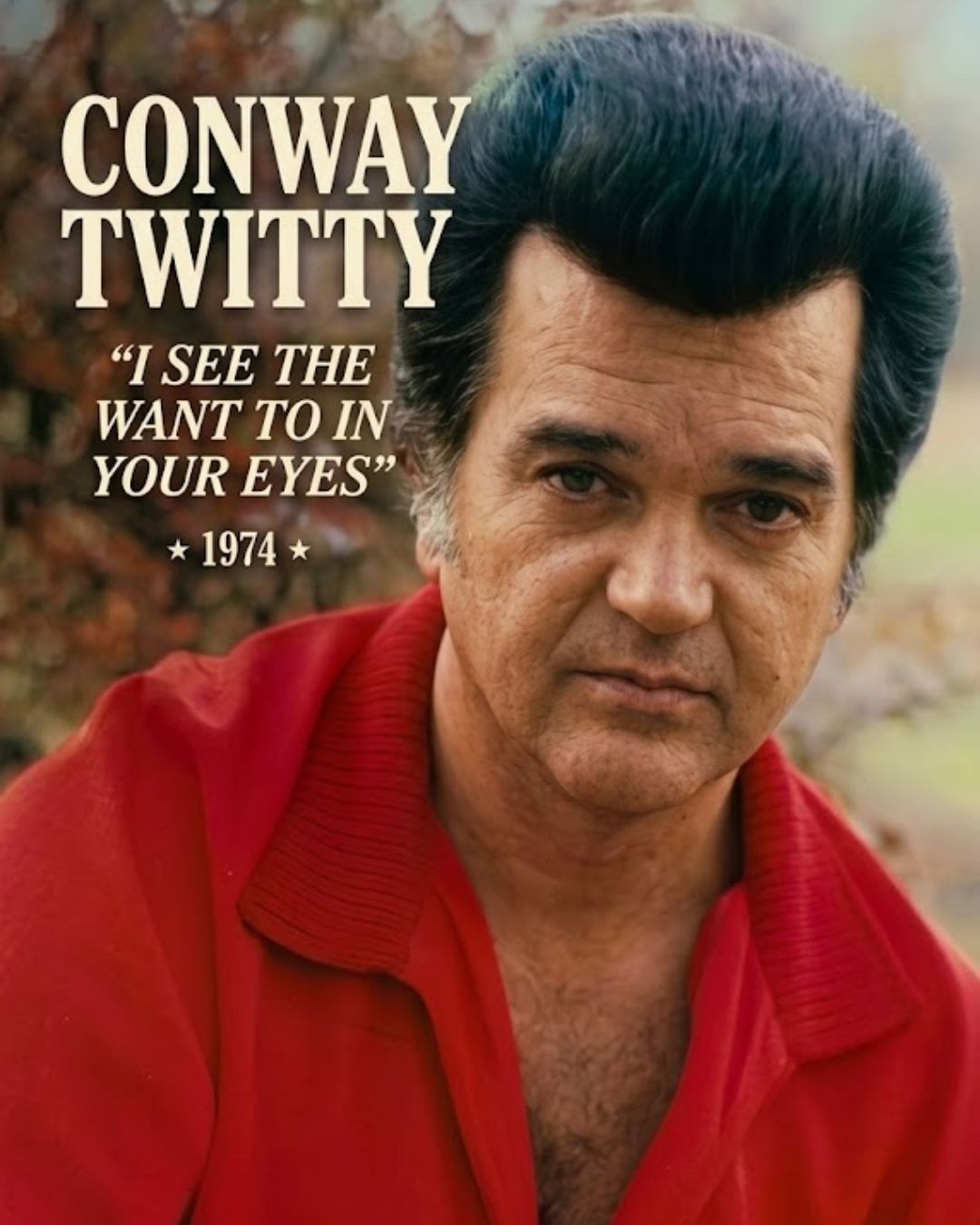
In the summer of 1974, songwriter Wayne Carson handed a delicate melody to Nashville’s most distinctive voice, seeking something far deeper than a conventional love song. Stepping up to the microphone, the singer traded bravado for a devastatingly quiet confession of unspoken longing. How did a subtle observation of a lover’s gaze transform into one of country music’s most hauntingly enduring moments?
THE DETAILED STORY
By the mid-1970s, Conway Twitty had already conquered rockabilly and established himself as the undisputed titan of American country music. Yet, he constantly sought material that explored the intricate, often unexpressed nuances of adult relationships. Written by Wayne Carson—the prolific songwriter behind “The Letter” and “Always on My Mind”—”I See The Want To In Your Eyes” offered an unusually restrained psychological portrait. Rather than chronicling an overt affair or an explosive heartbreak, the composition explored the quiet precipice of temptation: that private, electric instant when two people realize their mutual desire before a single boundary has been crossed.
Recorded at Bradley’s Barn in Mt. Juliet, Tennessee, under the legendary production of Owen Bradley and Twitty himself, the track stood apart from the era’s bombastic arrangements. The instrumentation remained tastefully understated, anchored by warm acoustic strums, gentle electric piano accents, and weeping pedal steel that cushioned rather than competed with the vocal delivery. Twitty understood that the lyric’s immense potency lay in its whispered intimacy. He abandoned the full-throated belt of his early rockabilly days in favor of a conversational, deeply resonant baritone. His signature vocal growl was softened into an aching plea, making the listener feel like an unintended eavesdropper on an intensely private confession.
Released in July 1974 as the lead single from his celebrated studio album I’m Not Through Loving You Yet, the recording resonated instantaneously across the American country music landscape. It surged up the national trade charts, capturing the Billboard Hot Country Singles number one position in September 1974 and logging two full weeks at the absolute summit. The remarkable achievement marked Twitty’s fourteenth solo country chart-topper, further cementing his undisputed reputation as an emotional interpreter who articulated adult vulnerability and unspoken longing with unmatched storytelling precision.
Decades later, the song endures as a masterclass in country-politan sophistication, proving that dramatic restraint often cuts far deeper than theatrical melodrama. While other artists have revisited Carson’s timeless lyrics over the years, none matched the gravitas, tenderness, and magnetic tension of this definitive 1974 master recording. It remains an enduring testament to a golden era of songwriting, where a single shared glance could carry the entire emotional weight of a lifetime.