PART 3: THE DEFINITIVE NARRATIVE
INTRODUCTION
Inside Decca Studios in April 1960, a twenty-year-old Ronald Wycherley stepped up to the microphone without a safety net of American cover songs. Armed solely with self-penned material and a blistering backing unit, the Liverpool singer cut a frenetic rockabilly groove at breakneck speed. But how did this frantic, rhythm-driven track redefine an entire nation’s sound?
THE DETAILED STORY
In 1960, the British popular music landscape was largely trapped in an echo chamber of polite American covers and heavily orchestrated teen ballads. Major record executives routinely dismissed the idea that homegrown artists could compose authentic rock ‘n’ roll, preferring to feed young vocalists safe, sanitized material. Billy Fury decisively dismantled that industry status quo. When entering Decca Studios in West Hampstead to cut his landmark ten-inch debut LP, The Sound of Fury, Fury insisted on recording exclusively original compositions. Writing under the pseudonym Wilbur Wilberforce to safeguard his creative autonomy, he captured the primal spirit of American rockabilly with unprecedented British authenticity.
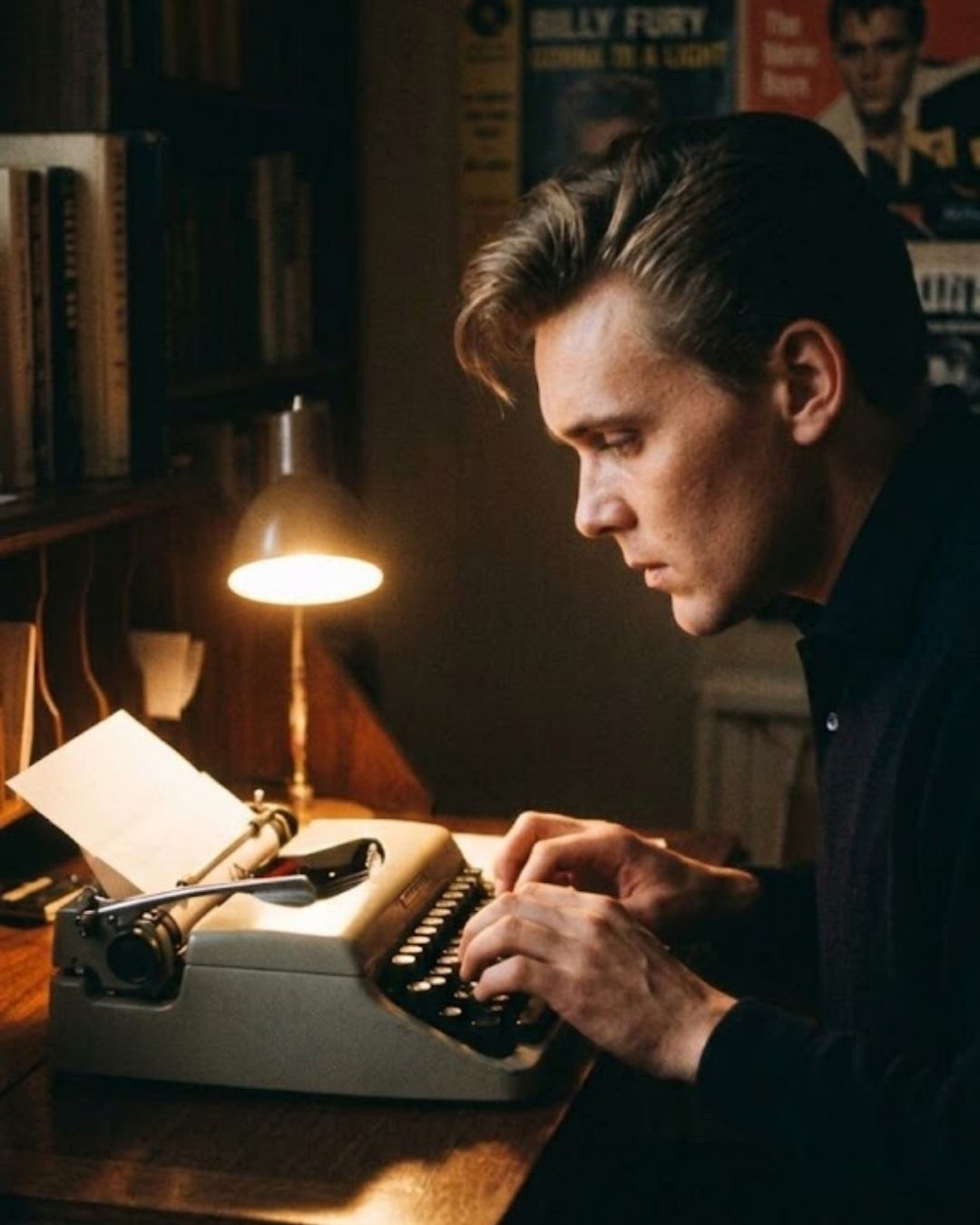
“Gonna Type a Letter” stood at the energetic epicenter of that creative triumph. Driven by an urgent, locomotive tempo, the track transformed the rhythmic clatter of typing a frantic letter into a vivid metaphor for emotional turbulence and restless longing. The recording session deliberately avoided intrusive brass sections or sweetening string arrangements in favor of an unvarnished, high-octane rock ensemble. Session guitar virtuoso Joe Brown provided searing rockabilly riffs and sharp twang, while drummer Andy White established a tight, chattering snare beat that echoed the mechanical cadence of typewriter keystrokes. Underpinning the track was Alan Weighell’s percussive upright slap bass, generating a rich acoustic drive reminiscent of Sam Phillips’ iconic Sun Records productions in Memphis.
Fury’s vocal delivery elevated the composition into timeless territory. Rather than mimicking American rock stars through exaggerated theatrics, Fury sang with intuitive vulnerability, raw bite, and breathless syncopation. He navigated rapid lyrical turns with rhythmic precision, shifting effortlessly from playful vocal hiccups to smoky lower-register growls. His distinctive Liverpool inflection introduced a sultry, rebellious aura that felt dangerous and remarkably ahead of its era.
Though commercial radio initially hesitated around such fierce intensity, “Gonna Type a Letter” proved that British artists could write, perform, and define their own rock identity without transatlantic imitation. The track cemented The Sound of Fury as a foundational masterpiece, directly influencing the emergent Merseybeat sound and earning reverence from legends like John Lennon and Keith Richards. Decades later, the song stands as an exhilarating monument to raw youth rebellion, artistic independence, and Billy Fury’s enduring status as Britain’s original rock pioneer.