INTRODUCTION
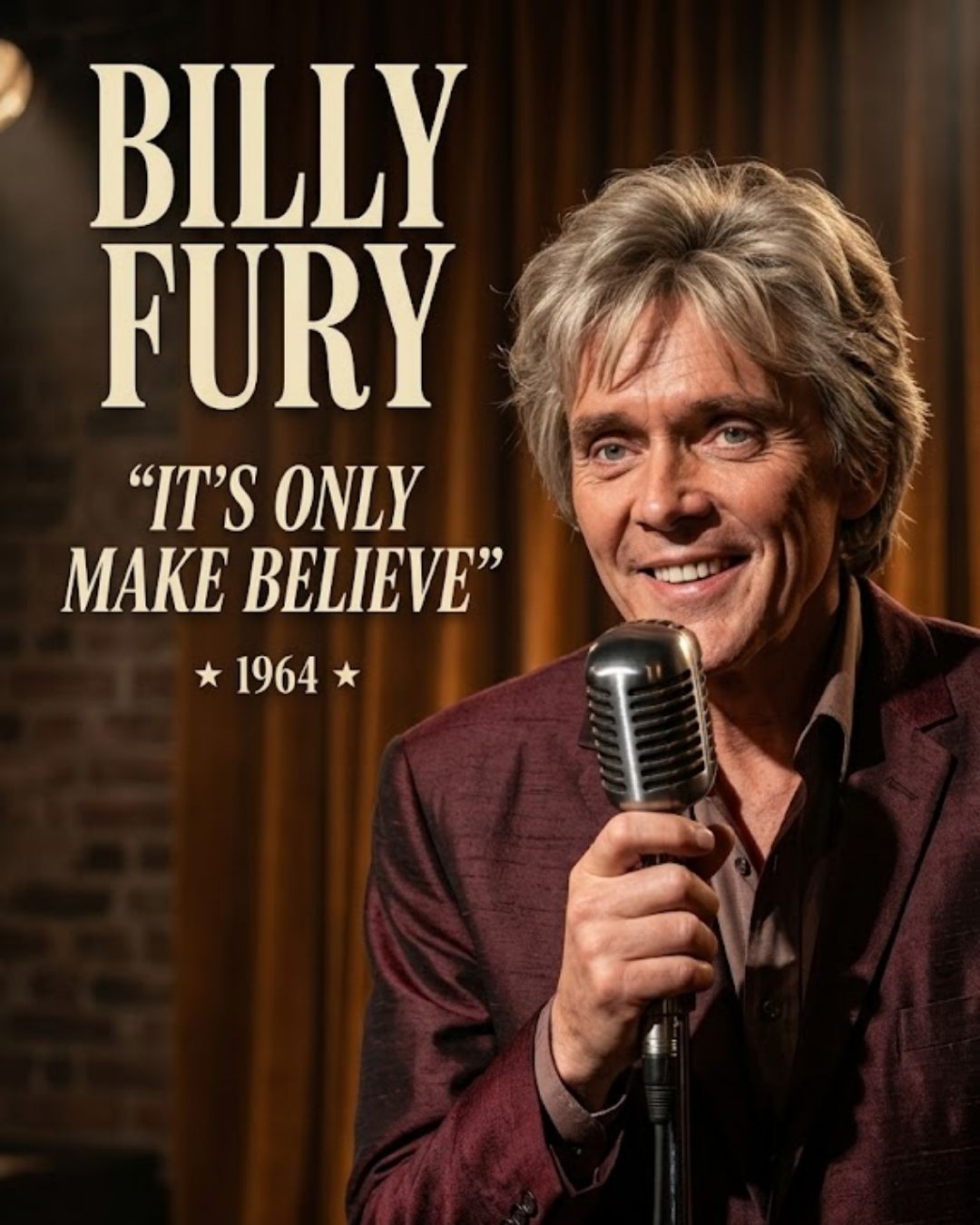
In 1964, British rock pioneer Billy Fury stood before the microphone at Decca Studios, battling the chronic heart ailments that shadowed his life. Instead of imitating Conway Twitty’s 1958 rockabilly hit, Fury leaned into devastating operatic grandeur, backed by dramatic orchestral strings. How did this frail Liverpool idol turn an American classic into one of Britain’s most haunting vocal deliveries?
THE DETAILED STORY
When Conway Twitty and Jack Nance wrote “It’s Only Make Believe” in 1958, the song was conceived as an explosive rockabilly lament, heavily influenced by Elvis Presley’s soaring vocal swagger. Twitty took it to the pinnacle of the global charts with raw, southern grit. Yet six years later, amidst the seismic roar of Beatlemania and the British rhythm-and-blues explosion, Billy Fury approached the composition from a radically different psychological perspective. Born Ronald Wycherley in Liverpool, Fury possessed a brooding, sensitive charisma that set him apart from his peers. Weakened by childhood rheumatic fever, which left him with permanent heart valve damage, Fury channeled a palpable fragility into every performance. To him, the lyric was not merely dramatic fiction—it was an agonizing reflection of longing, isolation, and unattainable dreams.
Entering the Decca recording facilities with arranger and producer Ivor Raymonde, Fury bypassed the upbeat trends dominating the mid-1960s pop landscape. Instead, the session was structured around cinematic intensity. The arrangement opens with quiet restraint, framing Fury’s voice against subtle piano arpeggios and hushed acoustic undertones. As the narrative of unrequited devotion unfolds, swelling string sections and thunderous timpani elevate the soundscape into pure operatic melodrama. Rather than relying on power alone, Fury demonstrated masterclass vocal dynamics, beginning with a trembling, breathy vibrato before ascending to an astonishingly clear, full-throated crescendo. His phrasing dragged behind the beat with deliberate melancholy, pulling listeners deep into the private torment of a lover caught between desperate illusion and harsh reality.
Released in late 1964, the single proved to be a formidable commercial triumph, steadily climbing the UK Singles Chart to secure a coveted top-ten position and remaining on the charts for thirteen weeks. In an era increasingly obsessed with electric beat ensembles, Fury’s monumental orchestral ballad reaffirmed the timeless authority of traditional crooning combined with authentic rock emotion. It proved that deep emotional honesty could hold its ground against the fastest-moving musical revolution of the twentieth century. Decades after his untimely passing in 1983, the recording stands as a revered cornerstone of British pop heritage. “It’s Only Make Believe” remains the definitive showcase of Billy Fury’s extraordinary gift: an unmatched ability to transform private vulnerability into universal, heartbreaking beauty.