INTRODUCTION
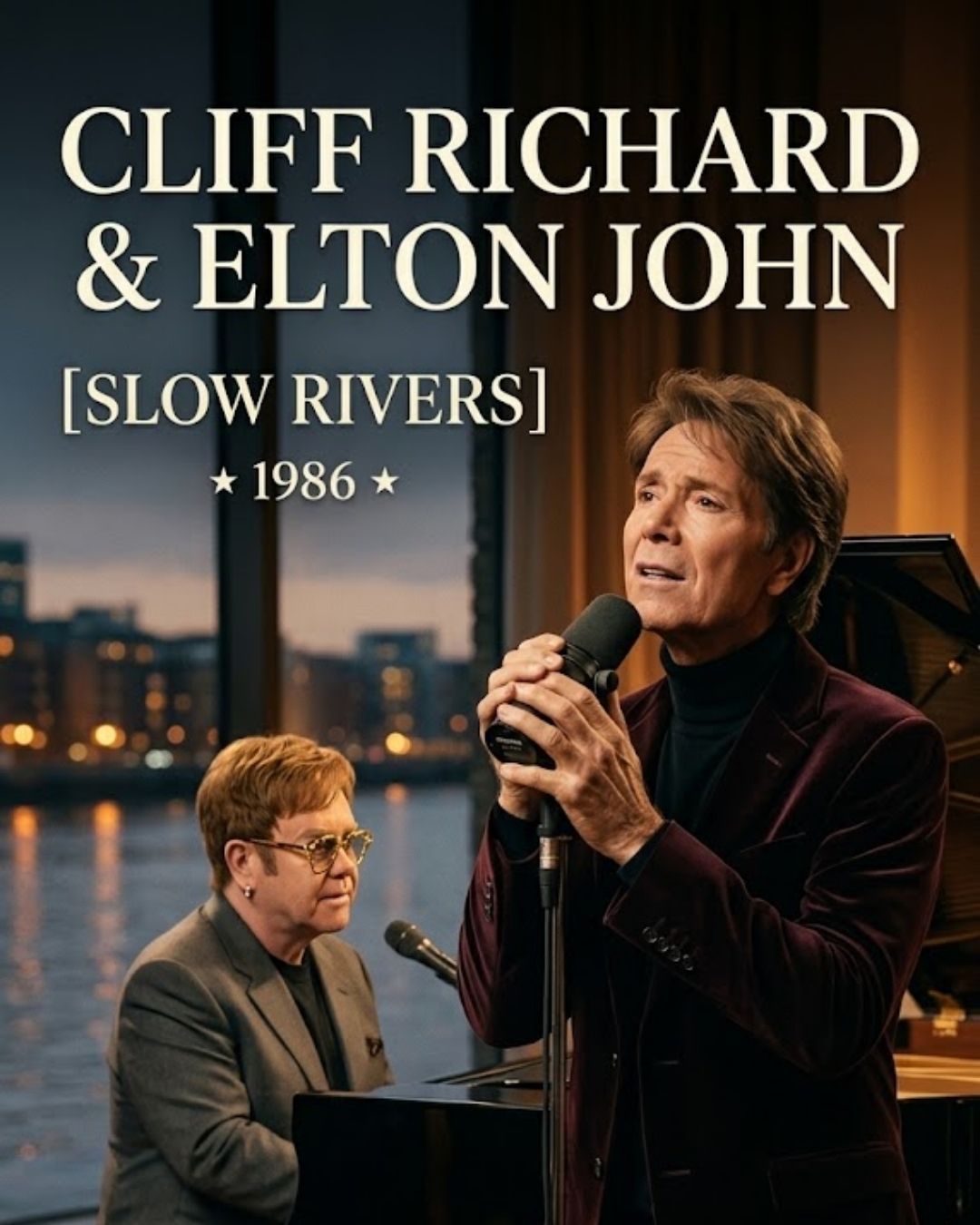
In late 1986, producer Gus Dudgeon watched two distinct eras of British music converge inside the control room at Wisseloord Studios. When Elton John sat at the piano alongside Cliff Richard to record Slow Rivers, both superstars sought a dramatic, atmospheric depth far beyond standard radio pop. Why did this poignant collaboration between two titans become such a fascinating enigma of the eighties?
THE DETAILED STORY
During the turbulent recording sessions for Elton John‘s twentieth studio album, Leather Jackets, the legendary songwriter sought a composition that transcended standard mid-tempo synth arrangements. Lyricist Bernie Taupin delivered a poetic, reflective narrative comparing human endurance, emotional fatigue, and spiritual resilience to slow-moving, relentless waterways. Intrigued by the composition’s somber depth and atmospheric weight, Elton recognized that the song required an interplay of contrasting vocal timbres rather than a solo performance. He reached out to his longtime friend Cliff Richard, orchestrating a historic studio partnership between Britain’s foundational fifties rock pioneer and its preeminent seventies piano maestro.
Recorded alongside veteran producer Gus Dudgeon, the track established a moody, cinematic sonic foundation. Rather than constructing bombastic pop hooks, the arrangement favored expansive synthesizers, subtle digital textures, and an understated rhythm section designed to let Taupin’s contemplative lyrics breathe. When the session commenced, the dynamic juxtaposition between the two singers produced an immediate emotional spark. Elton anchored the verses with his gravelly, blues-tinged vocal delivery, conveying the exhaustion of persistent life trials, while Cliff answered with his pristine tone, flawless pitch, and soaring vibrato. Their harmonious blend on the chorus transformed what could have been a mournful lament into a shared anthem of quiet perseverance.
Released as a promotional single in November 1986, the duet generated immediate intrigue across European radio stations. While the record achieved a modest peak at number 44 on the UK Singles Chart, it bypassed fleeting chart trends to cultivate an enduring legacy among loyal fans of adult contemporary music. Contemporary critics recognized that beneath the distinctive mid-eighties production aesthetic, the emotional core of the song remained profoundly authentic, elevated by two seasoned vocalists who possessed an intimate understanding of fame, perseverance, and artistic survival.
Decades later, Slow Rivers stands as one of the most distinctive and criminally underrated entries in both artists’ legendary catalogs. It captures an unforgettable transitional chapter in British pop history when two heavyweight icons merged their unique vocal identities to produce a deeply atmospheric piece of musical storytelling. The collaboration remains a masterclass in dynamic vocal arrangement, proving that genuine artistic camaraderie can transform a quiet, melancholic ballad into an enduring masterpiece of eighties pop heritage.