INTRODUCTION
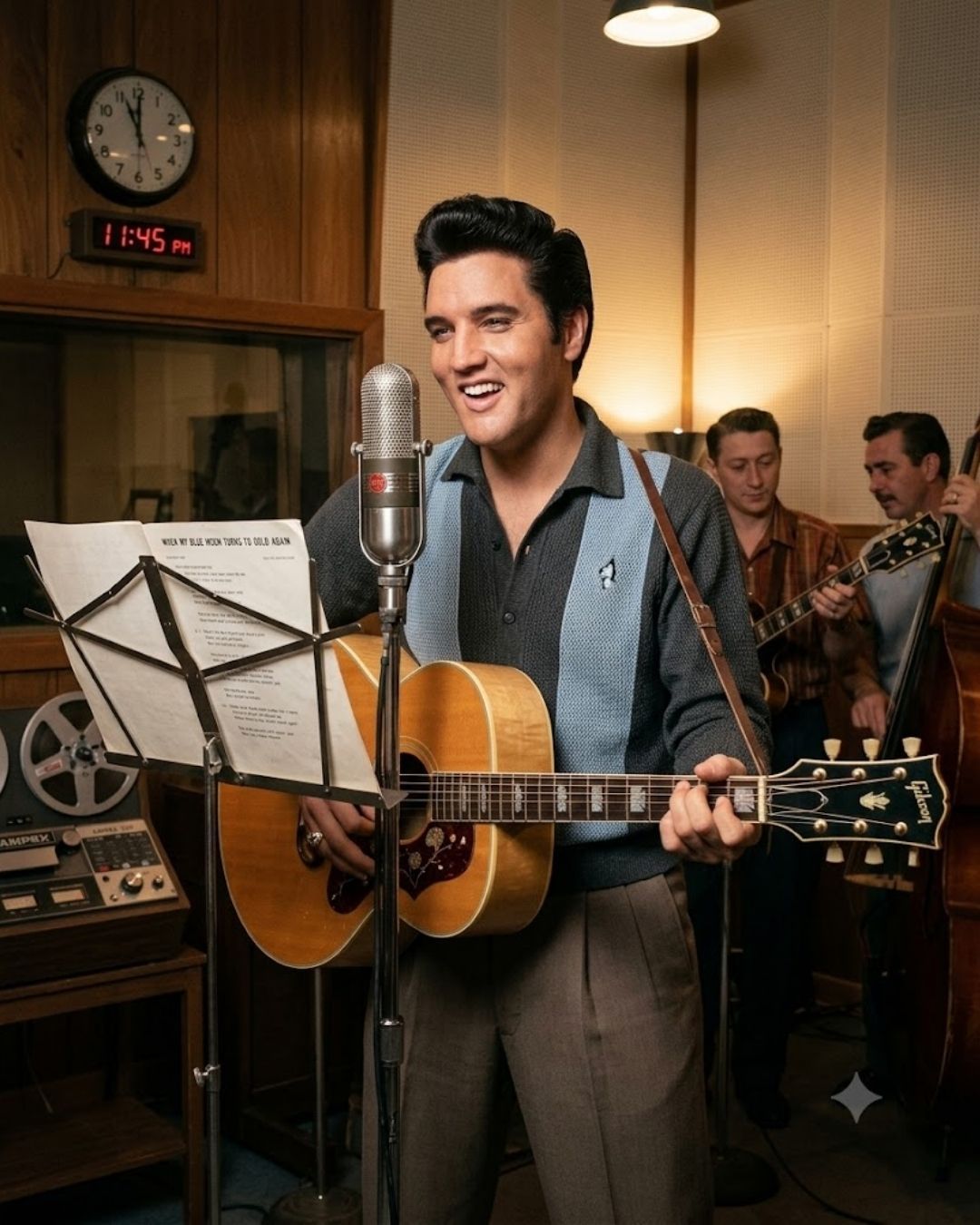
On September 2, 1956, inside Radio Recorders in Hollywood, a twenty-one-year-old Elvis Presley stepped up to the microphone to tackle a classic country tune. Rather than following Nashville’s traditional tear-in-your-beer formula, he injected the track with an irresistible swing that bridged rural tradition and early rockabilly. How did a modest 1941 hillbilly ballad transform into one of his most enduring early performances?
THE DETAILED STORY
Originally written in 1940 by Wiley Walker and Gene Sullivan, the song emerged during the twilight years of the Great Depression as a bittersweet promise that sorrow would eventually give way to golden happiness. Country legends from Cindy Walker to Zeke Clements had recorded the standard across the decade, establishing it as a sentimental hillbilly waltz. When the young singer from Tupelo arrived at Radio Recorders in late summer 1956 to record material for his landmark second studio LP, Elvis, he possessed an uncanny instinct for honoring musical heritage while completely rewriting the stylistic rulebook.
Flanked by his trusted musicians—guitarist Scotty Moore, bassist Bill Black, and drummer D.J. Fontana—Presley bypassed mournful melodrama. Instead, the ensemble locked into an upbeat, mid-tempo groove driven by Black’s rhythmic slap bass and Moore’s tasteful, fingerpicked electric guitar fills. Backing vocal quartet The Jordanaires provided celestial four-part gospel harmonies, introducing a lush pop polish that softened the rough edges without diluting the song’s rural sincerity. Presley’s vocal phrasing was masterfully relaxed; his voice slid gracefully from smooth baritone warmth to an airy upper register, radiating contagious optimism.
The recording session demonstrated his rare ability to synthesize diverse American roots. By blending Appalachian folk storytelling, gospel chord progressions, and modern rockabilly rhythm, the track helped pioneer what musicologists would later recognize as early foundations of the Nashville Sound. Beyond the studio walls, the song achieved massive cultural visibility on January 6, 1957, during Presley’s third and final appearance on The Ed Sullivan Show. Performing live before an audience of over fifty million viewers, he delivered a charming rendition just moments before network censors famously restricted cameras to filming him strictly from the waist up.
Released as an extended play single in early 1957, the track climbed to number nineteen on the Billboard Top 100 chart and resonated across nationwide jukeboxes. It proved that rock and roll could respectfully embrace traditional country sensibilities while captivating a modern youth generation. Decades later, this timeless recording stands as a powerful testament to Presley’s profound musical literacy, his innate studio instincts, and his transformative talent for turning vintage melancholia into radiant sunshine. Through every resonant chord and effortless vocal leap, it remains an unforgettable chapter in twentieth-century popular music.