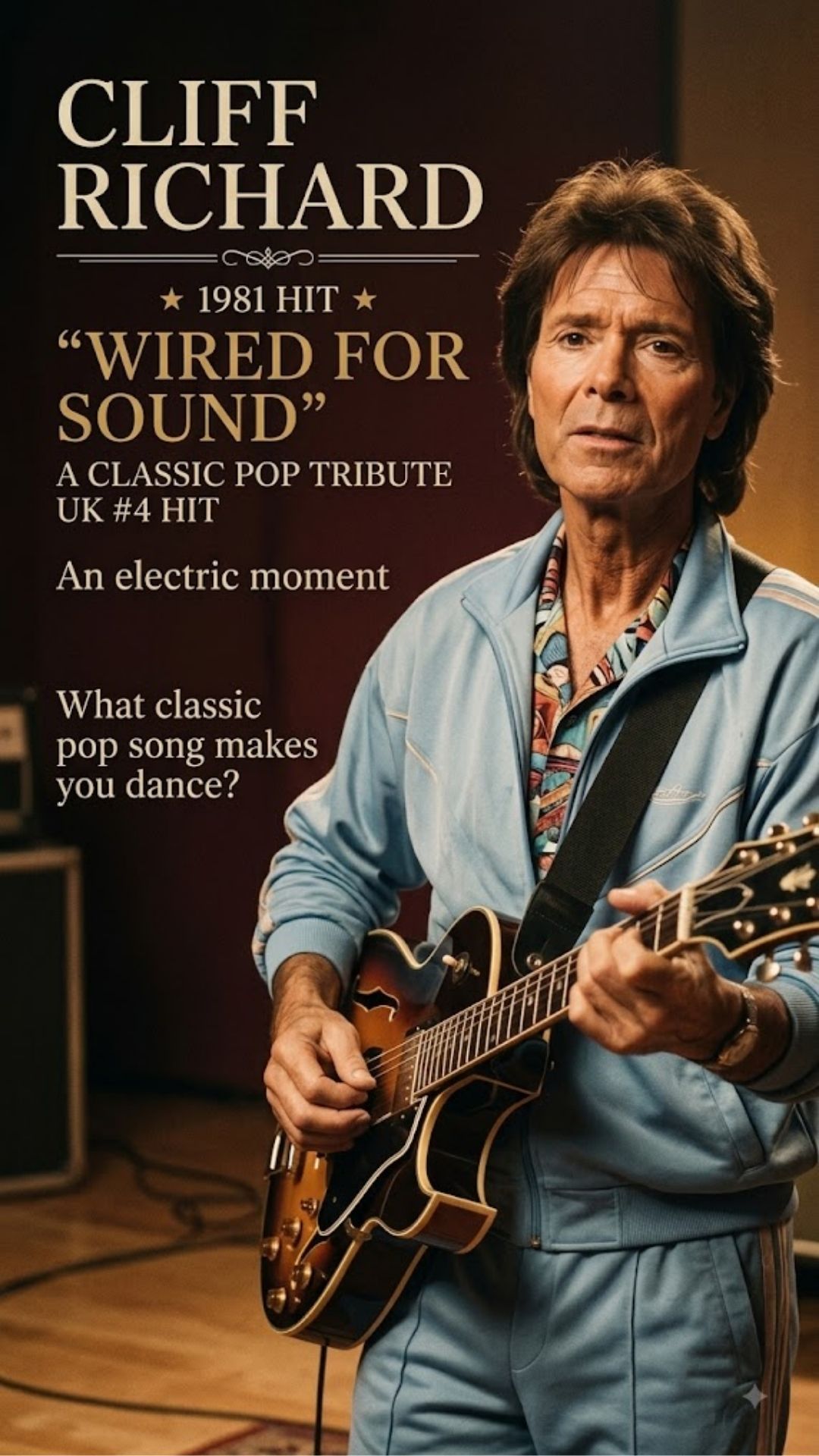
INTRODUCTION
Gliding through a Milton Keynes shopping center on bright red roller skates in the summer of 1981, veteran pop star Cliff Richard introduced a revolutionary pop aesthetic. Carrying a portable cassette player, he embraced futuristic synthesizer textures that stunned long-time industry observers. How did this high-energy synth-pop anthem successfully reinvent a legacy artist for the burgeoning MTV generation?
THE DETAILED STORY
Following the massive chart achievements of his late-seventies soft-rock material, Cliff Richard sought a modern sonic identity capable of competing alongside the new wave and synth-pop acts dominating the early eighties. The breakthrough arrived when renowned songwriter Alan Tarney, who previously penned “We Don’t Talk Anymore”, presented a dynamic composition celebrating personal music immersion through portable cassette players. Capturing the zeitgeist of the Sony Walkman phenomenon, the song tapped directly into the emerging youth culture of private, mobile listening.
Entering the studio, Tarney built a sparkling, electronic-driven production framework defined by crisp synthesizer arpeggios, driving drum programming, and an exuberant, punchy bass groove. Rather than relying solely on traditional rock instruments, the arrangement embraced sequenced electronic layers while preserving the artist’s effortless vocal clarity and infectious melodic instinct. The lyrics cleverly chronicled the joy of walking down city streets completely lost inside one’s headphones, creating an irresistible audio-visual connection that perfectly suited the dawn of the music video era.
Released in August 1981, the single generated immediate commercial momentum. Its accompanying promotional video, filmed inside the futuristic concrete walkways of Central Milton Keynes Shopping Centre, featured the singer roller-skating in a silver-grey jumpsuit while singing into a portable microphone. This vivid imagery caught heavy rotation on television broadcasts, instantly modernizing the artist’s public image. The record rapidly ascended the charts, reaching number four on the UK Singles Chart and achieving massive top-ten success across Australia, South Africa, and continental Europe.
Beyond its immediate chart triumph, the title track of the Wired for Sound album became one of the definitive pop recordings of the early 1980s. It proved that a veteran performer who began his career in the late 1950s could seamlessly integrate modern electronic production styles without losing his authentic artistic charm. Today, the anthem remains a cherished nostalgia milestone, immortalizing an era when portable music players first empowered listeners to soundtrack their own lives.