INTRODUCTION
In late 1979, Barry Manilow sat at a piano, listening to an obscure demo by Gerard Kenny about a struggling songwriter. While others heard a narrow showbiz lament, Manilow detected a universal heartbeat of survival buried inside the chords. How did a subtle shift in perspective transform an overlooked theatrical piece into one of the most enduring resilience anthems in pop history?
THE DETAILED STORY
The original composition, written by Gerard Kenny and Drey Shepperd, was originally conceived from the narrow perspective of a struggling Broadway musician facing constant artistic rejection across New York City. While the foundational melody possessed undeniable emotional depth, Barry Manilow recognized a critical limitation during his initial listening session: everyday listeners could never truly connect with a specialized narrative confined strictly to show business auditions, theatrical agents, and backstage industry negotiations.
Determined to unlock its broader human resonance, Manilow collaborated with his trusted songwriting partners, Bruce Sussman and Jack Feldman, to overhaul the song entirely. Together, they executed a complete lyrical reimagining, systematically stripping away every insular industry reference from the verses. In their place, they introduced universal themes of self-doubt, perseverance, and quiet dignity against overwhelming odds. By shifting the emotional perspective, the titular storm ceased to represent professional disappointment; instead, it became a powerful metaphor for the personal hardships, heartbreaks, and silent daily battles that every individual encounters throughout life.
When recording sessions began for his 1980 studio album Barry, Manilow approached the musical arrangement with masterclass theatrical precision. He anchored the opening with an understated, intimate acoustic piano, allowing his vocal delivery to communicate genuine vulnerability and quiet despair. As the verses progressed from doubt toward resilience, the production gradually expanded into a massive symphonic crescendo, driven by sweeping orchestral strings, dynamic percussion, layered vocal textures, and a signature key modulation that released overwhelming emotional catharsis.
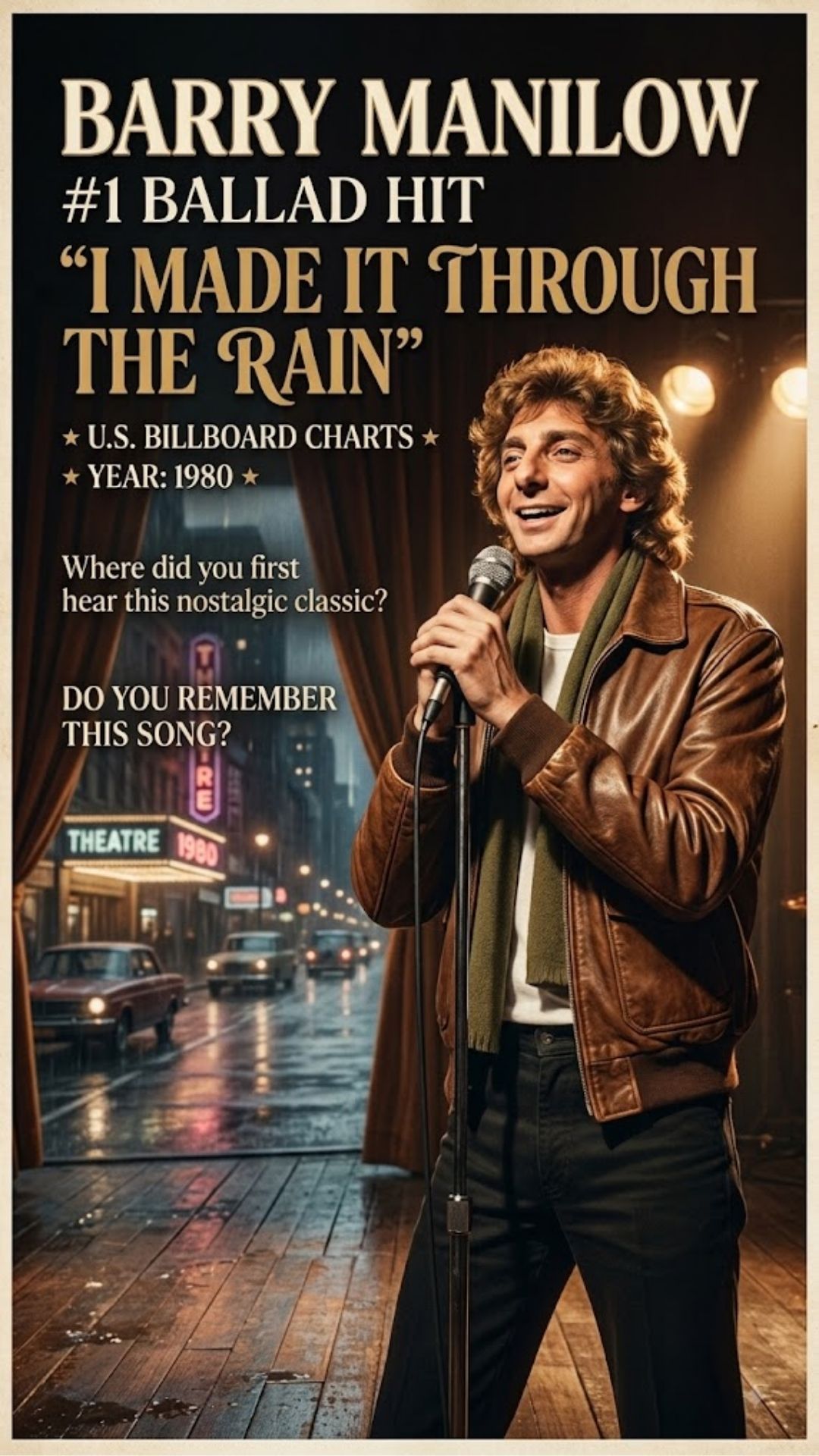
Released as a single in November 1980, the record resonated deeply with a global audience confronting significant socioeconomic turbulence. The track quickly achieved widespread commercial success, where it peaked at number 10 on the Billboard Hot 100 and reached number 4 on the Adult Contemporary chart, proving that authentic emotional storytelling could triumph on mainstream pop radio.
Beyond its impressive commercial achievements and radio airplay, the ballad evolved into a profound secular hymn of endurance. Over four decades later, listeners worldwide continue to embrace the track during pivotal life transitions, illness, grief, and recovery. By transforming a private lament into a shared anthem of hope, Manilow created one of the most enduring and beloved artistic triumphs of his entire career.