INTRODUCTION
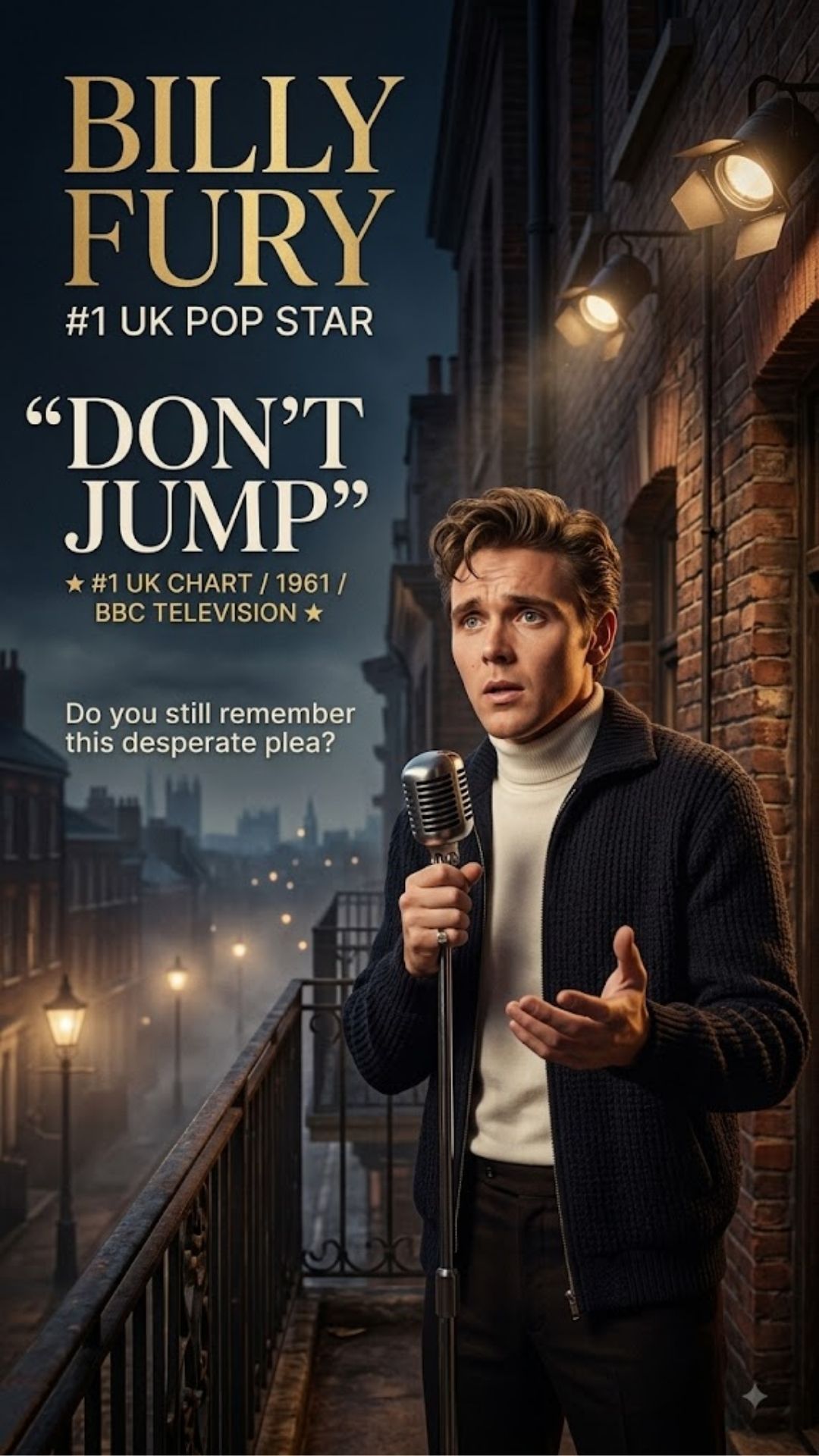
During a tense recording session at Decca Studios in July 1961, Liverpool’s rock pioneer stepped away from typical romantic ballads to cut something far darker. Rather than relying on outside Brill Building writers, Billy Fury composed a shadowy tale of desperation on a perilous ledge. What compelled Britain’s premier teen idol to gamble his soaring reputation on such a controversial, spine-chilling narrative?
THE DETAILED STORY
In the early 1960s, a strange phenomenon swept popular music: the rise of the teenage tragedy song, where melodrama met fatal romantic heartbreak. Yet while American radio leaned into sentimental narrations, Billy Fury approached the theme through a radically distinct, theatrical lens. Known to fans as Britain’s answer to rockabilly royalty, Fury—born Ronald Wycherley—possessed an innate knack for introspective songwriting that set him apart from his manufactured contemporaries. When he penned Don’t Jump, he constructed an unnerving dialogue that blurred the line between psychological crisis and twisted black comedy.
Recorded in mid-1961 under producers Dick Rowe and Mike Smith, the track emerged during an era when Decca Records heavily pressured Fury to record polished American pop standards. Instead of commercial conformity, Fury delivered a raw, suspenseful showcase built upon eerie call-and-response vocal arrangements. The song depicts a desolate protagonist standing high on a ledge, contemplating a fatal plunge over lost romance while an anxious chorus of voices desperately pleads with him to reconsider. Rather than leaning on sweeping orchestral strings, the arrangement relies on sharp percussive rhythms, stinging guitar accents, and a brooding tempo that amplifies the mounting suspense with every passing measure.
Fury’s vocal execution is nothing short of magnetic. He inhabits the character with genuine dramatic gravity, using his trademark breathy delivery and quivering vibrato to convey visceral existential despair before unleashing the song’s famous, darkly comedic lyrical twist. By contrasting tragic desperation with unexpected humor, this fearless blend of menace and showmanship proved that Fury was far more than a conventional teen heartthrob singing lighthearted romantic tunes. He was a master of tension who could transform an unorthodox narrative into compelling musical theater.
Because of its provocative subject matter, the track was initially withheld from regular single distribution in the UK, eventually surfacing on the 1962 extended play release Billy Fury No. 2. In the United States, London Records issued it as a standalone single, cementing its status as an elusive cult favorite among international collectors. Decades later, Don’t Jump stands as a fascinating testament to Fury’s songwriting audacity. It proves that beneath his dashing matinee-idol exterior burned a daring, visionary artist who was willing to explore the darkest corners of human emotion long before rock music fully embraced such dramatic storytelling.