Do you remember hearing that earth-shaking voice cry out for hope? Defying his manager during a turbulent year of national grief, Elvis Presley closed his 1968 television special with If I Can Dream. What made the King risk his entire career on a bold anthem of peace?
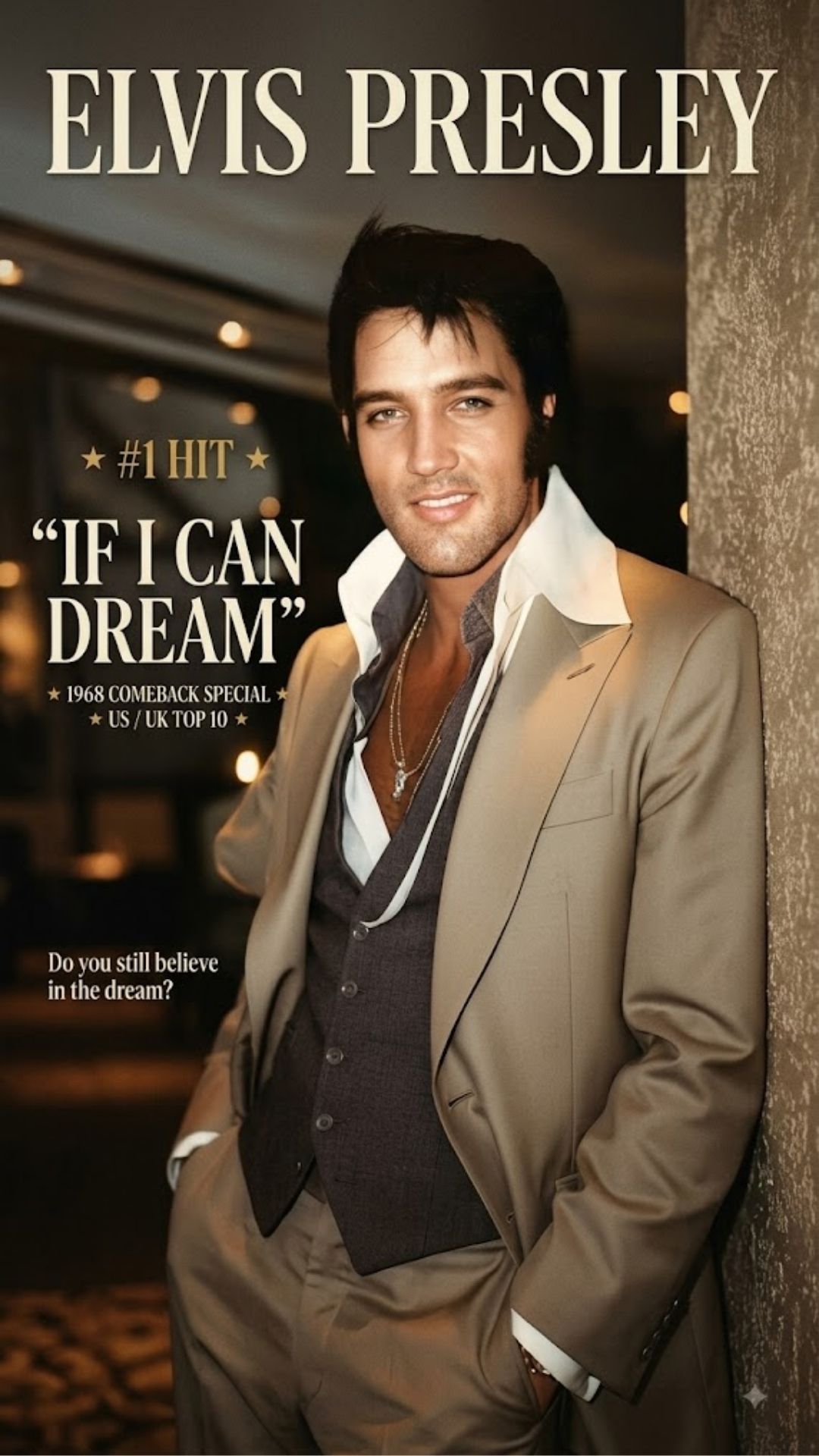
INTRODUCTION
On June 23, 1968, standing before the studio microphones in Burbank, a tearful Elvis Presley recorded a passionate vocal take that left the session musicians utterly stunned. Haunted by recent tragic assassinations, the singer chose conviction over commercial safety. How did this impassioned performance forever reshape his musical legacy during a pivotal turning point in 1968?
THE DETAILED STORY
In the spring of 1968, America was engulfed in profound social turbulence. The heartbreaking assassination of Martin Luther King in Memphis struck a deeply personal chord with Elvis Presley, whose roots were anchored in that very city. Just weeks later, the murder of Senator Robert F. Kennedy deepened the national despair. At the time, Elvis was preparing his television comeback with producer Steve Binder, who sought to break the artist out of a decade of formulaic Hollywood movies. While manager Colonel Tom Parker insisted on closing the broadcast with a traditional holiday carol, Binder and Presley envisioned a monumental musical statement reflecting the nation’s collective yearning for unity and healing.
To fulfill this vision, songwriter Walter Earl Brown was tasked with creating a song that captured Elvis’s innermost feelings. Drawing inspiration from King’s rhetoric of brotherhood, Brown composed If I Can Dream overnight. When Elvis first heard the demo tape, he was visibly moved and immediately vowed never to sing another song he did not truly believe in. Entering Western Recorders in June 1968, Elvis delivered an emotionally exhausting performance. He dropped to his knees on the studio floor, pouring every ounce of his soul into the microphone. Backing vocalists and arrangers were brought to tears by the unbridled intensity of his delivery, recognizing that the superstar was reinventing his artistry before their eyes.
When the broadcast aired in December 1968 on NBC, the visual presentation became instantly iconic. Dressed in an immaculate white three-piece suit against towering red marquee lights spelling his name, Elvis stood alone. His trembling hands, clenched fists, and soaring vocal dynamic transformed the finale into a secular sermon of hope. Rather than a polished pop singer, viewers witnessed an authentic gospel powerhouse laying bare his vulnerability to millions of households.
Released as a commercial single by RCA Victor, the recording climbed to number twelve on the Billboard Hot 100 and achieved Gold certification status. More than a chart victory, the song marked the triumphant resurrection of the King of Rock and Roll. If I Can Dream remains a timeless testament to human resilience, demonstrating that genuine music can transcend entertainment to speak directly to the conscience of the world.