Few records ever shattered Nashville conventions quite like Loretta Lynn did in October 1966. Refusing to accept late-night domestic neglect, her candid songwriting gave working women an unapologetic voice across rural America. Do you remember the electric thrill when her fearless honky-tonk truth first crossed your radio dial?
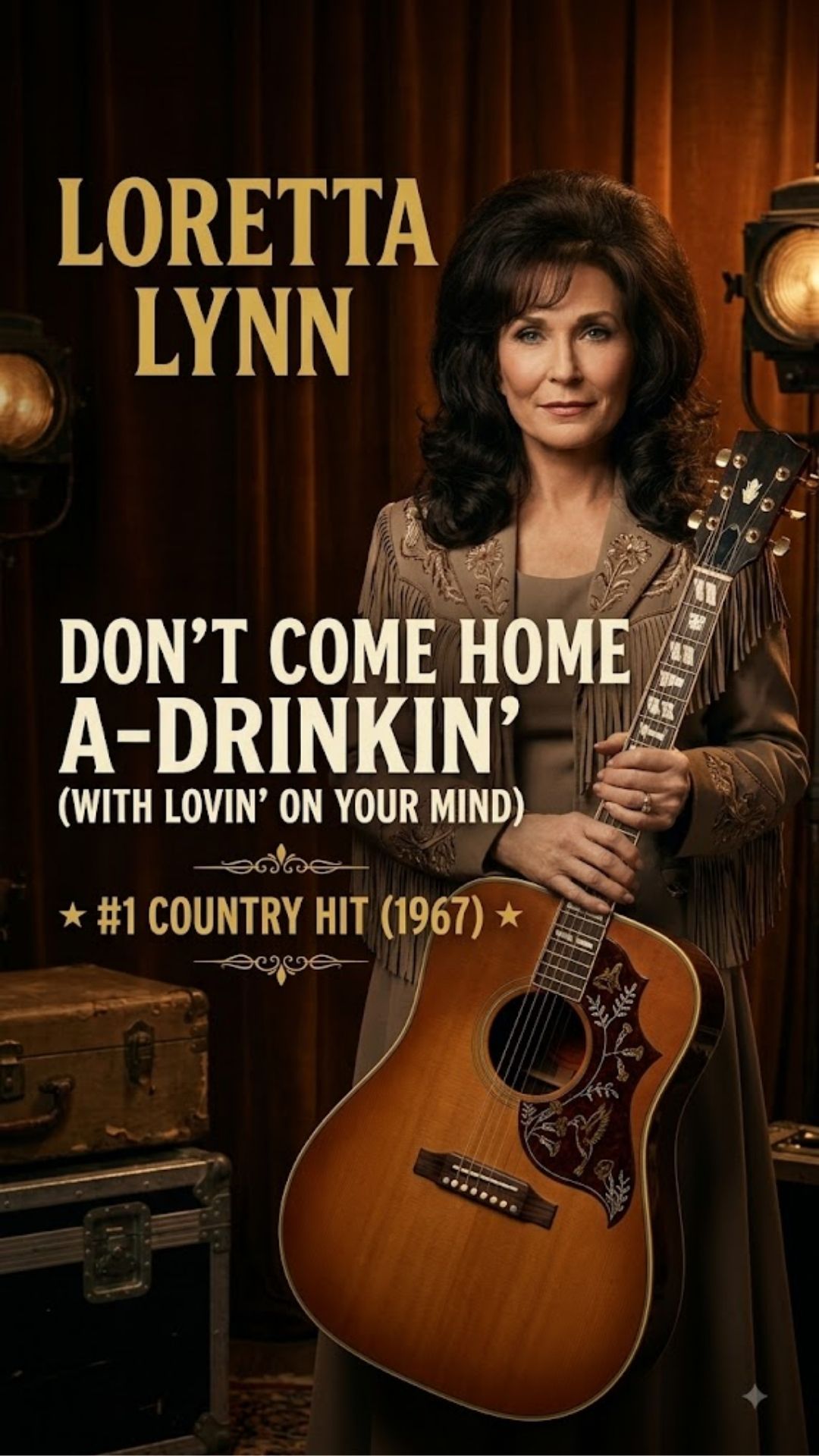
INTRODUCTION
Inside Columbia Historic Bradley’s Barn during late 1966, producer Owen Bradley listened as Loretta Lynn cut a track that defied the compliant domestic roles of the era. Grounded in real hardship, her blunt lyrical defiance rattled traditional radio programmers across the country. How did a simple three-chord anthem permanently dismantle the silence expected of country music wives?
THE DETAILED STORY
Co-written alongside her younger sister Peggy Sue Wells, the track emerged directly from the turbulent realities of Lynn’s marriage to Oliver “Doolittle” Lynn. Rather than cloaking domestic friction in polite metaphors, Lynn confronted the routine indignity of alcohol-fueled demands with razor-sharp specificity. The composition completely stripped away the prevailing Nashville trope of the tearful, submissive spouse. In place of passive heartache, she offered an unequivocal declaration of personal boundaries, giving rural women an unprecedented artistic mirror for their own everyday struggles.
Musically, the recording anchored itself firmly in authentic honky-tonk tradition under the seasoned guidance of Owen Bradley. Propelled by a brisk two-step shuffle, the arrangement highlighted biting electric guitar licks and an expressive pedal steel that echoed Lynn’s vocal resilience. Her delivery remained piercing, rhythmically assertive, and steeped in an unvarnished Appalachian cadence. Rejecting lush Nashville Sound strings in favor of raw roadhouse energy, the track achieved an immediate, infectious groove that commanded total attention on noisy barroom floorboards.
When released as a lead single, the record met immediate institutional resistance. Several conservative radio programmers banned the track entirely, deeming its frank marital confrontation too scandalous for family airwaves. Yet, everyday listeners embraced the message with extraordinary fervor. Working-class housewives found a fearless champion who dared to articulate their unspoken grievances, while jukebox operators across North America struggled to keep up with the overwhelming coin-drop demand in working-class taverns.
This grassroots surge triggered a massive commercial breakthrough that redefined industry benchmarks. In February 1967, the track climbed rapidly to reach number one on the Billboard Hot Country Singles chart, securing Lynn her first solo chart-topping hit. The momentum propelled her eponymous studio album to unprecedented heights, ultimately becoming the first female artist LP to be certified gold by the RIAA, shattering longstanding commercial doubts about female bankability in Nashville.
Beyond sales figures, the song irrevocably shifted the boundaries of modern songwriting. By proving that unflinching candor and female self-respect could dominate mainstream country charts, Lynn paved the way for subsequent boundary-pushing anthems throughout the twentieth century. The master recording endures as a landmark cultural statement where traditional country instrumentation converged with revolutionary domestic truth.